
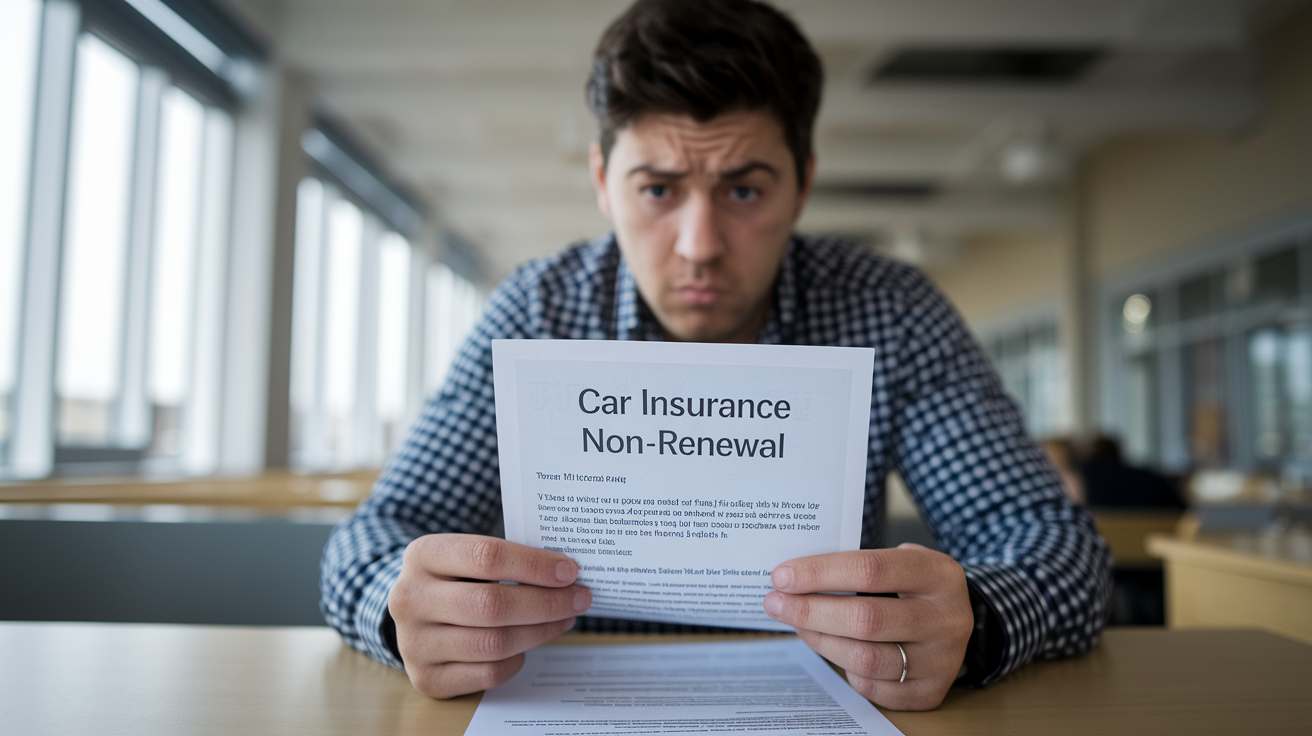

Got a non-renewal notice on your car insurance?
It’s not an immediate cancellation, you’re still covered until the policy ends, but the clock is short and a gap can mean fines, higher rates, or trouble getting coverage later.
Read the notice, confirm the reason, and start shopping for replacement coverage now.
This guide shows the exact steps to challenge a wrong decision, prove continuous coverage, and lock in a new policy before your current one runs out.
Immediate Actions to Take When You Receive a Car Insurance Non-Renewal Notice

A non-renewal means your insurer won’t offer you a new policy when your current term ends. You’re still covered until the policy expiration date. This isn’t an immediate cancellation. The insurer has to send written notice and, in most states, tell you why. Notice periods vary by state but usually run 30 to 60 days before expiration.
You need to act fast. The window between getting the notice and losing coverage is short, and you can’t afford to let your policy expire without replacement coverage already lined up. Even one day without insurance can trigger rate spikes, fines, and legal trouble if you’re caught driving uninsured.
What to do right now:
-
Read the whole notice. Find the stated reason for non-renewal, your policy expiration date, and when the non-renewal takes effect. Most states require insurers to explain why they’re dropping you.
-
Check the expiration date. That’s the last day you’ll have coverage. It’s also your hard deadline for getting a new policy.
-
Make sure the notice is real. Call the phone number on your current policy documents, not whatever number is printed in the notice. This helps you avoid scams.
-
Talk to your insurer or agent. Ask for more details if the reason doesn’t make sense or if you think there’s been a mistake. Get specifics on what triggered the decision.
-
Save everything. Keep copies of the notice, emails, and notes from phone calls. Write down the date, time, and name of everyone you speak with.
-
Double-check your coverage end date. Look at your current declarations page to confirm when you’ll actually be uninsured.
Continuous car insurance is usually a legal requirement. Gaps in coverage mess with your future rates and how easy it is to get insured again. A single day without coverage can mean penalties and higher premiums when you apply somewhere new.
Understanding Why Your Car Insurance Was Not Renewed

Insurers reassess risk every time your policy comes up for renewal. A non-renewal decision means something changed in how the company views your risk profile, or their own business priorities shifted. Non-renewals happen at policy expiration and tend to be driven by underwriting criteria or external factors. Mid-term cancellations are different. Those usually come from serious problems like fraud or a suspended license.
Non-renewals aren’t always about what you did. Sometimes an insurer just stops offering coverage in your state, changes its underwriting rules, or exits a line of business entirely. Other times, the decision ties directly to changes in your driving record, claims history, or who lives in your household.
Why insurers non-renew policies:
- Your driving record got worse. Multiple speeding tickets, at-fault accidents, or a recent DUI within a policy period.
- You filed too many claims or they cost too much. Filing several claims in a short window, even if none were your fault, can make the insurer see you as higher risk.
- Your location or risk profile changed. You moved to a zip code with more theft or accidents, or you added a high-risk driver to your household.
- The insurer made a business decision. The company might be shrinking its book of business in your state, tightening underwriting standards, or getting out of certain coverage types.
- Administrative or eligibility problems. You didn’t provide requested documents, proof of where you garage the car, or updated mileage estimates.
Insurers run profitability models at renewal and might decide that keeping your policy isn’t financially sustainable anymore. Even if you haven’t filed a claim or gotten a ticket, changes in your area’s risk profile or the insurer’s internal benchmarks can trigger a non-renewal. Understanding the stated reason helps you figure out whether you can fix the issue or whether you just need to find a new carrier.
How to Request Clarification or Challenge a Car Insurance Non-Renewal Decision

You have the right to know why your insurer non-renewed your policy. State rules require them to give you a specific reason, not just some vague reference to underwriting guidelines. If the reason in your notice doesn’t make sense, or if you think it’s based on wrong information, you can request a full explanation and sometimes challenge the decision.
Requesting a Written Explanation
Call your insurer or agent and ask for a detailed written explanation of the non-renewal reason. Request any underwriting notes, reason codes, or documents they used to make the decision. Ask if the decision came from a specific claim, driving violation, credit report, or external data source. If the insurer points to a mistake (like an accident you weren’t involved in or a ticket that got dismissed), ask how to submit proof of the error.
Preparing an Appeal or Rebuttal
If you think the non-renewal is based on wrong information, collect evidence to back up your case. Pull your motor vehicle record (MVR) from your state DMV to confirm there aren’t any reporting errors. If a claim was incorrectly pinned on you, request loss runs or claims history from your prior insurers. Gather receipts, police reports, court documents, or letters showing that violations were dismissed or corrected.
How to structure a rebuttal or appeal letter:
- Put your policy number, name, and the date of the non-renewal notice at the top.
- Identify the reason they gave for non-renewal and explain why it’s wrong or incomplete.
- Attach supporting documents: copies of corrected driving records, dismissed ticket confirmations, or claims history from another source.
- Ask the underwriting department to review the non-renewal decision.
- Give a specific deadline for response and request written confirmation of the outcome.
Submitting Communications
Send your rebuttal or request for clarification by email and certified mail with return receipt. Email creates a timestamped record. Certified mail gives you proof of delivery. Keep copies of everything and note the date and method you used. If you get a verbal response, follow up with an email summarizing what was discussed and asking for written confirmation. A written trail protects you if the insurer later disputes what was agreed upon or if you need to escalate to your state’s insurance department.
Finding Replacement Coverage After a Car Insurance Non-Renewal

Once you know the non-renewal is final, start shopping for replacement coverage right away. Don’t wait until the last week of your policy term. Comparing quotes takes time, and some insurers might need inspections, more documentation, or underwriting review before they’ll issue a new policy. You want a replacement policy in force on or before your current policy’s expiration date so there’s no gap in coverage.
Shop with multiple carriers, including ones that work with higher-risk drivers. A non-renewal doesn’t mean you can’t get insured. It means you need to find an insurer with different underwriting criteria. Independent brokers often have access to more than 50 insurance carriers, including non-standard and high-risk markets that don’t advertise directly to consumers. If you can’t find coverage in the standard market, your state may offer an assigned-risk pool or other ways to make sure drivers can meet legal insurance requirements.
| Option | Description |
|---|---|
| Standard insurers | National and regional carriers that usually offer the lowest rates for drivers with clean records. May decline you or quote high premiums after a non-renewal. |
| High-risk insurers | Companies that work with non-standard risks, like drivers with violations, claims, or prior non-renewals. Premiums are higher but coverage is available. |
| Brokers | Independent agents with access to dozens of carriers, including specialty and regional markets. Brokers can shop on your behalf and find options you might not locate alone. |
| State assigned-risk pools | Government-mandated programs that provide liability coverage when no insurer will voluntarily cover you. Rates are regulated but often higher than the private market. |
| Temporary or short-term policies | Non-standard policies with very short terms (30 or 60 days) that can bridge a gap while you search for long-term coverage. Not available in all states. |
| Telematics or usage-based programs | Policies that use a device or app to monitor driving behavior. May offer discounts for safe driving and can help rebuild your insurability over time. |
When you request quotes, make sure the new policy’s effective date is on or before the expiration date of your current policy. Even a one-day gap can result in a lapse in coverage, which shows up when future insurers check your history. If your old policy expires on June 30 at 11:59 p.m., your new policy should start no later than July 1 at 12:01 a.m., or better yet overlap by starting on June 30. Confirm the start time in writing with the new insurer.
Avoiding Lapses and Proving Continuous Coverage After a Non-Renewal

Non-renewal itself doesn’t appear on your driving record or credit report. But a gap in coverage, even for a single day, can increase your premiums for years and make it harder to get affordable insurance. Insurers use continuous coverage as a rating factor. If you let your policy lapse after a non-renewal, the next insurer will see the gap and may charge higher rates or require proof of financial responsibility before they’ll issue a policy.
Proving continuous coverage is straightforward if you plan ahead. When you shop for a new policy, insurers may ask for documents showing you had active coverage up to the moment the new policy starts. Providing this proof quickly can speed up the quoting and binding process.
Documents new insurers may request:
- Current policy declarations page showing coverage dates and limits.
- Letter of experience or proof of prior insurance from your old insurer.
- Payment history or billing statements showing premiums were paid through the expiration date.
- Cancellation or non-renewal notice with the stated end date of coverage.
If you need a letter of experience, contact your prior insurer’s customer service department as soon as you get the non-renewal notice. Most insurers can generate this letter within 24 to 48 hours. The letter usually includes your coverage dates, limits, deductibles, and claims history. Some insurers provide it automatically when a policy ends. Others need a written request. If you’re switching carriers on short notice, ask for the letter right away so you have it ready when the new insurer asks for it.
How to Prevent Future Car Insurance Non-Renewals
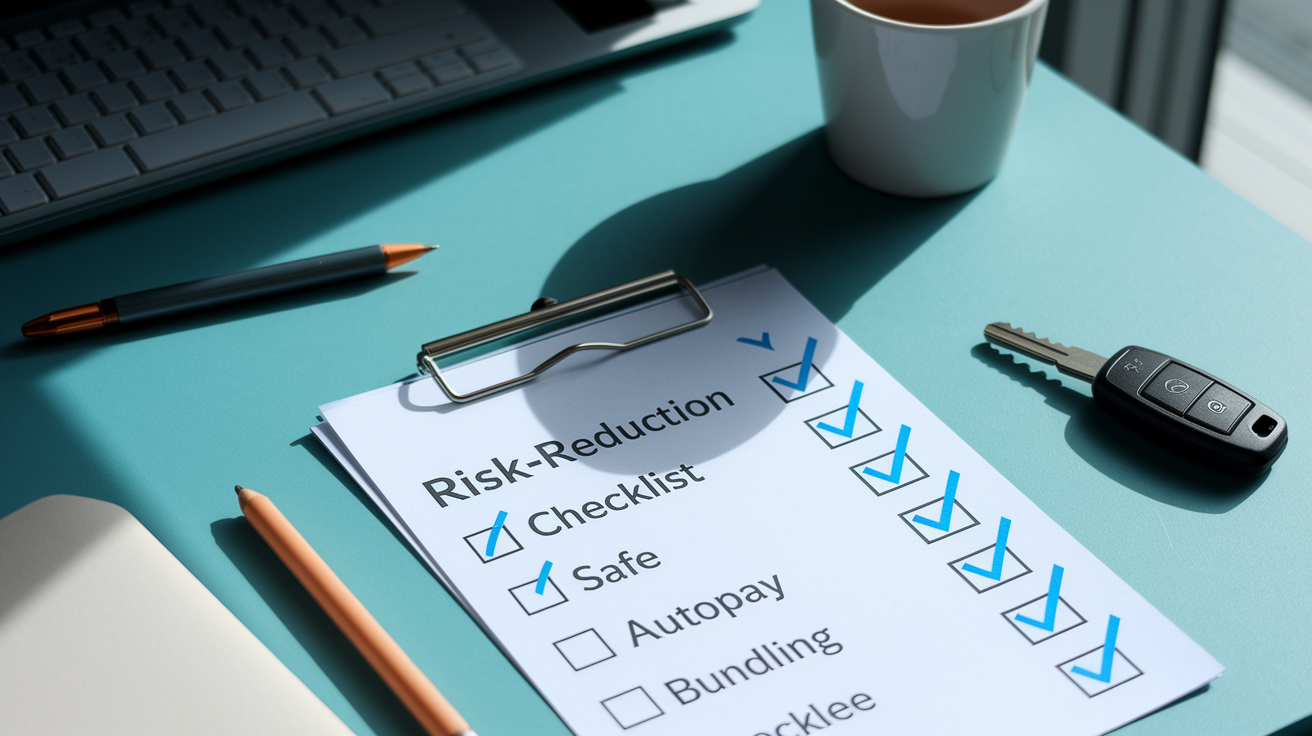
Prevention starts with understanding how insurers evaluate risk at renewal. The cleaner your record and the fewer claims you file, the more likely your insurer will renew your policy. Non-renewals are often the result of patterns. Multiple tickets in a year, several claims in a short period, or repeated missed payments. Breaking those patterns reduces your risk of losing coverage again.
Focus on what you can control. Your driving behavior, claims decisions, and payment reliability are all within your power to change. Reducing risk also means being realistic about what to insure and what to pay out-of-pocket. If a repair costs less than your deductible or only slightly more, think about paying for it yourself rather than filing a claim that adds to your claims history.
Long-term ways to reduce the risk of non-renewal:
- Keep your driving record clean. Avoid speeding tickets, distracted driving citations, and at-fault accidents.
- Limit claims frequency by paying for minor repairs out-of-pocket when the cost is close to or below your deductible.
- Set up autopay or payment reminders to avoid missed premium payments, which can lead to cancellation.
- Update your insurer right away when household drivers change, vehicles are sold, or mileage estimates shift.
- Consider bundling home and auto insurance with the same carrier to increase retention and access multi-policy discounts.
Final Words
You just got a non-renewal notice. Act fast: read it, check the expiration date and stated reason, and note any deadlines.
If the reason is unclear, ask for a written explanation and gather documents to appeal. Then shop multiple carriers, consider high-risk or temporary options, and set the new policy to start before the old one ends.
Use this checklist for how to respond to a car insurance non-renewal notice and keep proof of continuous coverage. You’ll reduce stress and get back to normal faster.
FAQ
Q: What to do if your car insurance is not renewed?
A: If your car insurance is not renewed, read the notice for reason and deadline, confirm the expiration date, verify the notice is real, contact your insurer, shop for replacement, and document everything.
Q: What not to say to the insurance adjuster?
A: You should not say you caused the accident, guess facts, admit fault, or exaggerate damages; stick to clear factual statements and tell them you’ll share documents or a written statement.
Q: Which insurance company has the most complaints?
A: The insurance company with the most complaints varies by state and year; check your state insurance department or the NAIC complaint ratios and recent consumer reports for current data.
Q: What is a non-renewal notice insurance?
A: A non-renewal notice in insurance is a letter saying the insurer will not renew your policy at term end; you stay covered until expiration and the notice must state a reason and deadline.