
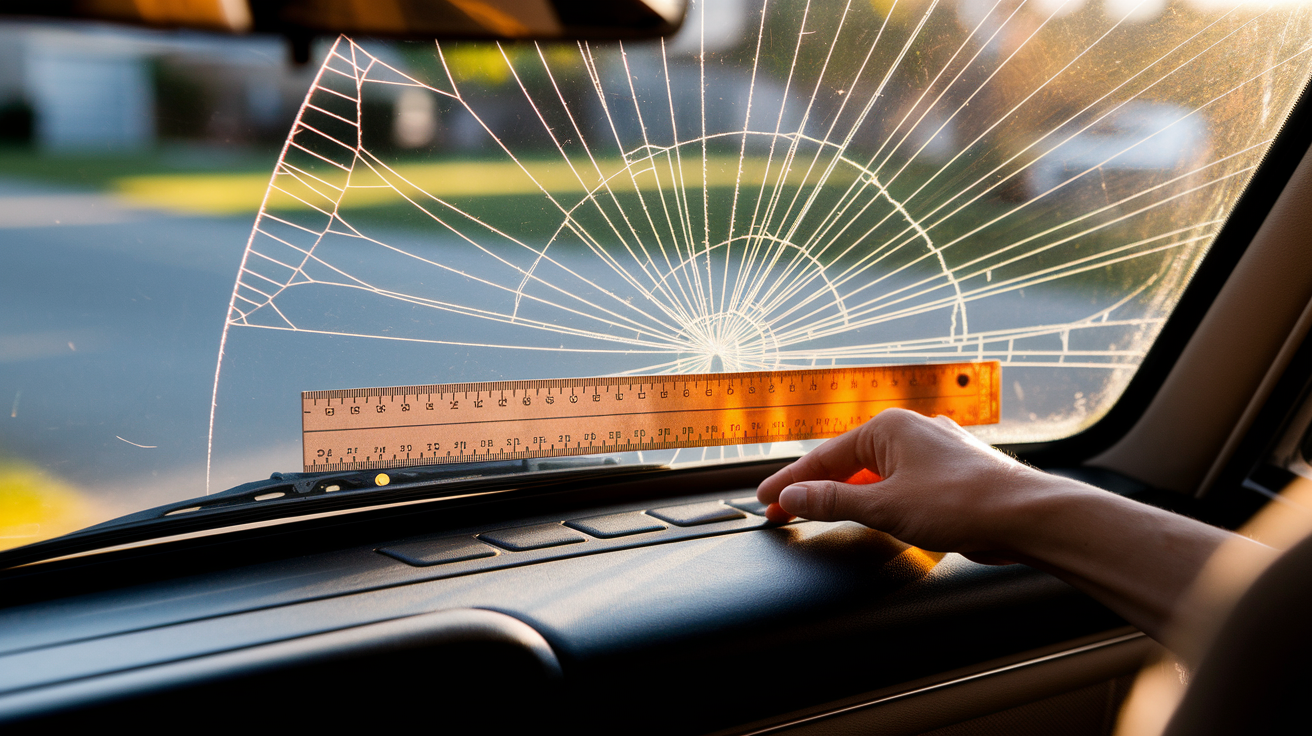

Think filing a windshield claim will take days or a lot of hassle?
You can often get approval and a repair within 24 to 72 hours.
This post shows the exact steps to speed things up.
First, document the damage right away.
Next, check your policy for glass coverage or a deductible waiver.
Then report the claim with photos, and choose the right shop.
I’ll walk you through what to say, what to upload, and what to expect so you get back on the road fast and with fewer surprises.
Immediate Steps to Take After Windshield Damage

Soon as you spot windshield damage, get somewhere safe, grab photos, and write down what happened.
If you’re driving when the glass cracks or chips, pull over when it’s safe to do so. Check whether the damage blocks your view or makes the car unsafe. If the crack sits right in your line of sight or the glass looks like it’s buckling, don’t keep driving. Hit your hazards if you’ve stopped on the shoulder.
Once you’re parked safely, start documenting. Take photos right away, before weather or more road junk can make the crack worse. Measure the crack with a ruler or tape measure and jot down the number. Write the exact date, time, and location, plus weather and road conditions.
Cover exposed cracks with clear packing tape so moisture and dirt can’t get in. Don’t drive if the damage messes with visibility or structural strength. If you need to move the car, go slow and avoid bumps.
Quick evidence checklist:
- Two wide shots showing the full windshield and vehicle.
- Four close-ups: two from inside showing chip or crack ends, two from outside.
- Measure crack length in inches.
- Write down date, time, exact location.
- Note weather and whether road debris, hail, or other stuff was involved.
- Record the incident in your phone (note or voice memo works).
Reviewing Your Policy for Windshield Claim Coverage

Before you call your insurer, dig out your policy and find the declarations page and comprehensive section. Windshield damage almost always falls under comprehensive for things like road debris, weather, or vandalism. If the windshield broke in a crash, you’re looking at collision coverage instead.
Check your deductible and see if your policy has a glass waiver or glass rider. Lots of insurers skip the deductible for chip repairs but not full replacements. A separate glass rider, usually $25 to $75 a year, wipes out the deductible for all glass work.
| Coverage Type | What It Applies To | Deductible Rules | When It Helps Most |
|---|---|---|---|
| Comprehensive | Non-collision damage (weather, debris, vandalism) | Varies; $0 to $500 common. Often waived for chip repair. | Most windshield damage events. |
| Collision | Windshield broke during a crash or impact | Typically $250 to $1,000 | Accident-related windshield damage. |
| Glass Rider | All glass (windshield, side windows, sunroof) | $0 deductible; waiver applies to repair and replacement | Frequent glass damage or vehicles with expensive OEM glass. |
| Liability | Only covers damage you cause to others | Does not cover your windshield | Never helps with your own windshield. |
Contacting Your Insurance Company to Start the Windshield Claim

Call your insurer as soon as you’ve got the damage documented. Most companies handle claims 24/7 by phone, app, or online. Reporting within 24 to 72 hours keeps things moving and avoids disputes about when the damage actually happened.
When you call, they’ll ask for your policy number, VIN, and basic incident info. They might send you a link to upload photos through the app or email. Many insurers approve faster when you use the app because the adjuster can review photos right away.
What to have ready before calling:
- Policy number and VIN (on your insurance card and registration)
- Date, time, location where damage happened
- Photos of the damage (wide and close)
- Estimated crack or chip size in inches
- Name and contact info for your preferred shop, if you’ve got one
- Whether this was a collision or something else
If your insurer has an approved shop network, ask whether using one of those speeds things up. Some companies contact the shop directly and set up your appointment once the claim’s approved.
Providing Required Documentation and Completing the Filing Process

After your initial call or app submission, your insurer assigns a claim number and tells you what they need. Most want three to six photos, one written estimate from a licensed shop, and a description of what happened. Some accept virtual inspections, so your uploaded photos replace an in-person visit.
Your claim number is your reference code for everything going forward. Write it down and save it in your phone. You’ll need it when scheduling repairs, checking status, or following up with the adjuster. Keep every document related to the claim for at least 12 to 36 months. If warranty or billing issues pop up, you may need records for up to seven years.
If the damage came from vandalism or a hit and run, you might need a police report. Call the non-emergency line and file a report the same day the damage occurred. The report number and a copy should go to your insurer along with photos and estimate. Even if a police report isn’t required, having one can help if your claim gets questioned later.
Damage Inspection and Windshield Claim Authorization

Once your insurer has photos and paperwork, they’ll either approve the claim right away or schedule an inspection. Virtual inspections using app photos can mean same-day approval. In-person inspections usually happen within one to seven business days, depending on workload and where you’re located.
After inspection, expect a decision within 24 hours to seven days. The insurer issues a repair authorization form or written approval you can forward to the shop. If approved, schedule the repair. If denied, they must give you a written explanation and tell you how to appeal.
What Adjusters Look For
Adjusters measure crack length, check where the damage sits, and confirm whether it affects your view or vehicle sensors. They look for signs of old damage, like chips or cracks that were there longer than the reported date.
If the crack’s near the edge or extends across the driver’s view, they’ll usually authorize replacement. If it’s a small chip away from edges and not in your line of sight, repair gets approved. Adjusters also verify that incident details match the damage pattern. A crack from road debris typically starts at a single impact point, while hail shows multiple sites.
Choosing a Repair Shop for Windshield Damage Claims

Most insurers give you a list of approved vendors. Using an approved shop often means direct billing, so the shop invoices the insurer and you pay just your deductible. Approved shops may also get faster authorization because the insurer already works with them and has pre-negotiated rates.
You don’t have to use an approved shop. You can pick any licensed auto glass place. If you go with a non-approved shop, you might pay the full cost upfront and then ask for reimbursement. The insurer reimburses up to the policy limit, minus your deductible.
Ask whether the shop uses OEM (original equipment manufacturer) glass or aftermarket. OEM matches your vehicle’s original specs and costs more. Aftermarket is made by third parties, costs less, but may vary slightly in fit or tint. Many insurers cover both, but some policies make you pay the difference if you choose OEM when aftermarket’s available.
Shop selection things to think about:
- Approved shops offer direct billing and faster approval.
- OEM glass matches factory specs; aftermarket is cheaper and might have slight differences.
- Chip repair takes 30 to 90 minutes; full replacement takes 1 to 3 hours.
- Mobile services come to you but may charge a travel fee and aren’t always covered.
Repair vs. Replacement During a Windshield Insurance Claim
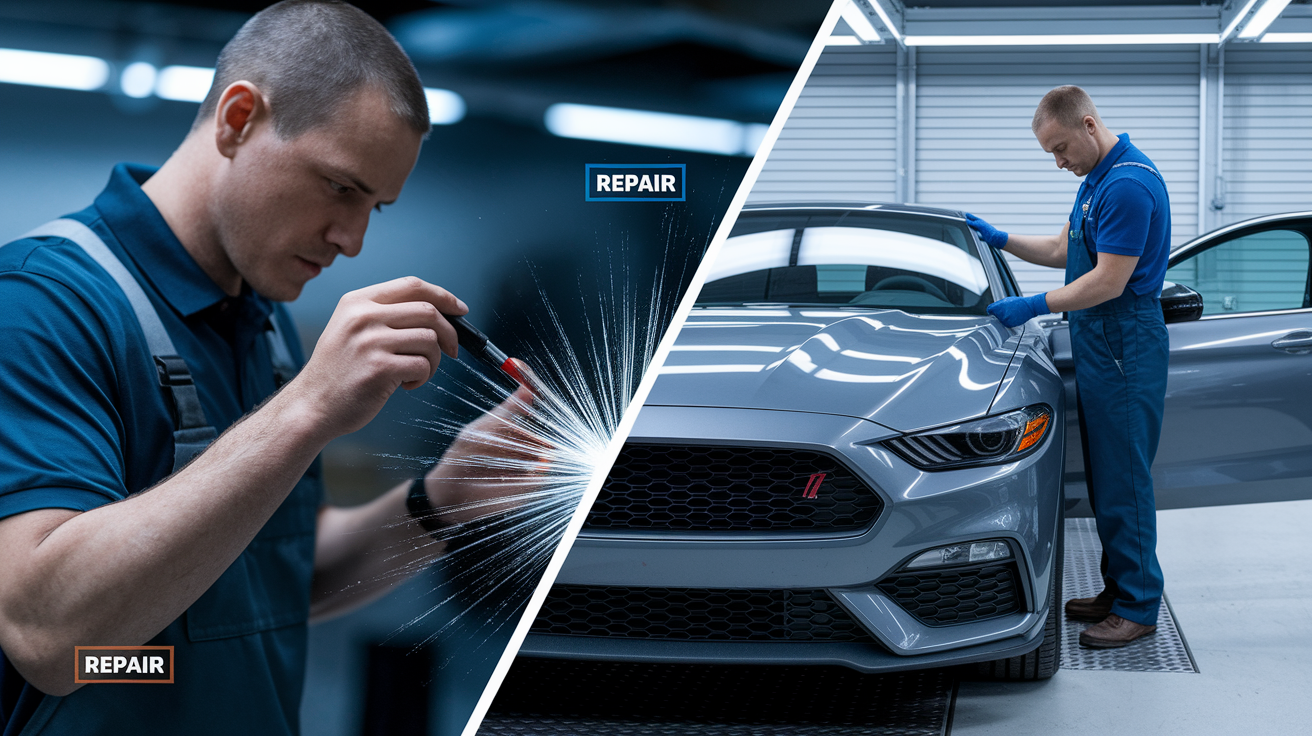
Insurers approve repair when the damage is a chip smaller than a quarter or a crack shorter than about six inches and sitting outside your direct view. Repair is faster, cheaper, and keeps the original factory seal. Chips and small cracks can often be fixed in under an hour.
Replacement is needed when the crack’s longer than six inches, crosses your line of sight, reaches the edge, or affects advanced driver-assistance systems like lane-departure sensors or automatic braking cameras. Vehicles with ADAS usually need recalibration after replacement, which adds time and cost. Recalibration makes sure sensors and cameras are aligned right and may be required by law in some states.
| Damage Type | When Approved | Time Required |
|---|---|---|
| Chip Repair | Chip smaller than a quarter, not in driver’s line of sight | 30 to 90 minutes |
| Crack Repair | Crack under 6 inches, not at edge, not blocking view | 30 to 90 minutes |
| Full Replacement | Crack over 6 inches, in line of sight, or affecting ADAS sensors | 1 to 3 hours plus 1 to 3 days for scheduling and curing |
Costs, Deductibles, and Out-of-Pocket Amounts for Windshield Claims

Chip repair runs $50 to $150. Many insurers waive the deductible for minor repairs, so you might pay nothing. Full replacement ranges from $200 to $1,200 or more, depending on your vehicle, whether you pick OEM or aftermarket, and whether ADAS recalibration is needed. Luxury vehicles and trucks with heated windshields or rain sensors sit at the higher end.
Your deductible is what you pay before insurance covers the rest. Common amounts are $0, $100, $250, and $500. If you have a glass waiver, the deductible’s gone for repairs. If you have a full glass rider, it’s waived for repairs and replacements.
Example scenarios:
- Repair cost $120, deductible $500. You pay $120 out of pocket; filing makes no sense.
- Replacement cost $650, deductible $500. Filing saves you $150; might not be worth a potential rate bump.
- Replacement cost $900, deductible $250. Filing saves you $650; usually the better choice.
- Replacement cost $400, glass rider active (zero deductible). You pay $0; file the claim.
If you’re using direct billing with an approved shop, you pay your deductible to the shop on repair day. If you pay the shop in full and request reimbursement, the insurer sends you a check for the covered amount minus deductible within one to three weeks.
Claim Timelines and What to Expect During the Process

Virtual inspections can wrap up the same day you upload photos. In-person adjuster visits are usually scheduled within one to seven business days. Once inspection’s done, the insurer approves or denies within 24 hours to seven days, depending on how complex the claim is.
After approval, you can schedule the repair. Most shops can book chip repairs within 24 to 72 hours. Chip repairs finish in 30 to 90 minutes. Full replacements take one to three hours of shop time, but scheduling might add one to three business days depending on glass availability and shop workload. Vehicles with ADAS sensors may need an extra half-day for recalibration.
Once repair or replacement is done, the adhesive used to install a new windshield needs curing time. Most shops say wait one to 24 hours before highway speeds or car washes. The shop gives you specific curing instructions based on adhesive type and weather. If you need your car right away, ask about accelerated curing, though it’s not always available and may cost extra.
Common Reasons Windshield Claims Are Denied
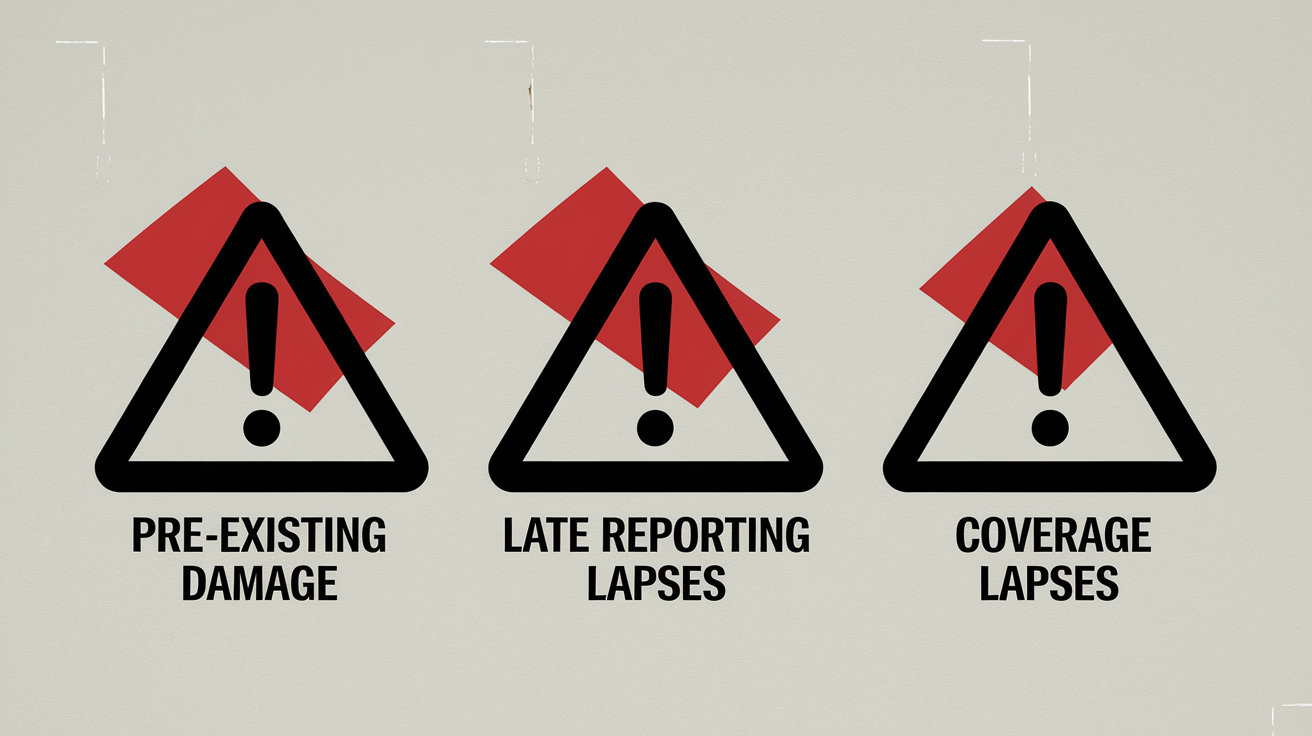
Insurers deny windshield claims when they think the damage existed before you reported it. Pre-existing damage is the most common reason. If you didn’t photograph the windshield right after the incident, the insurer might argue the crack was already there.
Late reporting is another frequent cause. Most policies want you to report damage within a reasonable time, often 30 days or less. If you wait months, the insurer may question whether the damage happened during the policy period or got worse because you ignored it.
Coverage lapses, commercial-use exclusions, and policy exclusions for certain damage types also lead to denials. If your policy lapsed even for a day and damage occurred during that gap, claim gets denied. If you use your personal vehicle for commercial deliveries and your policy excludes commercial use, windshield damage during a delivery might not be covered.
Top denial reasons:
- Pre-existing damage or can’t prove the incident date
- Late reporting past the filing window (commonly 30 days)
- Coverage lapses, commercial-use exclusions, or policy exclusions for specific incidents
If your claim’s denied, ask for a written denial letter explaining why. You can appeal. Provide more evidence like time-stamped photos, witness statements, repair estimates, or incident reports. Appeals are usually reviewed within 15 to 30 days.
Will Filing a Windshield Claim Affect Your Insurance Rates?
A single glass-only claim filed under comprehensive usually doesn’t raise your premium. Insurers treat windshield damage as a no-fault incident, similar to hail or theft. Comprehensive claims are generally seen as lower risk than collision or liability.
Multiple windshield claims in a short period, like two or three in 12 months, can bump your rate or lead to non-renewal. Repeated claims signal higher risk, even if each one is small. Some insurers won’t renew a policy after three comprehensive claims in two years, depending on state rules and company policy. If the windshield broke during a collision and you file under collision coverage, your rates are more likely to go up because collision claims carry more weight in underwriting.
Final Words
Secure safety, photograph the damage, and jot down the incident details right away.
Next, review your policy for glass or comprehensive cover, contact your insurer with your policy number and photos, and submit the required documents to open the claim.
Choose a certified repair shop, decide repair versus replacement (especially if your car has camera or rain-sensor systems), and track timelines and deductible examples so you know likely costs.
Follow these steps to see how to file a claim for windshield damage and move from problem to repair with as little hassle as possible. You’ll be back on the road soon.
FAQ
Q: Is it worth filing a claim for windshield? Will my insurance go up if I file a claim for a windshield?
A: Filing a windshield claim is worth it when repair or replacement costs more than your deductible (what you pay before insurance pays). Single glass-only comprehensive claims rarely raise rates, but repeats or collision-related claims can.
Q: Will insurance replace your windshield for free? What does $500 deductible with full glass mean?
A: Insurance will replace your windshield for free only if your policy has a glass waiver that removes the deductible. A $500 deductible with “full glass” usually means you pay $500 unless the rider explicitly waives it.