


Think liability covers your bills after a crash? Think again.
Liability insurance only pays for losses you cause to other people, like their medical bills, car repairs, and legal defense if they sue.
It does not pay your medical bills or fix your car.
This post explains what the bodily injury and property damage parts cover, where policy limits can leave you on the hook, and the simple questions to ask your insurer so you’re not surprised after a wreck.
Core Coverage Provided by Liability Insurance in a Car Accident
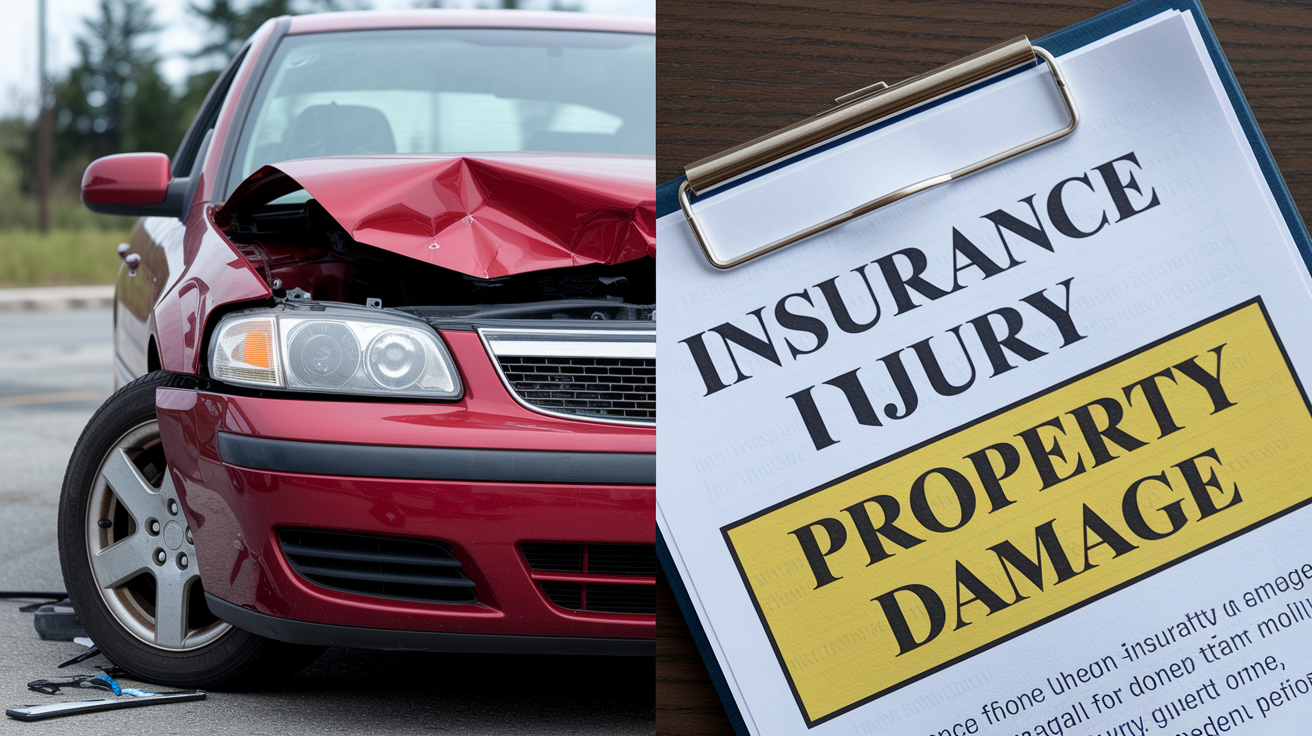
Liability insurance covers the other person’s losses when you cause a crash. It doesn’t pay your medical bills or fix your car. Bodily Injury (BI) liability pays for injuries you cause to other drivers, passengers, pedestrians, or cyclists. Property Damage (PD) liability pays to repair or replace other people’s vehicles, fences, mailboxes, or buildings you damage. Both parts include legal defense if someone sues you.
Most drivers think liability covers everything in a crash. It doesn’t. If you rear-end another car, BI liability pays the other driver’s hospital bill and lost wages. PD liability pays to fix their car. Your own broken windshield and whiplash? Not covered. You need collision coverage for your car and either medical payments (MedPay) or personal injury protection (PIP) for your injuries. Liability only works when you owe someone else money for harm you caused.
Policy limits set the maximum your insurer will pay per accident. If the other driver’s medical bills hit fifty thousand dollars and your BI limit is thirty thousand per person, your insurer pays thirty thousand. The remaining twenty thousand can become your personal debt. Understanding these boundaries helps you decide if state minimums are enough or if you need higher limits to protect your assets.
- Bodily Injury liability covers medical expenses, lost income, pain and suffering, and rehabilitation costs for people you injure.
- Property Damage liability pays for repairs, replacement vehicles, and damage to structures or personal property you hit.
- Legal defense coverage means your insurer handles lawsuits, attorney fees, and settlements on your behalf, up to your policy limit.
Bodily Injury Liability Coverage Explained

Bodily Injury liability kicks in the moment someone in the other vehicle gets hurt because of your driving. It pays for emergency room treatment, surgery, physical therapy, prescription medications, and follow-up care. If the injured person misses work, BI covers lost wages. If the injury causes long-term pain, disability, or emotional distress, the coverage includes pain and suffering damages. Your insurer also handles the legal defense if the injured party files a lawsuit, meaning they assign an attorney, negotiate settlements, and pay court costs, all within your policy limit.
Real dollar amounts show how quickly BI can be exhausted. A moderate injury that lands someone in the ER for observation, imaging scans, and a week of physical therapy might cost twenty-five thousand dollars. That fits comfortably under California’s minimum BI limit of thirty thousand per person. But a catastrophic injury involving multiple surgeries, months of rehab, permanent disability, and lost earning capacity can easily hit two hundred fifty thousand dollars or more. If your BI per-accident limit is sixty thousand, you’ve left one hundred ninety thousand unpaid, and the injured party can sue you personally for that shortfall.
Typical costs covered under Bodily Injury liability:
- Emergency medical treatment, ambulance transport, and hospital admission
- Surgery, anesthesia, imaging (X-rays, MRI, CT scans), and specialist consultations
- Rehabilitation services, physical therapy, and occupational therapy
- Prescription medications and medical equipment (crutches, wheelchair, prosthetics)
- Lost wages and future earning capacity if the injury prevents work
- Pain, suffering, emotional distress, and loss of quality of life
Property Damage Liability Coverage and Real-World Examples

Property Damage liability pays to fix or replace the other driver’s vehicle when you’re at fault. If their car is totaled, your PD coverage pays the actual cash value up to your limit. PD also covers damage to structures, like a fence you knock down, a mailbox you clip, or a storefront you crash into. Some policies include towing and storage fees for the damaged vehicle, but coverage details vary by insurer.
A minor fender bender might cause thirty-five hundred dollars in bumper and paint repairs. Your PD coverage handles that easily if your limit is fifteen thousand, which is California’s minimum. But if you hit a parked luxury SUV and cause twenty-two thousand in damage, and your PD limit is only fifteen thousand, the other driver can bill you for the remaining seven thousand. Multi-car pileups or crashes involving commercial vehicles can push PD costs even higher, sometimes into six figures when several vehicles are totaled.
| Damage Type | Typical Cost | Covered by PD Liability? |
|---|---|---|
| Minor bumper and paint repair | $3,500 | Yes, if within limit |
| Moderate collision damage (frame, airbags, electronics) | $12,000 | Yes, if within limit |
| Total loss of economy sedan | $18,000 | Partially, if $15k limit; $3k gap |
| Total loss of luxury SUV plus damaged fence | $45,000 | Partially, if $15k limit; $30k gap |
What Liability Insurance Does Not Cover After a Car Accident

Liability pays for the other person’s losses, not yours. Your own medical bills, prescription costs, rehab visits, and lost wages aren’t covered under your liability policy. If you need to repair or replace your car after the crash, liability does nothing for you. You need collision coverage for your vehicle and either medical payments or personal injury protection for your injuries. Plenty of drivers learn this gap the hard way after a wreck.
Liability also stops at your policy limit. If total damages are one hundred thousand dollars and your limit is fifty thousand, the insurer pays fifty thousand. The remaining fifty thousand becomes your personal responsibility unless you have umbrella coverage or other protections. Hit-and-run situations where the at-fault driver flees or can’t be identified fall outside liability coverage. You’d need uninsured motorist coverage to recover those losses. Policy lapses, excluded drivers, and intentional acts void coverage entirely, leaving you without protection even if you thought you were insured.
Common exclusions and non-covered items include:
- Your own medical expenses and lost income. Liability only covers people you injure, not yourself.
- Your vehicle repairs or replacement. Collision or comprehensive coverage is required for your car.
- Damages above your policy limit. You can be sued personally for the excess amount.
- Hit-and-run crashes. Unless you carry uninsured motorist coverage.
- Drivers excluded by name on your policy. If an excluded driver causes a crash, the insurer won’t pay.
- Intentional harm or criminal acts. Deliberate damage or DUI-related harm may not be covered.
Liability Insurance Limits and How They Work in an Accident

Liability limits are stated in a split format or a combined single limit. Split limits show three numbers, like 30/60/15, which means thirty thousand per person for bodily injury, sixty thousand total per accident for bodily injury, and fifteen thousand per accident for property damage. A combined single limit uses one number, such as one hundred thousand, to cover all bodily injury and property damage in a single accident. Split limits are more common in personal auto policies. Combined single limits often show up in commercial or high-value policies.
Once your insurer pays up to the limit, your financial responsibility begins. If two people are injured in a crash you caused and their combined medical bills reach eighty thousand dollars, but your per-accident BI limit is sixty thousand, the insurer pays sixty thousand total. The remaining twenty thousand can lead to lawsuits, wage garnishment, or settlement negotiations. Higher limits reduce this personal exposure. If your limit had been one hundred thousand per accident, the entire eighty thousand would be paid, and you’d owe nothing out of pocket for that claim.
| Limit Structure | Example | How It Pays |
|---|---|---|
| Split limits | 30/60/15 | $30k max per person BI, $60k max per accident BI, $15k max PD per accident |
| Combined single limit | $100,000 | $100k total for all BI and PD in one accident, allocated as needed |
| Higher split limits | 100/300/50 | $100k per person BI, $300k per accident BI, $50k PD |
How Liability Insurance Applies to Fault and Comparative Negligence

Liability pays only when you’re legally at fault. Fault is determined by police reports, witness statements, traffic camera footage, and physical evidence at the scene. If the other driver ran a red light and hit you, their liability policy should pay your damages. If you turned left into oncoming traffic and caused a collision, your liability policy pays the other driver’s losses. Disputes over fault are common, and insurers assign percentages when both drivers share responsibility.
In states using comparative negligence rules, your recovery is reduced by your percentage of fault. If total damages are one hundred thousand dollars and you’re found twenty-five percent at fault, you can recover seventy-five thousand from the other driver. California, New York, and Illinois all use versions of comparative fault. Illinois bars recovery if you’re more than fifty percent at fault. New York allows recovery even if you’re ninety-nine percent at fault, but your award drops proportionally. Understanding your state’s rule helps set realistic expectations for settlement negotiations.
Key fault and negligence principles:
- Fault is proven through police reports, photos, witness statements, dashcam video, and accident reconstruction.
- Comparative negligence reduces your payout by your share of fault. If you’re 30% at fault for $50,000 in damages, you recover $35,000.
- Some states bar recovery if you’re more than 50% at fault; others allow partial recovery at any fault level.
- Liability insurers often dispute fault to minimize payouts. Documented evidence strengthens your claim.
Uninsured and Underinsured Motorist Coverage Compared to Liability
Uninsured Motorist (UM) coverage pays when the at-fault driver has no insurance at all or when they flee the scene in a hit-and-run. Underinsured Motorist (UIM) coverage kicks in when the at-fault driver’s liability limits are too low to cover your damages. For example, if the other driver’s BI limit is thirty thousand and your medical bills total sixty thousand, their liability pays thirty thousand. Your UIM coverage, if you carry it, pays the remaining thirty thousand, up to your UIM limit. Neither UM nor UIM are the same as liability. Liability protects other people when you cause a crash. UM and UIM protect you when someone else causes a crash but lacks adequate coverage.
Many states require UM and UIM as part of every auto policy. Illinois and New York both mandate UM coverage equal to your liability limits. California offers it but doesn’t require acceptance. If you reject UM/UIM in writing, you’re exposed to significant risk if an uninsured driver hits you. Even if you carry high liability limits to protect others, those limits do nothing for you when you’re the victim. UM and UIM fill that gap.
When UM or UIM applies instead of liability:
- The at-fault driver has no auto insurance and can’t pay your claim.
- The at-fault driver flees the scene and can’t be identified (hit-and-run).
- The at-fault driver’s liability limits are exhausted and your damages exceed those limits.
- The at-fault driver’s insurer denies the claim due to a lapsed policy or coverage exclusion.
- You’re injured by an uninsured or underinsured driver while a pedestrian or cyclist.
Steps to Take After a Car Accident to Support a Liability Claim
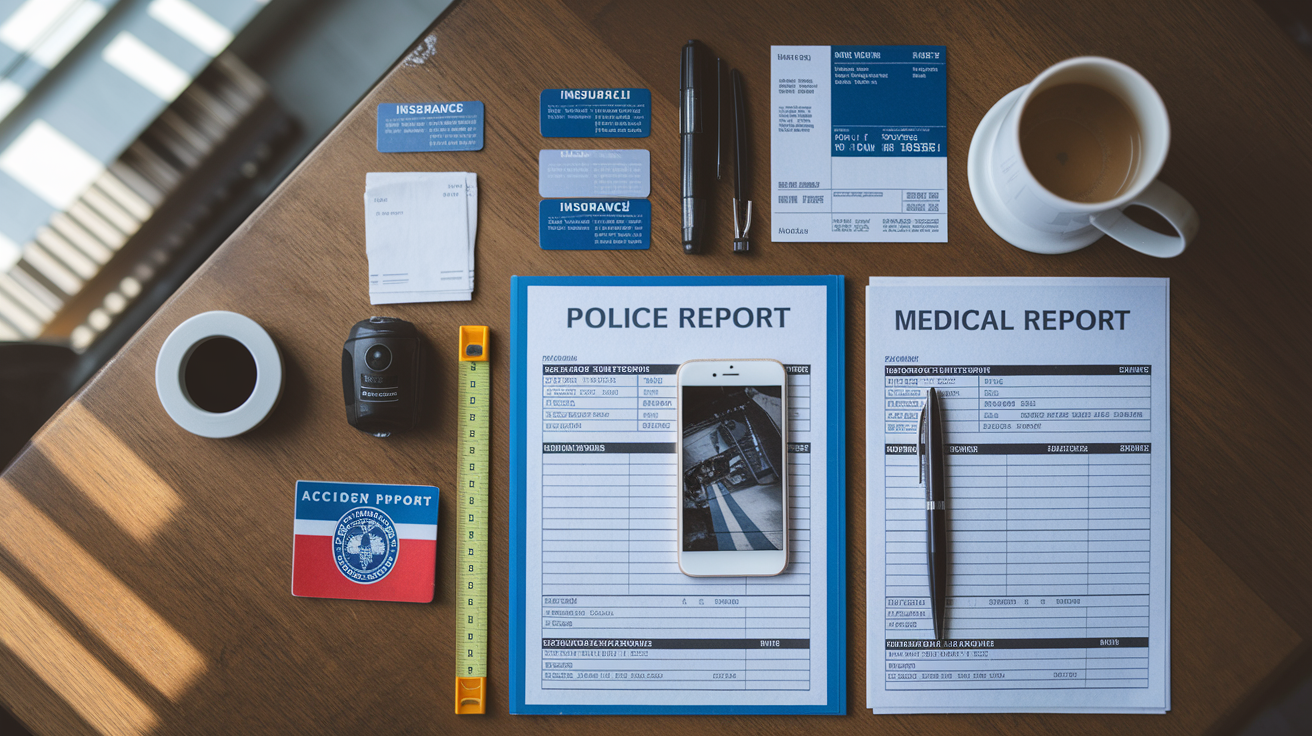
Call 911 immediately, even if the crash seems minor. A police report establishes an official record of the accident, including officer observations, statements from drivers, and preliminary fault assessments. If anyone is injured, request an ambulance. Delayed symptoms like whiplash, concussion, or internal bleeding often appear hours or days later, so see a doctor within twenty-four hours even if you feel fine. Medical records tie your injuries to the accident and create a documented timeline insurers rely on during claim evaluation.
Photograph the scene from multiple angles before vehicles are moved. Capture all vehicle damage, skid marks, traffic signals, road conditions, debris, and visible injuries. Record the other driver’s name, phone number, license plate, insurance company, and policy number. Collect contact information from witnesses. If you have a dashcam, preserve the footage immediately. Avoid admitting fault or speculating about what happened. Stick to factual descriptions when speaking with police, insurers, and witnesses. Statements like “I didn’t see them” or “I’m so sorry” can be used against you in fault determinations.
Report the accident to your insurer as soon as possible. Provide only the facts: date, time, location, parties involved, and a brief description of what occurred. Don’t agree to recorded statements with the other driver’s insurer without consulting an attorney. Keep a recovery journal noting pain levels, medical appointments, missed work days, and activity limitations. Organize all receipts, repair estimates, medical bills, and employer documentation of lost wages. Prompt, thorough documentation protects your claim and speeds up settlement negotiations.
- Call 911 and request police and medical response. A police report and medical evaluation create official records.
- Take photos and videos. Capture all damage, the scene layout, road conditions, and visible injuries.
- Collect driver and witness information. Names, phone numbers, insurance details, and license plates.
- Seek immediate medical care. Even if you feel fine; injuries can surface later.
- Preserve dashcam or surveillance footage. Download and back up video before it’s overwritten.
- Report to your insurer with factual details. Avoid speculation or admitting fault.
- Organize and save all documents. Medical bills, repair estimates, receipts, police reports, and correspondence.
How Liability Claims Are Evaluated, Negotiated, or Disputed

Insurance adjusters evaluate liability claims by reviewing police reports, medical records, repair estimates, photos, and witness statements. They calculate how much the insurer should pay based on documented damages, policy limits, and fault assessments. Adjusters work for the insurance company, and their goal is to settle claims quickly and cheaply. They may delay responses, request excessive documentation, dispute fault percentages, or make lowball settlement offers hoping you’ll accept out of frustration or financial pressure.
Negotiation begins when you submit a demand letter with itemized damages and supporting evidence. The adjuster counters with their own valuation, often significantly lower. Back-and-forth offers continue until both sides agree or negotiations break down. If the insurer denies the claim without a valid reason, disputes clear fault, or refuses a fair settlement, you can file a complaint with your state insurance department or pursue litigation. Legal defense is included under liability policies, so if you’re sued, your insurer assigns an attorney and covers court costs up to your policy limit.
Settlement offers depend on how well you document your case. Strong claims include police reports showing clear fault, itemized medical bills with treatment notes, employer letters confirming lost wages, and before-and-after photos of injuries and vehicle damage. Weak claims lack documentation, have gaps in medical treatment, or include inconsistent statements. If you accept a settlement, you typically sign a release waiving future claims related to that accident. Read all settlement agreements carefully and consider consulting an attorney before signing, especially if injuries are severe or long-term effects are uncertain.
| Claim Decision Factor | Impact on Claim | Typical Evidence Needed |
|---|---|---|
| Clear fault determination | Higher payout, faster settlement | Police report, dashcam video, witness statements |
| Documented medical treatment | Stronger injury claim, higher pain/suffering award | Hospital records, therapy notes, prescription receipts |
| Consistent statements | Reduces insurer disputes, speeds negotiation | Police report, your written account, witness accounts |
| Policy limits and coverage gaps | Limits maximum payout, may require UM/UIM or lawsuit | Insurance declarations page, coverage confirmation |
Choosing the Right Liability Coverage Based on Your Risk and Budget

State minimum liability limits are almost never enough. A serious injury, totaled luxury vehicle, or multi-car pileup can exceed minimums in minutes, leaving you personally liable for the shortfall. If you own a home, have savings, or earn a steady income, higher limits protect those assets from lawsuits. Raising your BI limit from 30/60 to 100/300 often costs less than twenty dollars per month, a small price compared to the risk of a six-figure judgment against you.
Collision and comprehensive coverage fill gaps liability leaves open. Collision pays for your vehicle repairs regardless of fault. Comprehensive covers theft, vandalism, weather damage, and animal strikes. Medical payments or personal injury protection covers your medical bills and lost wages after a crash, no matter who caused it. Bundling these coverages with higher liability limits gives you all-around protection and often qualifies you for multi-policy discounts. Review your policy annually and adjust limits as your assets, driving habits, and risk exposure change.
Practical tips to increase liability limits affordably:
- Raise your deductibles. Higher collision and comprehensive deductibles lower your premium, freeing budget for higher liability limits.
- Bundle policies. Combining auto and home insurance with one carrier usually earns a discount.
- Ask about usage-based or telematics programs. Safe-driving discounts can offset the cost of higher limits.
- Review coverage annually. Drop coverages you don’t need (like collision on a car worth under $2,000) and redirect savings to liability.
- Consider umbrella insurance. A one-million-dollar umbrella policy costs around two hundred to three hundred dollars per year and extends liability protection beyond your auto limits.
Final Words
You now know what liability insurance does at the scene: it pays other people’s medical bills, covers repairs or replacement for their property, and handles legal defense — but only up to your policy limits.
We also covered common exclusions, how limits and fault change payouts, when UM/UIM matters, and the simple steps to preserve a claim.
If you’re asking what does liability insurance cover in a car accident, use the checklist from this post: check limits, document the crash, and consider raising coverage. Small changes can protect you.
FAQ
Q: What will liability insurance not cover, and does liability cover if someone hits me?
A: Liability insurance will not cover your own medical bills or car repairs when you’re at fault; it pays others’ losses and legal defense. If someone else hits you, their liability should cover you unless they’re uninsured.
Q: What does $25,000 bodily injury liability per person mean?
A: The $25,000 bodily injury liability per person means your insurer will pay up to $25,000 for one injured person’s medical costs and related losses when you’re at fault, subject to any per-accident limits.
Q: Is it better to have a $500 deductible or $1000?
A: Choosing a $500 versus $1,000 deductible depends on your cash flow: a $1,000 deductible usually lowers your premium but raises out-of-pocket after a claim; pick what you can afford to pay immediately.