


What if agreeing to pay more after a crash could shave hundreds off your car insurance bill?
Raising your deductible means you pay more out of pocket when you file, and your insurer usually lowers your premium.
Many drivers cut their yearly bill 10 to 30 percent by moving from $500 to $1,000, often $100 to $200 a year.
The real question is whether those savings beat the risk of a surprise repair or total loss.
Read on for breakeven math, questions to ask, and quick checks to see if a higher deductible fits your budget and driving habits.
How Raising Your Car Insurance Deductible Impacts Your Premium
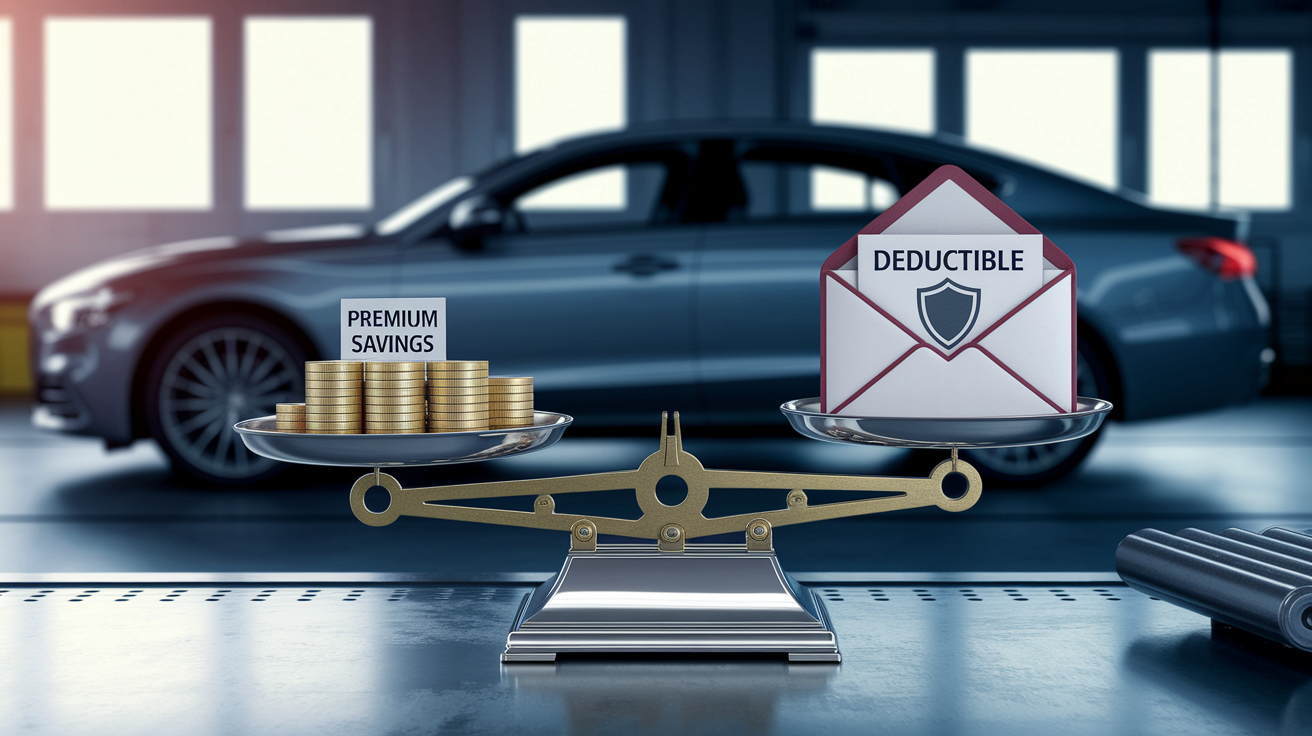
Your deductible is what you pay before your insurer steps in to cover the rest. Raise that number, and you’re taking on more risk upfront. The insurer rewards you with a lower bill. Most drivers cut their premiums by 10 to 30 percent when they bump up from a lower deductible to a higher one. Moving from $500 to $1,000 typically saves somewhere between $100 and $200 a year, though it depends on your insurer, state, and driving profile.
The math is simple, but the outcome varies. Some companies are more generous with deductible discounts than others. Location matters too. Urban drivers in pricey repair markets often save more in raw dollars than rural drivers. Your age, claims track record, and what you drive all play a part in how much you’ll actually pocket. The real question is whether what you save in premiums makes sense against what you’d owe if you had to file tomorrow.
Here’s a quick breakeven check. Let’s say you save $150 a year by going from $500 to $1,000. That’s an extra $500 out of pocket if you file a claim. Divide 500 by 150, and you get about 3.3 years. Go more than three years without filing collision or comprehensive? You come out ahead. File sooner? You’ve paid more than you saved.
Main financial effects when you raise your deductible:
Lower premiums because you’re covering more risk yourself.
Higher out-of-pocket cost when you actually file a claim.
Breakeven window that shifts based on how often you file and how much you save each year.
Typical Premium Savings at Different Deductible Levels
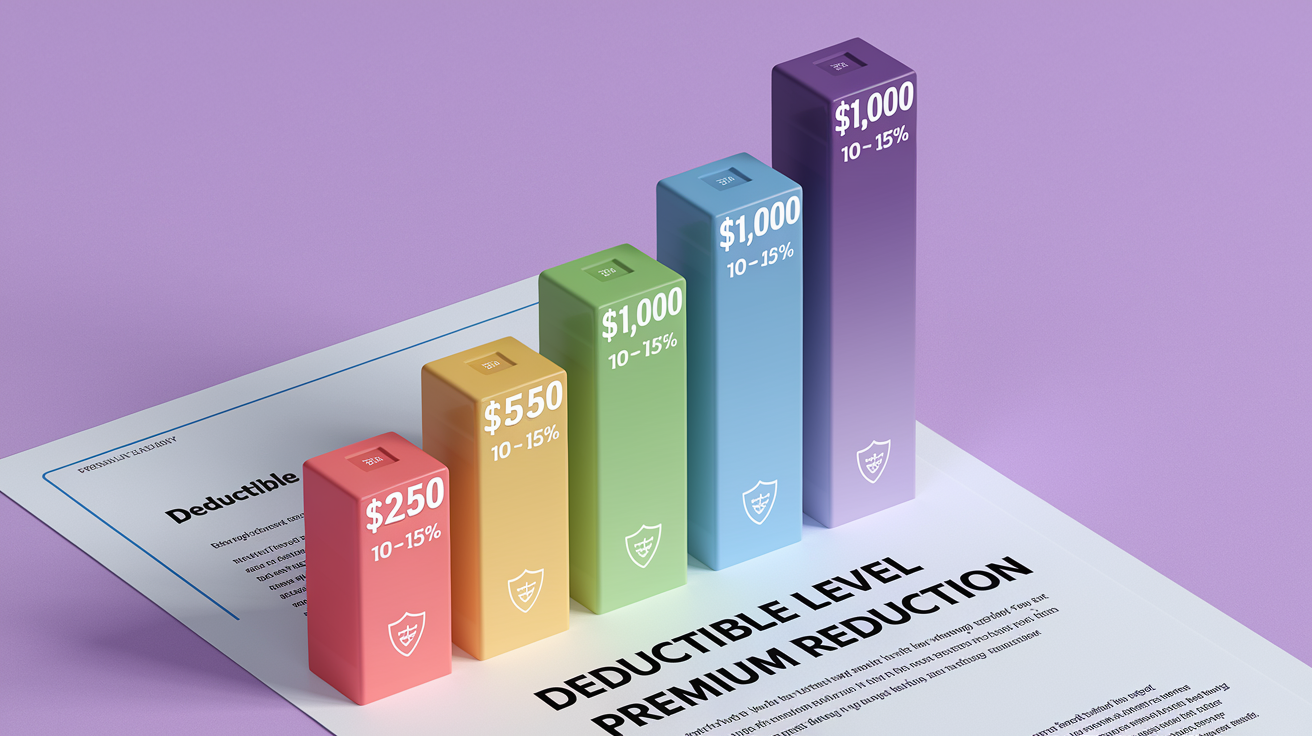
Premium cuts follow a pretty clear pattern. Higher deductible, lower bill. Most insurers offer standard steps like $250, $500, $1,000, and sometimes $1,500 or $2,000. Each jump up trims a chunk off your collision and comprehensive costs.
| Deductible Level | Approx. Premium Reduction vs. $250 | Notes |
|---|---|---|
| $250 | Baseline (0%) | Highest premium; lowest out-of-pocket risk. |
| $500 | 10–15% | Moderate savings; common middle ground. |
| $1,000 | 20–30% | Bigger savings; you’ll need solid emergency savings. |
| $1,500+ | 30–40% | Max savings; only realistic if your vehicle value and budget support it. |
These are ballpark numbers. Your real savings hinge on your state’s rules, your insurer’s pricing, and your personal risk profile. A clean-record driver in a low-cost state might see a smaller dollar drop than a higher-risk driver in an expensive market. Insurers use different pricing models, so always grab quotes at multiple deductible levels before you commit. What looks like a 25 percent cut on paper could mean $80 a year for one person and $250 for another, even if both start with identical premiums.
Factors That Determine Whether Raising Your Deductible Is Safe

Raising your deductible only works if you can actually pay it when something happens. Financial experts usually suggest keeping liquid savings equal to at least your deductible, closer to $1,000 to $2,000 minimum. Hailstorm dents your hood? Parking lot fender bender cracks your bumper? You’ll need that cash ready. Without it, you might delay repairs, borrow money, or skip the claim and keep driving a damaged car.
Your driving history and daily routine count just as much as your bank account. Two accidents in the past three years? You’re more likely to file another one soon. Long commute through heavy traffic or frequent night driving in bad weather also bumps up your risk. Work from home, drive under 7,500 miles a year, and park in a secure garage? Your odds of needing a claim drop, so a higher deductible becomes less risky.
Then there’s household comfort with risk. Some families are fine self-insuring smaller repairs and using insurance only for total loss situations. Others want predictable costs even if it means paying more monthly. If a surprise $1,000 repair would cause real financial pain, keep your deductible low. If you can absorb that without touching retirement savings or credit cards, a higher deductible makes sense.
Questions to ask before you raise it:
Can I pay the full deductible today without borrowing or draining essential savings?
Have I filed collision or comprehensive claims in the last three years, or do I drive in conditions that make claims more common?
Does my household have backup transportation if my car’s in the shop and I can’t afford immediate repairs?
Am I comfortable treating my deductible as self-insurance for minor stuff and only filing bigger claims?
Cost-Benefit Examples for Realistic Driver Situations
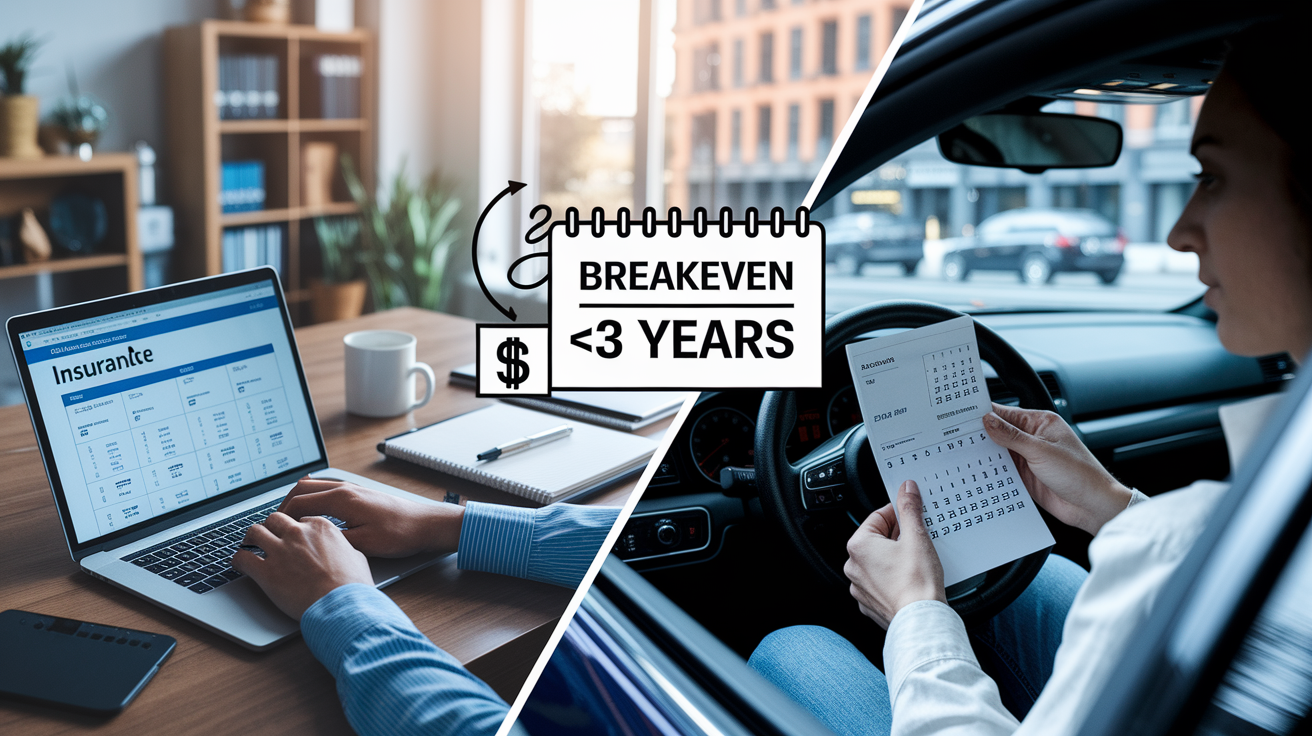
A low-risk driver who works remotely and logs 5,000 miles a year might save $180 annually by moving from $500 to $1,000. If they file a claim once every six years on average, the breakeven looks solid. Six years of savings total $1,080. The extra $500 paid in a single deductible still leaves them $580 ahead. For that driver, the higher deductible works.
Now picture someone with two speeding tickets and a recent at-fault accident who commutes 50 miles daily through heavy traffic. Same $180 annual savings by raising the deductible, but way higher odds of filing. Claim happens every two years? They pay an extra $500 twice in four years, $1,000 total, while saving only $720 in premiums. The higher deductible costs more than it saves.
Urban drivers deal with different risks than rural ones. Dense parking, higher theft rates, constant stop-and-go traffic. More door dings, vandalism, rear-end collisions. A city driver might see the same premium cut as a rural driver but file claims more often, making the higher deductible a worse bet. Repair costs shift too. Urban body shops usually charge more per hour, so even minor damage can push estimates above your deductible, leaving you to cover the full bill.
Quick takeaways from these scenarios:
Low annual mileage and clean records make higher deductibles safer.
Frequent commuters or drivers with recent claims should think twice.
Urban vs. rural affects both accident odds and repair costs, which changes the breakeven window.
Lender and Leasing Restrictions That Limit Deductible Changes
Finance or lease your car? Your contract almost always requires collision and comprehensive. Most lenders and leasing companies also cap how high your deductible can go. They want to protect their asset, so they set limits to make sure you’ll file and repair damage instead of driving around with a totaled or heavily damaged car because the deductible’s too expensive to pay.
Typical caps fall between $500 and $1,000. Some lenders allow up to $1,500, but that’s less common. Before you call your insurer about raising your deductible, pull out your loan or lease paperwork and check the insurance requirements section. Contract caps deductibles at $1,000 and you’re eyeing $1,500? You’re stuck until you pay off the loan or the lease ends.
| Financing Type | Typical Deductible Limits | Reason |
|---|---|---|
| Auto Loan | $500–$1,000 (sometimes $1,500) | Lender protects loan collateral by keeping repairs affordable. |
| Lease Agreement | $500–$1,000 (rarely higher) | Leasing company owns vehicle and wants prompt, full repairs. |
| Paid-Off Vehicle | No limits (your choice) | You own it; insurer and state rules are your only constraints. |
How Vehicle Age, Value, and Condition Affect Deductible Decisions
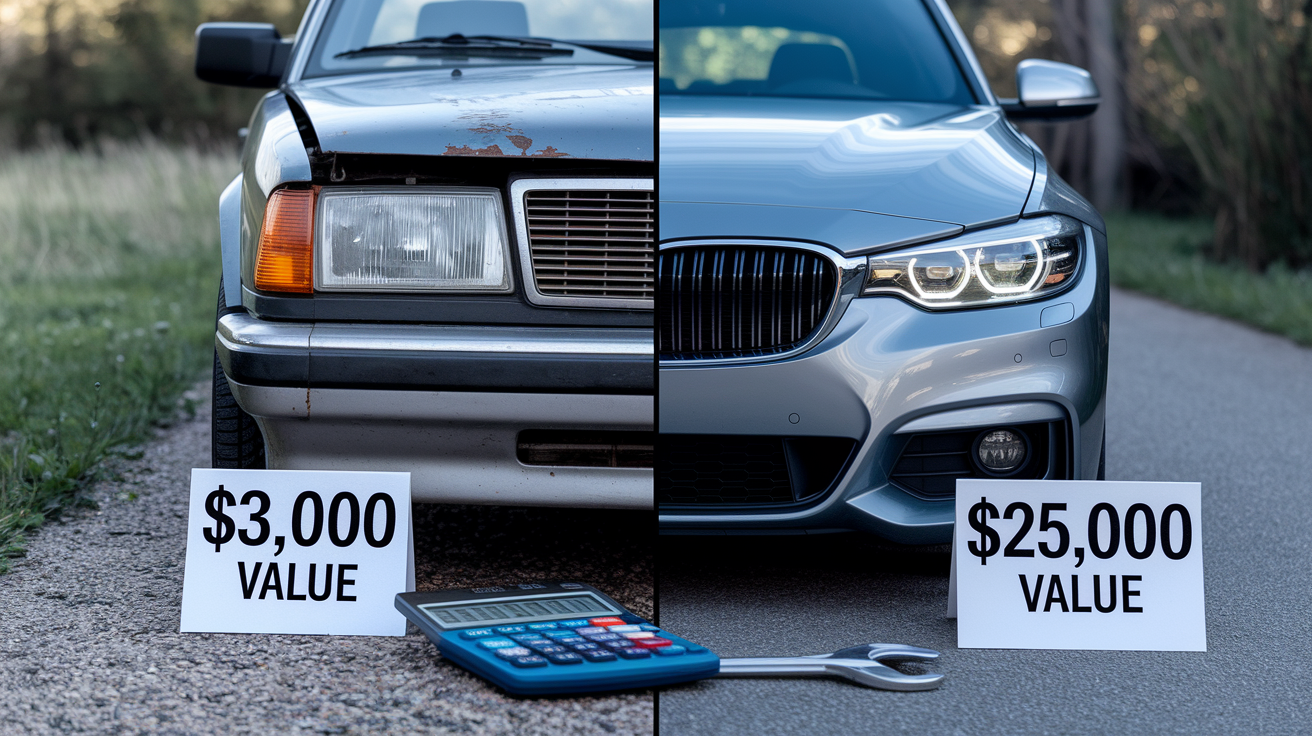
Older car worth $3,000 with a $1,000 deductible? Narrow gap. Repairs cost $2,500, your insurer pays only $1,500 after you cover the deductible. At some point, low vehicle value plus high deductible makes collision and comprehensive not worth keeping. Many drivers drop those coverages entirely once a car dips below about $3,000 to $4,000, rather than paying premiums for coverage that won’t deliver much in a claim.
Newer, higher-value vehicles justify keeping collision and comprehensive, and the deductible becomes a real choice. Car’s worth $25,000? A $1,000 deductible still leaves $24,000 of potential payout. The math supports paying for coverage and picking a deductible that balances premium savings with out-of-pocket risk. Condition matters too. Well-maintained car with no pre-existing damage? More likely the insurer pays close to book value in a total-loss claim. Car with dents and mechanical issues? Valued lower, which shrinks the benefit of low deductibles.
Signs your low-value vehicle might not justify collision or comprehensive at any deductible:
Market value is less than twice your annual collision and comprehensive premiums.
Repair estimates for common damage exceed half the car’s total value.
You’ve got enough savings to replace the vehicle outright if it’s totaled or stolen.
A Simple Framework to Decide Your Ideal Deductible

Picking the right deductible doesn’t need a spreadsheet. Just a clear process. Start by finding out what you’d actually save. Call your insurer or log into your account and request quotes at $250, $500, $1,000, and $1,500. Write down the annual premium for each and note the savings as you move up. The dollar difference between your current deductible and each higher tier is your potential annual savings.
Four steps to follow:
Check your emergency savings. Make sure you’ve got cash equal to the highest deductible you’re considering, plus a small buffer. Can’t cover a $1,000 deductible today without borrowing? Don’t choose it.
Review your accident risk. Count how many collision or comprehensive claims you’ve filed in the past five years. Add up tickets, at-fault accidents, and your annual mileage. High numbers mean higher risk, which points toward lower deductibles.
Compare premiums and calculate breakeven. Subtract the lower-deductible premium from the higher one to find annual savings. Divide the deductible increase by the annual savings. Result is under three years and you rarely file claims? Raising the deductible probably works.
Pick a breakeven point you’re comfortable with. Rather break even in two years? Choose a smaller deductible bump. Fine waiting four years to come out ahead? Go higher. There’s no universal right answer, just what fits your budget and comfort with risk.
Check your deductible every year when your policy renews. Your finances, driving patterns, and vehicle value all shift over time. A deductible that worked two years ago might not fit today. Set a reminder to review your coverage, run fresh quotes, and adjust if your situation’s changed. Annual check-ins keep your deductible lined up with your real life, not outdated guesses.
Final Words
in the action we showed how raising your deductible usually cuts premiums, gave break-even math, compared deductible levels, covered lender limits, and offered a simple four-step decision plan.
If you have $1,000–$2,000 in emergency savings and a clean driving record, a higher deductible often makes sense. If not, sticking with a lower deductible may be safer.
Next step: get a same-coverage quote, run the break-even math, and ask yourself: should I raise my car insurance deductible? You can test it and feel confident about the choice.
FAQ
Q: Is it better to have a $500 deductible or $1000? Is it better to have a higher deductible on your car insurance? Is a $500 deductible high?
A: Choosing between a $500 and $1,000 deductible—or whether a higher deductible is better—depends on whether you want lower premiums or lower out-of-pocket costs. If you can cover $1,000, a higher deductible often cuts premiums $100–$200 a year; $500 is moderate.
Q: Is a $2000 car deductible a bad idea?
A: A $2,000 car deductible is risky if you can’t afford $2,000 after a crash. It can lower your premium more, but only pick it if you have a solid emergency fund and low accident risk.