


Think “comprehensive” means your insurer will fix anything that happens to your car?
Not quite.
Comprehensive covers non-collision damage — theft, vandalism, fire, hail, falling trees, and animal strikes like hitting a deer.
It pays based on your car’s pre-damage value, minus your deductible (what you pay before insurance pays).
In this post you’ll learn exactly what comprehensive does and doesn’t cover, how claims and payouts work, and when the coverage is worth keeping.
Ready to avoid surprise denials and pick the right deductible? Read on.
Core Coverage Breakdown for Comprehensive Car Insurance

Comprehensive car insurance covers damage to your vehicle from stuff that isn’t a collision you caused. Some policies call it “other than collision” coverage. Stolen car? Vandalism? Fire? Hail the size of golf balls? That’s when comprehensive kicks in. The insurer settles based on what your car was worth before the damage (Actual Cash Value), then subtracts your deductible.
What’s covered is pretty broad. Natural disasters, sure. But also things like hitting a deer or a tree falling on your parked car during a storm. Some policies have separate glass deductibles, sometimes as low as zero, for windshield chips and cracks. A $100 windshield chip might cost you nothing out-of-pocket if you’ve got a glass waiver.
Here’s how a claim works: insurer calculates repair cost, subtracts your deductible. Hail damages your car for $3,500 and your deductible’s $500? They pay $3,000. If the damage is bad enough that fixing it costs more than the car’s worth, they’ll usually total it and pay you the Actual Cash Value minus your deductible.
Comprehensive typically covers:
- Theft and attempted theft
- Vandalism (keying, broken windows, slashed tires)
- Fire or explosion
- Weather damage (hail, wind, flood, hurricanes)
- Falling trees, branches, or debris
- Animal collisions (deer and other wildlife)
- Glass and windshield damage
- Riot or civil disturbance damage
Key Differences Between Comprehensive Coverage and Collision Coverage

Both comprehensive and collision are “physical damage” coverages that fix your car, just for different things. Comprehensive handles non-collision events. Stuff that happens when the car’s parked or when you hit an animal. Collision covers crashes you cause or help cause. Backing into a pole, rear-ending someone, rolling over in a single-car accident.
Neither one pays for damage you do to someone else’s property or their medical bills. That’s liability. Comprehensive also doesn’t cover your own medical expenses from a crash. That’s personal injury protection or medical payments, depending on your state and policy.
| Coverage Type | What It Pays For |
|---|---|
| Comprehensive | Damage from theft, vandalism, weather, fire, falling objects, animal strikes, and other non-collision events |
| Collision | Damage from hitting another vehicle, object, or rolling over (accidents you cause or share fault in) |
| Liability | Bodily injury and property damage you cause to others; does not repair your own vehicle |
Incidents Not Covered Under Comprehensive Car Insurance
Comprehensive doesn’t cover everything. Wear and tear? Mechanical breakdowns? Routine maintenance? Never included. Engine seizes because you skipped oil changes? Transmission fails from age? Those are maintenance issues, not covered events. Same goes for rust, fading paint, or worn-down tire tread.
Personal belongings inside the car aren’t covered by your auto policy either. Someone breaks in and steals your laptop, phone, or gym bag? You’ll file under your homeowner or renter insurance, not comprehensive. A lot of drivers think their auto policy covers everything in the vehicle. It doesn’t. Just the car itself and permanently installed equipment.
Comprehensive also excludes damage from intentional acts, illegal activity, or using the vehicle in prohibited ways. Crash while racing or driving drunk? Intentionally damage your own car? Claim gets denied. Use your personal vehicle for commercial deliveries or rideshare without the right endorsement? Damage during that activity might not be covered.
Common comprehensive exclusions:
- Mechanical or electrical breakdowns
- Normal wear and tear or aging
- Personal items and belongings inside the car
- Intentional damage or fraud
- Racing, illegal activity, or prohibited use
- Damage during commercial use without endorsement
Deductibles, Payouts, and How Insurers Calculate Comprehensive Claims

Your comprehensive deductible is what you pay out-of-pocket before the insurer covers the rest. Common options are $250, $500, and $1,000. Pick a higher deductible and your premium drops. Raising it from $250 to $1,000 can cut your comprehensive premium by roughly 10 to 30 percent, depending on the insurer and your state. The tradeoff? You pay more when you file a claim.
When you file, the insurer pays the repair cost or the car’s Actual Cash Value (whichever’s less), then subtracts your deductible. Repair costs $4,500 and your deductible’s $500? Insurer pays $4,000. If the car’s worth $8,000 and the repair estimate is $6,800 (85 percent of its value), the insurer might total it and pay you $8,000 minus your $500 deductible. That’s $7,500.
The total loss threshold varies by insurer and state but usually falls between 70 and 80 percent of the car’s Actual Cash Value. Once they declare a total loss, you’ll typically sign over the title in exchange for the settlement check. Still owe money on a car loan? The check usually goes to your lender first. You get any leftover amount, or you owe the difference if the payout doesn’t cover the loan balance.
Total loss valuation process:
- Insurer inspects the damage and gets repair estimates.
- If repair costs exceed the total loss threshold (often 70 to 80% of ACV), the claim becomes a total loss.
- Insurer calculates Actual Cash Value based on the car’s make, model, age, mileage, and condition before the loss.
- Settlement equals ACV minus your deductible. If financed, the lender receives payment first and you get the remainder.
How a Comprehensive Car Insurance Claim Works

Filing a comprehensive claim starts with notifying your insurer as soon as possible after the incident. Most insurers let you start a claim online, through an app, or by phone. You’ll give basic info about what happened, when, and where. If the damage involves theft or vandalism, most insurers want a police report. Call the non-emergency line, file a report, and get the report number to give your insurer.
Next, document the damage. Take clear, timestamped photos from multiple angles. Car got stolen? Note the time and location it was last seen. Tree fell on it? Photograph the tree and the car together. More evidence upfront means the claim moves faster. The insurer assigns a claims adjuster, usually within 24 to 72 hours, who reviews your policy and the loss details.
The claim process typically follows these steps:
- Report the incident to your insurer and provide initial details (date, time, location, what happened).
- File a police report if required for theft, vandalism, or hit and run incidents. Obtain the report number.
- Submit photos, repair estimates, or other documentation requested by the insurer.
- An adjuster inspects the damage in person or reviews submitted photos and estimates.
- Insurer authorizes repairs at an approved shop or issues a total loss settlement offer.
- If repairing, the shop completes work (typically 3 to 14 days depending on parts availability). You pay your deductible at pickup.
- If totaled, you sign over the title and receive the ACV payout minus your deductible (settlement usually within 7 to 30 days).
Cost of Comprehensive Insurance and What Affects Your Premium

Comprehensive coverage usually adds between $100 and $600 per year to a full auto insurance policy, depending on the vehicle, location, and driver. It’s separate from collision and liability, so you’ll see a line item for comprehensive on your declarations page. In many cases, comprehensive is cheaper than collision because the risk of weather damage or theft is often lower than the risk of an accident.
Several things affect what you’ll pay. Vehicle value is the biggest one. Insuring a $40,000 SUV costs more than a $10,000 sedan because the potential payout is higher. Your ZIP code matters, too. Live in an area with high theft rates, frequent hail, or flooding? Your comprehensive premium will be higher. Parking on the street instead of in a garage can also raise your rate.
Your deductible choice, driving record, claims history, and mileage all play a part. Installing anti-theft devices like an immobilizer or GPS tracker can reduce your comprehensive cost by 5 to 20 percent with many insurers. Some states let insurers use your credit score or insurance score as a factor, which can raise or lower your rate.
Main cost drivers for comprehensive premiums:
- Vehicle value, make, and model (luxury and high-theft models cost more)
- ZIP code crime rates, weather risk, and flood/hail exposure
- Chosen deductible ($250 vs $1,000 can change premium by 10 to 30%)
- Anti-theft devices and security features (immobilizer, GPS, alarm)
- Driving record, claims history, and annual mileage
When Comprehensive Coverage Is Recommended

Comprehensive is optional by law but often required by your lender or leasing company. Finance or lease a car? The bank or lessor will typically mandate both comprehensive and collision coverage until the loan is paid off or the lease ends. That requirement is spelled out in your loan or lease contract and protects the lender’s interest in the vehicle.
Even if you own the car outright, comprehensive is usually smart if the vehicle has real value or if you live in an area with high theft, severe weather, or wildlife collision risk. If replacing the car out-of-pocket would cause financial hardship, comprehensive gives you a safety net. But if your car’s worth only a few thousand dollars and your deductible is $1,000, the coverage might not be worth it. You’d pay little or nothing after the deductible on a total loss.
Comprehensive is recommended in these scenarios:
- Your car is financed or leased (usually required by lender/lessor).
- Your vehicle is worth more than a few thousand dollars and you can’t afford to replace it yourself.
- You live in a high-theft area, flood-prone zone, or region with frequent hail or severe storms.
- You drive in areas with high deer or wildlife collision rates and repair costs would strain your budget.
Optional Add-Ons and Enhancements to Comprehensive Protection
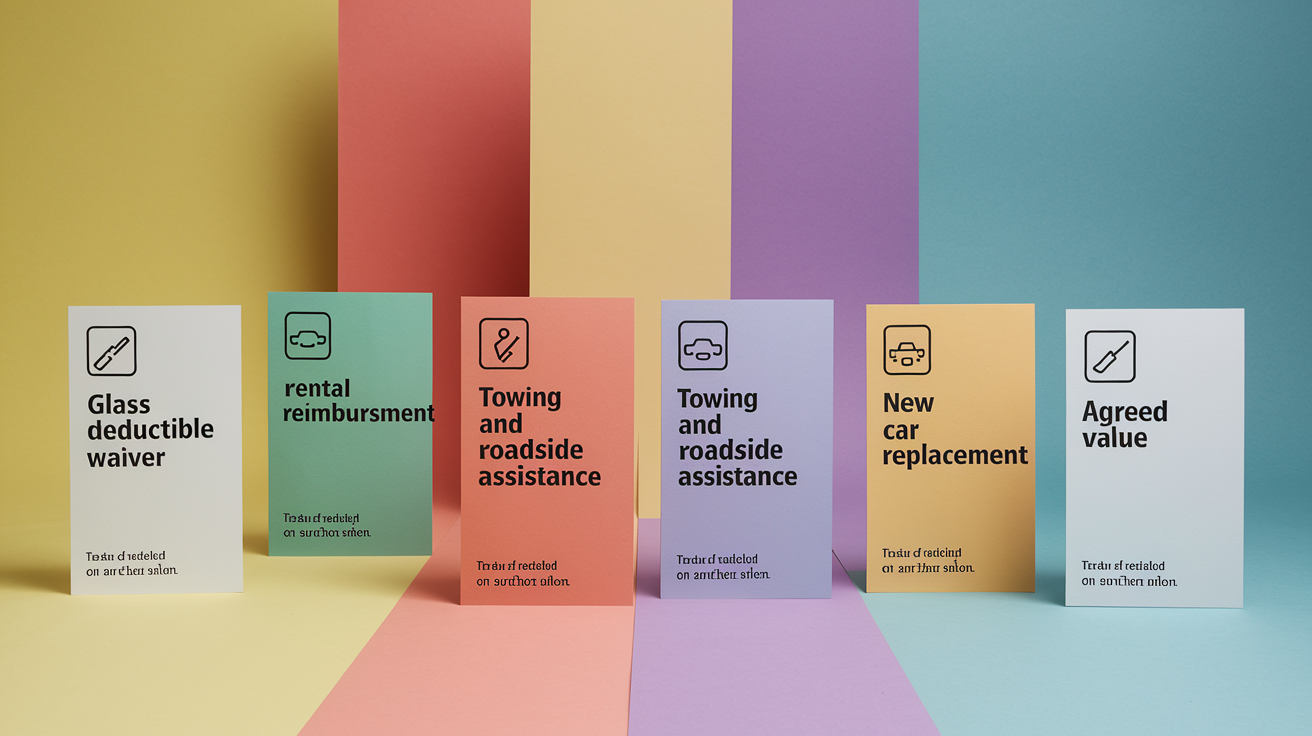
Many insurers offer endorsements and add-ons that expand or refine your comprehensive coverage. A glass deductible waiver is common. It sets your deductible to $0 for windshield repairs or replacements, which can save you $200 to $600 on a single claim. The endorsement typically costs an extra $0 to $50 per year and is popular in states with a lot of gravel roads or frequent windshield damage.
Rental reimbursement is another useful one. It pays a daily amount (often $20 to $50 per day, up to a limit) for a rental car while your vehicle is in the shop after a covered comprehensive claim. Towing and roadside assistance endorsements are also available, usually costing $5 to $15 per month, and cover tows, jump starts, lockouts, and flat tires.
If you have a new car, ask about new car replacement coverage. This endorsement pays the cost of a brand new replacement vehicle (not Actual Cash Value) if your car is totaled within the first one or two model years or within a certain mileage threshold, often 12,000 to 24,000 miles. For classic or custom cars, agreed value coverage locks in a pre-agreed payout amount instead of relying on depreciated Actual Cash Value, which can be too low for rare or restored vehicles.
Common Comprehensive Claim Scenarios and Real-World Examples
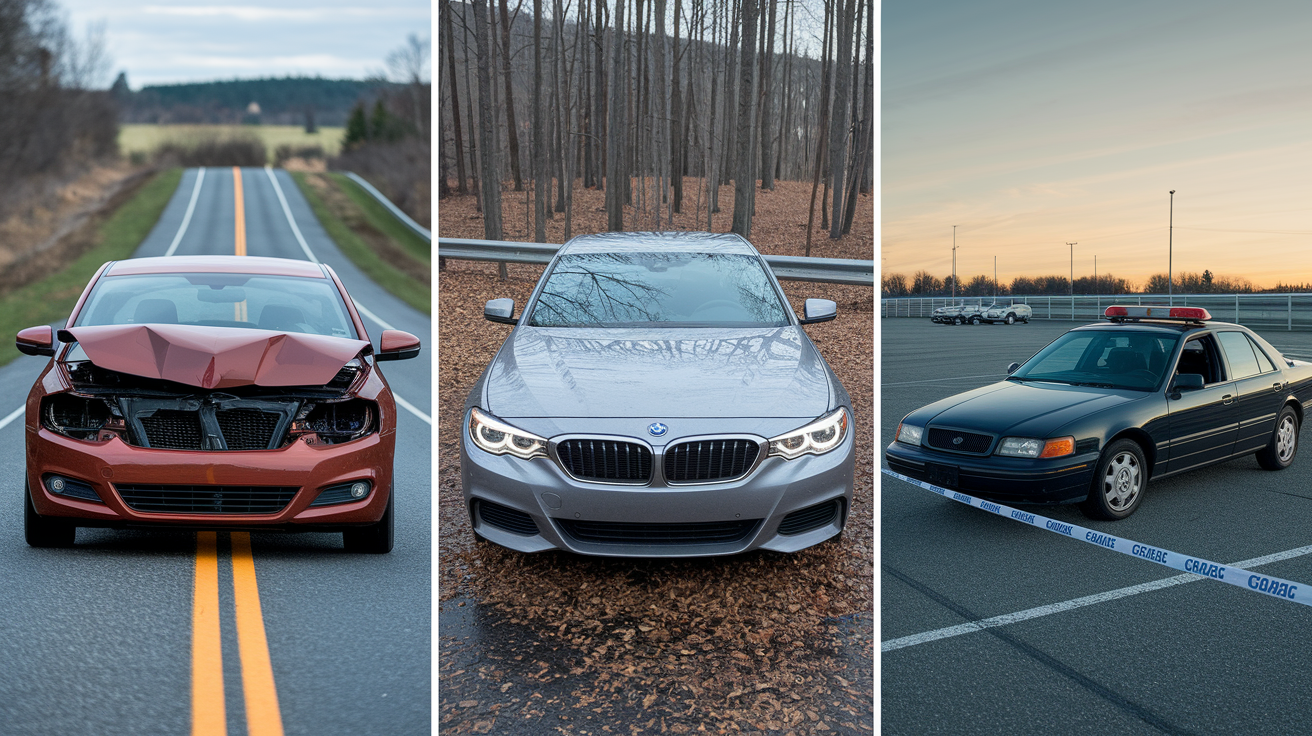
Real world comprehensive claims vary in size and complexity. A common one is hitting a deer on a rural highway. The front end damage (bumper, hood, headlight, radiator) might total $2,200. With a $500 deductible, the insurer pays $1,700. Repairs typically take 3 to 7 days if parts are in stock. Some insurers waive the deductible or count deer strikes differently depending on state law or policy wording.
Hail damage is another frequent claim, especially in the Midwest and South. A severe hailstorm can dent the hood, roof, and trunk, requiring paintless dent repair or panel replacement. If the repair estimate comes in at $3,500 and your deductible is $500, the insurer pays $3,000. Most body shops finish hail repairs in 5 to 14 days, but wait times can stretch during storm season when shops are backlogged.
Theft claims can be straightforward or complicated. If your car is stolen and never recovered, the insurer declares it a total loss and pays the Actual Cash Value minus your deductible. Car was worth $12,000 and your deductible is $1,000? You receive $11,000. If you still owe $14,000 on the loan, gap insurance would cover the $3,000 shortfall. If the car is recovered with damage, the insurer pays to repair it or totals it, depending on the damage severity.
| Scenario | Damage Amount | Typical Outcome |
|---|---|---|
| Deer collision (front-end damage) | $2,200 repair cost | $1,700 payout with $500 deductible; 3 to 7 day repair |
| Hail damage (dents and paint) | $3,500 repair cost | $3,000 payout with $500 deductible; 5 to 14 day repair |
| Vehicle theft (total loss) | ACV $12,000 | $11,000 settlement with $1,000 deductible; title signed over |
Tips to Save Money on Comprehensive Car Insurance

Raising your deductible is one of the fastest ways to lower your comprehensive premium. Moving from a $250 deductible to $1,000 can cut your premium by 10 to 30 percent, depending on your insurer and vehicle. Just make sure you’ve got enough in savings to cover the higher deductible if you need to file a claim. If you can’t afford $1,000 out-of-pocket in an emergency, stick with a $500 deductible and look for other savings.
Comparing quotes from at least three insurers is essential. Comprehensive rates vary wildly by company, even for the same coverage and deductible. One insurer might charge $300 per year while another charges $500 for identical coverage. Bundling your auto and home or renter policies with the same insurer often unlocks a multi-policy discount of 10 to 25 percent.
Keeping a clean driving record and limiting small claims also helps. Filing multiple claims in a short period can trigger rate increases or non-renewal, even for comprehensive claims. If the damage is minor and close to your deductible amount, paying out-of-pocket might save you money in the long run by avoiding a rate hike. Installing anti-theft devices, parking in a garage, and maintaining good credit (where allowed) can also reduce your premium.
Ways to save on comprehensive coverage:
- Raise your deductible to $500 or $1,000 if you have emergency savings to cover it.
- Compare quotes from multiple insurers annually to find the best rate.
- Bundle your auto policy with home or renter insurance for a multi-policy discount.
- Install anti-theft devices (alarm, immobilizer, GPS tracker) to qualify for discounts.
- Maintain a clean driving record and avoid filing small claims that barely exceed your deductible.
- Ask about usage-based or telematics programs that reward low mileage or safe driving with lower premiums.
Final Words
You’ve seen the essentials: comprehensive is “other-than-collision” protection for your own car — theft, vandalism, fire, hail, flood, falling trees, animal strikes, and glass. We covered how claims are paid (actual cash value minus your deductible), how it differs from collision and liability, common exclusions, pricing factors, claim steps, and useful add-ons.
If you’re still deciding, run the math on your car’s value, deductible, and any lender rules. And if you’re asking what does comprehensive car insurance cover, check your policy or ask your agent. You’ll have a clearer choice now.
FAQ
Q: What is included in comprehensive car insurance?
A: Comprehensive car insurance includes non-collision damage to your own vehicle, like theft, vandalism, fire, hail, flood, falling trees, animal hits, and glass/windshield repairs, usually paid as actual cash value minus your deductible.
Q: What is not covered under comprehensive insurance?
A: What is not covered under comprehensive insurance includes mechanical breakdowns, wear and tear, personal items inside the car, intentional damage, racing or illegal use, and crash damage you caused—those fall under collision or other policies.
Q: Which is better, 3rd party or comprehensive?
A: Which is better, third-party or comprehensive, depends on your car and needs: third-party covers damage to others and is cheaper; comprehensive protects your vehicle from many perils and suits financed, new, or high-risk-area cars.