


Thinking you can drive your new car home and sort insurance later?
Don’t.
Most states need proof before you leave, lenders usually demand full coverage, and gaps can cost you money.
This post shows exactly what to do the day you buy a car, what documents to have, whether to add or replace a vehicle on your policy, how premiums can change, and when to get gap insurance.
Follow the clear checklist here and you’ll avoid coverage gaps, lender headaches, and surprise bills.
Immediate Steps to Update Your Insurance After Buying a New Car
Update your auto insurance the same day you buy a car. Most states need proof of insurance before you can legally drive off the lot, and if something happens on the way home without coverage, you’re looking at fines, penalties, or a denied claim. Sure, your insurer might give you a grace period for new purchases. But that doesn’t mean you can just wait. You still need to call them and hand over the details right away. Waiting puts you at risk and might violate your current policy.
Here’s what to do immediately after purchase:
Gather vehicle details. Write down the VIN, make, model, year, purchase date, and odometer reading. Financed or leased? Grab the lender name and account info too.
Contact your insurer. Call them. Or use the app if you’ve got it. Phone’s fastest if you need proof right now.
Provide required information. Hand over the VIN, purchase date, and financing details. They’ll probably ask how you’re using the car: commute, personal, business, whatever.
Decide whether to add or replace. Keeping the old car? Add the new one. Sold or traded it? Replace it on the policy.
Confirm the effective date. Ask for coverage to start on the purchase date, the moment you take delivery. Get written confirmation of when it starts and what the new premium is.
Request proof of insurance. Ask for an updated ID card or digital proof with the new VIN. Most insurers can email or text this in minutes.
Most insurers handle updates fast if you give them complete information. Call during business hours and an agent can often issue a binder or temporary proof while the formal change goes through. You’ll get a follow up email or mailed declarations page with the updated premium within a day or two.
Check the effective date on your proof of insurance to verify continuous coverage. It should match the day you bought or took delivery of the car. No gap between old coverage and new. If you’re replacing a vehicle, make sure the old car’s removed on the same date the new car’s added. Any overlap or gap in the timeline? Call back and get it corrected before you drive.
Understanding Insurance Grace Periods for New Car Purchases
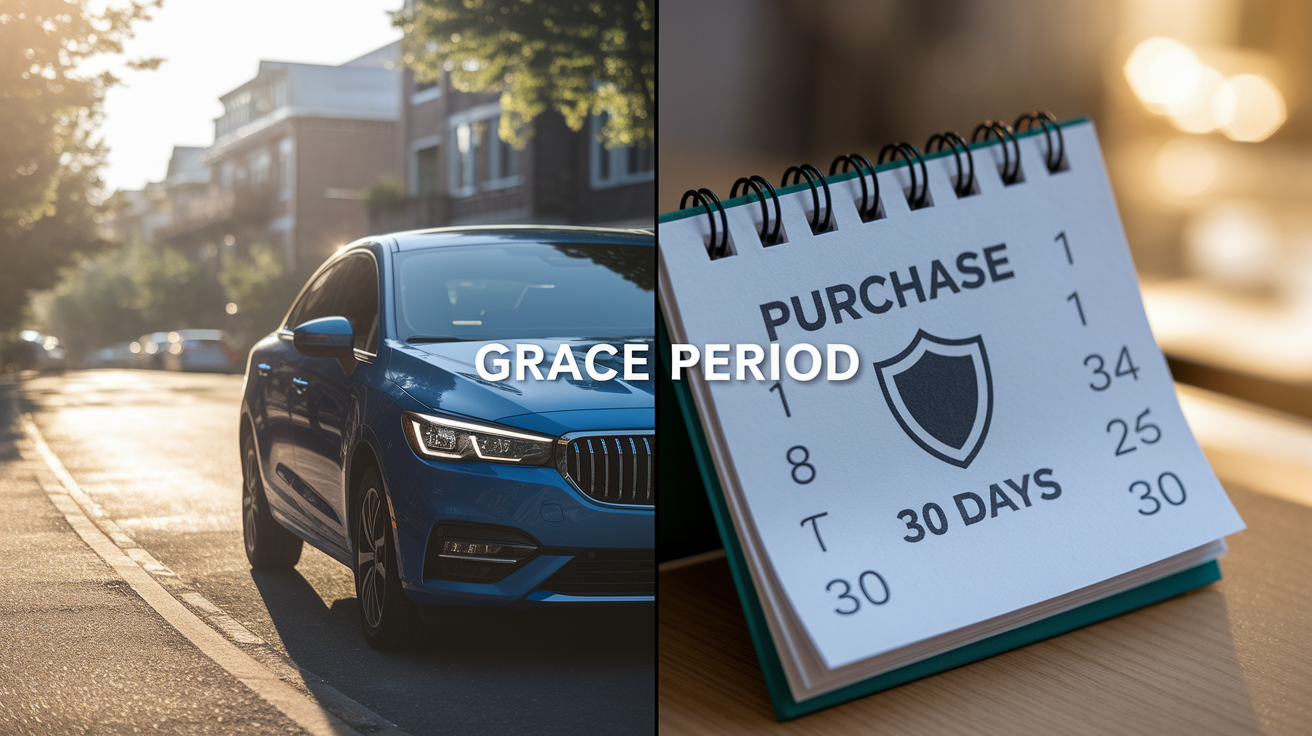
A grace period is a window where your existing auto insurance automatically extends to a newly purchased vehicle, even before you formally notify the insurer. Most insurers offer somewhere between 7 and 30 days from the purchase date. The exact length depends on your insurer’s rules and your state’s regulations. This temporary coverage typically applies only if you already have an active policy with collision and comprehensive on at least one vehicle. Got liability only on your current policy? The grace period may cover only liability on the new car, not collision or comprehensive.
Exceed the grace period without notifying your insurer and the new vehicle may lose automatic coverage. Any claim filed after that window could get denied. Some states require immediate notification regardless of grace periods. Lenders and lessors often demand proof of full coverage effective on the purchase date. That means you can’t rely on a grace period alone if you’re financing or leasing. Even if your insurer allows 30 days, update your policy within 24 to 48 hours. You’ll avoid administrative headaches, lender violations, and surprise coverage gaps.
Documentation Needed to Update or Transfer Coverage
Insurers need specific documents to verify the vehicle, assess risk, and price your coverage correctly. Providing complete and correct information up front speeds things up and prevents errors on your policy. Missing or incorrect details, especially the VIN, can cause coverage to apply to the wrong vehicle. Or not apply at all if you file a claim.
Gather this before you contact your insurer:
Vehicle Identification Number (VIN). This 17 character code identifies your specific car and is used for rating and coverage assignment.
Purchase agreement or bill of sale. Shows the purchase date, purchase price, and seller information.
Odometer reading. Insurers use mileage to estimate annual use and adjust premiums.
Driver information. Your driver’s license number and the license numbers of any household members who’ll drive the new car.
Lender or lessor details. If financed or leased, provide the lender name, account number, and contact information so the insurer can list them as a lienholder or loss payee on the policy.
Adding a New Car to Your Policy vs. Replacing an Existing Vehicle

Adding a car to your policy keeps all current vehicles insured and adds the new one as an additional vehicle. Common when a household buys a second or third car, or when you’re keeping your old car temporarily while you finish a sale. Adding a vehicle typically qualifies you for a multi car discount, which can lower the per vehicle premium a bit. The insurer will rate the new car based on its own risk factors and charge an additional premium for the added exposure.
Replacing a vehicle removes the old car from your policy and substitutes the new car in its place. Use this when you’ve sold, traded, or permanently retired the old vehicle. Replacing keeps your policy structure the same (same number of vehicles, same drivers) and transfers your existing coverage limits and deductibles to the new car. Most insurers process replacements quickly and issue a prorated refund or credit if the old vehicle was removed mid term. You’ll pay any additional premium for the new car or get a credit if the new car’s cheaper to insure.
Premiums change based on the risk profile of the new vehicle compared to the old one. Replacing an older, low value sedan with a newer SUV? Expect your premium to increase due to higher repair costs and vehicle value. If you’re adding a car, your total policy premium will rise, but the per vehicle cost may drop slightly with a multi car discount. Replacing a high risk sports car with a family vehicle may lower your premium. Contact your insurer for a quote before finalizing the purchase if cost’s a concern.
How Premiums Change After Buying a New Car

Insurers evaluate the risk of insuring your new car by analyzing vehicle specific factors that predict the likelihood and cost of future claims. Newer cars, especially models with advanced technology or expensive parts, generally cost more to insure than older, simpler vehicles. The insurer pulls data tied to your VIN to assess repair costs, safety ratings, theft rates, and claims history for that make and model. This data feeds into the rating algorithm that calculates your premium.
Key factors that affect your new car premium:
Safety features. Cars with automatic emergency braking, lane keeping assist, and high crash test ratings may qualify for discounts.
Repair cost. Luxury brands, electric vehicles, and cars with specialized parts typically cost more to fix, raising collision and comprehensive premiums.
Vehicle value. Higher value cars cost more to replace, which increases comprehensive and collision premiums.
Theft rates. Models that are frequently stolen or have high theft related claims will have higher comprehensive premiums.
You can estimate your new premium by asking your insurer for a quote before you buy the car. Provide the VIN or at minimum the make, model, year, and trim level. The insurer will generate a preliminary quote showing how your premium would change if you added or replaced the vehicle. Compare this quote to your current premium to understand the financial impact. Adjust your coverage or deductibles if the increase is larger than expected.
When You Need Gap Insurance for a New Car

Gap insurance covers the difference between what your car’s worth at the time of a total loss and what you still owe on your loan or lease. Finance a new car and it depreciates quickly in the first few years, often faster than you pay down the loan balance. If the car’s totaled or stolen, your collision or comprehensive coverage pays the actual cash value (what the car’s worth now), not the amount you owe. Gap insurance pays the remaining loan balance so you’re not stuck paying for a car you no longer have. If you owe 25,000 dollars on a totaled car that’s worth 20,000, gap insurance covers the 5,000 difference.
Gap insurance is especially useful if you financed the car with a small or no down payment, took a loan longer than 60 months, or bought a vehicle that depreciates faster than average (luxury cars, electric vehicles). Most lenders and lessors recommend or require gap coverage. You can buy gap insurance from your auto insurer, add it to your loan through the lender, or purchase it from the dealer. Buying through your insurer’s often cheaper and can be canceled once the loan balance drops below the car’s value. Paid cash or made a large down payment that keeps your loan balance below the car’s value? Gap insurance isn’t necessary.
Common Mistakes to Avoid When Updating Insurance
Small errors during the insurance update process can cause coverage gaps, billing surprises, or claim denials. Most mistakes happen because drivers assume the process is automatic or skip verification steps after contacting the insurer.
Avoid these frequent mistakes:
Assuming the grace period covers everything. Grace periods often apply only to liability or to vehicles already insured with full coverage. If your old car had liability only, your new car may not automatically receive collision or comprehensive during the grace period.
Forgetting to remove the old vehicle. Replace a car but don’t formally remove it from the policy and you’ll pay premiums for both vehicles until the insurer processes the removal. Request the removal effective on the same date you add the new car.
Providing the wrong VIN. Double check the VIN on your paperwork and read it back to the agent. One wrong digit applies coverage to a different vehicle. Your claim will be denied if the VINs don’t match.
Not verifying proof of insurance. After the update, download or request written proof that shows the new VIN and effective date. Don’t assume the insurer processed everything correctly until you see documentation.
Skipping the lender notification. Financed or leased? Confirm the insurer listed the lender as the lienholder or loss payee. If the lender isn’t listed, they won’t receive claim payments directly. That can delay repairs or total loss settlements.
Final Words
Update your policy as soon as you drive the new car off the lot. Gather the VIN, purchase date, odometer and lender info, contact your insurer, and get proof of insurance the same day to avoid a gap.
Know your grace period, decide whether to add or replace the old vehicle, and check how premiums and gap coverage might change. Avoid common slip-ups like missing documents or assuming you’re still covered.
If you’re still wondering how to update insurance after buying a new car and transferring coverage, use these steps and call your insurer—you’re covered and ready to drive.
FAQ
Q: How do you switch over insurance when you buy a new car?
A: Switching or transferring your car insurance when you buy a new car means you contact your insurer right away, provide the VIN, purchase date and lender info, choose add-or-replace, confirm the effective date, and get proof of insurance.