


Think bundling home and auto is just a sales trick?
In many cases, it actually lowers your total insurance bill.
Most insurers give a multi-policy discount between 5% and 25%.
That percentage can reduce one or both policies, but the dollar savings depend on your carrier, state rules, home value, and driving history.
We’ll show real savings data, the common gotchas that cut into those discounts, and a short checklist to compare quotes apples to apples.
Read on to see whether bundling will likely save you money.
How Bundling Home and Auto Affects Your Premiums

Yes, bundling home and auto insurance almost always cuts your total premiums. Most insurers offer a multi-policy discount somewhere between 5% and 25% when you put both policies with the same company.
The discount usually applies to one or both policies, depending on how the insurer prices things. Some companies knock down your home premium, others trim your auto rate, and plenty apply savings to both. What you’ll actually see depends on the carrier, your state’s insurance rules, and your individual risk profile. But bundles are one of the most reliable ways to lower insurance costs without touching your coverage.
Insurers offer bundling discounts for straightforward business reasons:
Lower customer acquisition costs. Signing one customer for two policies costs less than recruiting two separate people.
Higher retention rates. Customers with multiple policies stick around longer and shop less often.
Reduced administrative expenses. Managing bundled policies under one account cuts billing and servicing overhead.
Better loss forecasting. Holding both home and auto data gives insurers a more complete risk picture.
Cross-sell opportunity. Multi-policy holders are more likely to add umbrella coverage or other products down the line.
The bundling discount shows up automatically on your quote once the insurer links your home and auto policies. You don’t need to ask for it or negotiate anything.
Typical Savings Ranges and What Influences Them

Bundling discounts vary a lot by insurer and customer profile. While 5–25% is common, some customers see discounts below 5% and others top 30%, especially during promotional windows or with certain carriers focused on retention. What you get depends on how the insurer calculates base rates for each line and how much weight they give multi-policy discounts in your state.
Higher value homes often yield bigger dollar savings even if the percentage stays the same, because the discount applies to a larger base premium. If your auto policy is expensive because of multiple vehicles or drivers, the bundling discount can produce real annual savings. On the flip side, if you carry minimum liability and a modest dwelling policy, the total discount in dollars may be small even at a high percentage.
| Factor | How It Impacts Savings |
|---|---|
| Insurer pricing strategy | Some carriers prioritize bundles and offer higher discounts. Others focus competitive pricing on single lines |
| State regulation | Certain states cap discount percentages or require prior approval of multi-policy credits |
| Claims history | Clean records on both home and auto can unlock higher bundle discounts. Recent claims may reduce eligibility |
| Credit-based insurance score | Higher scores often correlate with larger bundle savings in states that allow credit-based pricing |
| Coverage limits and deductibles | Higher limits and lower deductibles increase base premiums, which amplifies dollar savings from the percentage discount |
| Property and vehicle types | Standard homes and common vehicles usually qualify for published discounts. Specialty properties or high-performance cars may see smaller bundles |
| Household composition | Multiple drivers or properties on the same account can stack additional discounts with the bundle |
Bundling discount percentages get applied after the insurer calculates your base rate. So two customers with the same discount percentage can see very different dollar savings.
How Bundling Discounts Work Behind the Scenes

Insurers combine both policies under a single customer account, which reduces the cost of servicing, billing, and claims administration. When you bundle, the company processes one set of account records, one renewal cycle, and one customer service relationship instead of two. Those operational savings get passed back to you as a discount.
Underwriting also benefits from bundling. Holding both your home and auto data gives the insurer a fuller picture of your risk profile, claim patterns, and payment behavior. Actuaries use that combined data to refine risk models. They often assign lower combined risk scores to multi-policy customers, who statistically file fewer claims and maintain coverage longer than single-policy holders.
Retention is another driver. Customers with bundled policies are much less likely to shop around at renewal because unbundling means comparing multiple quotes and potentially losing the multi-policy discount. That predictability lets insurers price bundles more aggressively up front, knowing they’ll keep the business and spread acquisition costs over several years. The discount is part of the insurer’s plan to lock in long-term, profitable accounts.
Savings Examples From Major Insurers
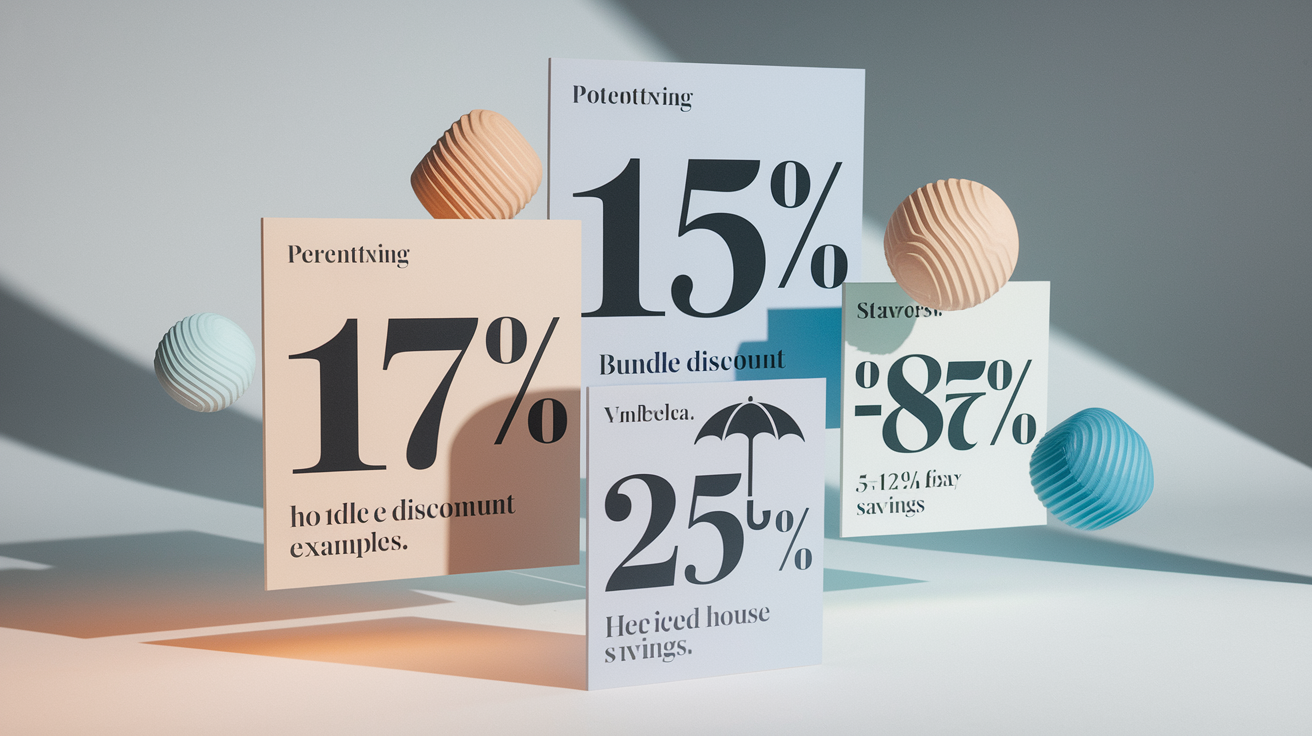
State Farm commonly offers bundling discounts that can reach around 17% in many markets. The company applies the discount to both home and auto premiums when you carry homeowners or renters insurance alongside your auto policy. Actual savings vary by state and individual underwriting factors, but State Farm consistently promotes multi-policy discounts as a core benefit for customers looking to simplify billing and reduce costs.
Allstate advertises average bundle savings around 25% when combining home and auto coverage. In practice, that figure represents an average across all bundled customers. Some profiles see less and others see more. California, for example, has stricter rate regulations, and Allstate’s average discount there may drop to single digits. Allstate’s bundling structure often stacks with safe driver and claim free discounts, which can push total savings higher.
Progressive reports bundling discounts in the range of 5–12% for most customers. Progressive’s pricing tends to be competitive on auto coverage even without a bundle, so the home insurance addition provides a modest percentage discount. If you’re already getting a strong rate on your car policy, the bundle still saves money but may not produce the dramatic percentages seen with carriers that price bundles more aggressively.
GEICO partners with other insurers to offer homeowners coverage and applies multi-policy discounts that range from roughly 8% to 25% depending on the partnered carrier and your location. Because GEICO underwrites auto directly but refers home insurance, the discount structure can vary more than with carriers that underwrite both lines in house.
State Farm and Allstate often show higher published discount ranges. Progressive’s bundles tend toward the lower end but start from competitive base rates. GEICO’s partnership model creates variability by state and partner insurer. Actual savings depend on your driving record, home characteristics, and state regulations.
Pros and Cons of Bundling

Bundling simplifies your insurance life. You get one bill, one renewal date, one app to manage claims, and one customer service number. That convenience saves time and reduces the chance of missing a payment or letting a policy lapse. Bundled customers also qualify for additional perks like umbrella policies, which many insurers only offer to multi-policy holders.
The financial savings are real for most households. Even a 10% discount on combined premiums can add up to several hundred dollars a year. Higher discounts push that number well into four figures for customers with expensive homes or multiple vehicles.
Pros:
Lower combined premiums through multi-policy discounts. Simplified billing and account management. Easier claims process when one event affects both home and car.
Cons:
May limit price shopping if you assume the bundle is always cheapest. One claim can affect renewal pricing on both policies. Bundling may not be the lowest option if a competitor offers a much better rate on one line.
When Bundling Might Not Save You Money

Bundling doesn’t deliver savings when one insurer’s standalone rate for home or auto is significantly higher than competitors. If Carrier A offers a 20% bundle discount but their base home premium is 30% more expensive than Carrier B’s standalone policy, you’ll pay more overall even with the discount. This happens a lot with high value homes, where specialty insurers often beat standard carriers on coverage and price.
High risk drivers sometimes find better deals with non-standard auto insurers that don’t offer bundled home policies. If your driving record includes multiple violations or a DUI, a carrier that focuses on high risk auto may quote a lower rate than a bundled option from a standard insurer. In those cases, keeping home and auto separate preserves access to the best price on each line.
Unique property types also reduce bundling value. Homes in flood zones, wildfire areas, or older buildings with outdated systems may require surplus lines coverage or state FAIR plans that can’t be bundled with standard auto policies. If you rent instead of own, the renters insurance discount is often smaller than the homeowners bundle, which can make separate shopping more attractive.
How to Compare Bundle Quotes Effectively

Start by gathering your current declarations pages for both home and auto. You need exact coverage limits, deductibles, endorsements, and annual premiums to make an apples to apples comparison. Without matching those details, you can’t tell if a lower quote is actually a better deal or just less coverage.
Request three types of quotes from each insurer: bundled home and auto, standalone home, and standalone auto. Use identical coverage limits and deductibles across all quotes so the only variable is the carrier and bundle discount.
Calculate the total annual cost for bundled versus separate policies by adding home and auto premiums together. Check the effective discount percentage by comparing the bundled total to the sum of standalone quotes from the same insurer.
Ask each carrier whether the bundle discount stacks with other discounts like safe driver, claim free, home security, or autopay credits. Compare not just price but also coverage features, exclusions, and claims service reputation in your state.
Re-run comparisons at renewal or after major life changes like buying a new car, moving, or adding a driver.
If the bundled total is lower and the coverages match, the bundle wins. If splitting policies across two carriers saves more money after accounting for identical limits and deductibles, keep them separate. The math is straightforward once you control for coverage.
Final Words
Bundling home and auto typically trims your combined premium by about 5–25%, depending on your insurer, state, and risk profile. It’s one of the easiest ways to save and simplify billing.
When you shop, compare bundled and separate quotes with the same limits and deductibles. If you’re still wondering, does bundling home and auto reduce premiums? In most cases it will, but always double-check quotes so you get the best deal. You’ll probably pay less and have one fewer bill to track.
FAQ
Q: Is it actually cheaper to bundle home and auto insurance?
A: Bundling home and auto insurance is often cheaper, typically saving about 5–25% overall. It can limit shopping flexibility and sometimes one policy is cheaper standalone, so compare bundled and separate quotes.
Q: What is the 80% rule for homeowners insurance?
A: The 80% rule for homeowners insurance means you should carry at least 80% of your home’s replacement cost or the insurer may reduce claim payments proportionally. For a $300,000 rebuild cost, that’s $240,000 coverage.
Q: What not to tell your insurance company?
A: You should avoid telling your insurance company admissions of fault, guesses about causes, or unnecessary details. Stick to basic facts—what happened, when, who was involved—and don’t give recorded statements without checking your policy or getting advice.