


Think one ticket ruins your insurance for years?
Not always.
Insurers often spot violations in two to four weeks, and that ticket can raise your bill for three to five years if you do nothing.
But there are clear moves that often cut the spike fast: traffic school to mask or reduce points, defensive driving discounts, raising deductibles, and shopping at least three quotes.
This post shows step-by-step actions you can take in the first thirty days to lower your premium without giving up needed coverage.
Immediate Actions to Reduce Insurance Rates After Receiving a Ticket

Most insurers spot traffic violations within two to four weeks. They either hear it from you or catch it when they pull your motor vehicle record at renewal. Once that ticket lands on your driving record, it’s going to mess with your premium for three to five years if it’s minor speeding. Serious stuff like DUI can haunt your rates for up to ten years and trigger way steeper surcharges than a simple speeding ticket.
The fastest way to soften a premium spike is enrolling in an approved traffic school or defensive driving course before your next renewal. Plenty of states let drivers attend traffic school to dismiss a ticket or knock down license points, which keeps the violation from ever showing up on your insurance record. If your state permits dismissal, that’s your first move. If not, ask your insurer whether finishing a defensive driving course gets you a 5 to 20 percent discount. Bundling that with a full discount audit and shopping at least three competing quotes can bring down the premium without gutting essential protection.
Here’s what to do in the first thirty days after a ticket:
- Enroll in court approved traffic school before your court date or conviction deadline to pursue dismissal or point reduction.
- Call your insurer to ask about accident forgiveness programs, safe driver discounts, and defensive driving course credits.
- Gather your driver’s license number, vehicle identification number, and current policy details and request quotes from three or more carriers, including regional insurers that may compete for new business.
- Review your collision and comprehensive deductibles and decide whether raising them from fifty dollars to 250 dollars can offset the ticket surcharge.
- Ask your agent to confirm all active discounts on your policy, such as paperless billing, bundling, autopay, and homeowner status, then request any new discounts you now qualify for.
- Verify the severity code on your ticket, the exact violation description that appears on your motor vehicle record, and whether your state classifies it as moving or non moving, since non moving violations often don’t trigger rate increases.
Time matters because traffic school enrollment windows close quickly, court deadlines are firm, and your insurer calculates the next renewal premium weeks before the renewal date. Missing the traffic school deadline or waiting until after your conviction to shop quotes leaves money on the table. If you act while the violation’s still pending, some insurers will underwrite the new policy before the conviction posts, locking in a cleaner rate for the policy term.
How Traffic Violations Influence Insurance Pricing and Rating Factors

Insurers assign surcharges by looking at the type of violation, your prior record, and the number of years since the offense. Each company uses proprietary scoring models, but most carriers evaluate violations during a lookback window of three to five years for minor infractions and longer for serious convictions. When you get a speeding ticket, the underwriting system adds a surcharge to your base premium at renewal and then gradually reduces that surcharge as each year passes without a new violation. Speeding violations bump average rates by about 29.5 percent compared with clean drivers, and an at fault accident can raise premiums by up to 50 percent. The surcharge period typically matches the lookback window, so if your insurer rates speeding tickets for three years, you’ll see the full surcharge in year one, a smaller increase in year two, and a further reduction in year three until the ticket ages off your record.
Insurers classify violations into tiers based on severity. A five mile over speeding ticket in a school zone might sit in one tier, while reckless driving, street racing, or DUI occupy higher tiers with much steeper surcharges. The exact premium impact depends on state law, your carrier’s appetite for risk, and whether you hold other violations or claims on your record. A driver with one speeding ticket and otherwise clean history usually sees modest increases. A driver with two speeding tickets and an at fault claim within three years may face non renewal or placement into high risk insurance.
Here are specific violations and their typical premium outcomes:
- Minor speeding (10 mph or less over the limit): 10 to 20 percent increase, rated for three years in most states.
- Major speeding or reckless driving: 20 to 40 percent increase, rated for three to five years.
- DUI, DWI, or DWAI: 50 to 150 percent increase or more, rated for five to ten years, and may require SR 22 filing and high risk coverage.
State specific rules add another layer of complexity. Maryland assigns twelve points for DUI conviction, and those points stay on the offender’s license permanently, which means insurers in Maryland see that conviction indefinitely. North Dakota cites drivers for street racing seventy times more often than other states, so racing violations in North Dakota may trigger especially close underwriting scrutiny. Some states allow point reduction through traffic school or expungement after a period of good behavior, while others don’t remove points but may mask the ticket from insurer view if you complete an approved program within a set timeframe. Always check your state’s point system and masking rules before assuming a ticket will automatically fall off your insurance record at the three year mark.
Using Traffic School and Defensive Driving Courses for Faster Rate Relief
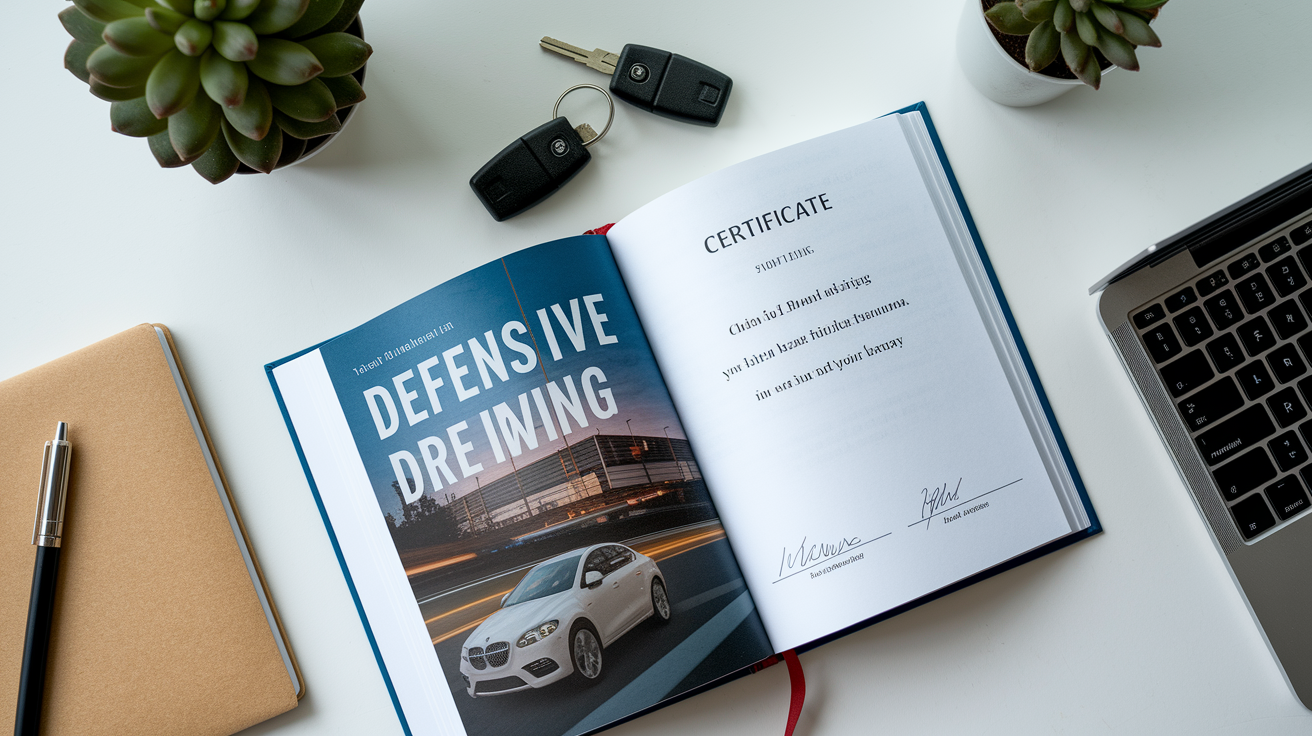
Defensive driving courses deliver two main benefits: immediate discounts on your current policy and the potential to reduce or remove license points. Most insurers offer discounts of 5 to 20 percent for completing an approved defensive driving or traffic school program, even if the course doesn’t remove the ticket from your record. In states that allow point reduction, traffic school can remove one or two points from your license, which helps prevent license suspension and may reduce the severity tier your insurer assigns to your violation. Alaska, for example, removes two points when a driver completes an approved course. If your state permits ticket masking, finishing traffic school before conviction can keep the violation off your motor vehicle record entirely, meaning your insurer never sees it.
Eligibility depends on state law, your driving history, and the specific violation. Many states restrict traffic school to drivers with no recent violations or allow it only for minor speeding tickets, excluding DUI, reckless driving, and commercial vehicle violations. Check your court paperwork or call the court clerk to confirm whether you qualify, then enroll before the deadline printed on your citation. Insurers usually require proof of completion, a certificate from the course provider, and they verify that the program carries approval from your state’s motor vehicle or insurance department. Some carriers automatically apply the discount at the next renewal once they receive your certificate. Others require you to submit the certificate and request the discount manually.
| Program Type | Possible Benefit | Timeframe |
|---|---|---|
| Court ordered traffic school (ticket dismissal) | Ticket does not appear on motor vehicle record; no insurance surcharge | Complete before court deadline, typically 60–90 days from citation date |
| Voluntary defensive driving course (insurer discount) | 5–20% premium discount; may phase in over 1–3 years | Certificate valid at next renewal; discount duration varies by carrier |
| Point reduction traffic school | Removes 1–2 points from license; may lower severity tier with insurer | Effective within weeks of completion; check state motor vehicle rules |
| State approved mature driver course | Discount for drivers 55+ (often overlaps with defensive driving discount) | Renew certificate every 2–3 years; discount applies at each renewal |
Policy Adjustments That Can Reduce Costs After a Ticket

Raising your deductibles is one of the quickest ways to lower your premium after a ticket without changing carriers or coverage types. Increasing your collision and comprehensive deductibles from fifty dollars to 250 dollars can save roughly 29 percent on physical damage premiums, or about 222 dollars per year according to national averages. If your car’s worth less than a few thousand dollars, consider raising the deductible even higher, to 500 or 1,000 dollars, as long as you have enough savings to cover that amount out of pocket if you file a claim. The tradeoff is simple. You accept more financial responsibility in exchange for immediate premium relief. Before you adjust, confirm your emergency fund can handle the new deductible, because filing a claim after a ticket already sits on your record can trigger a second surcharge.
Dropping optional coverages like rental reimbursement, roadside assistance, or custom parts endorsements can shave another twenty to fifty dollars off your six month premium. These add ons are convenient but not required by lenders, and if you already have roadside coverage through an auto club or credit card, paying for it twice wastes money. However, if your vehicle’s financed or leased, your lender almost always requires collision and comprehensive coverage, so switching to liability only isn’t an option until you own the car outright. Liability only works only when you can afford to replace the vehicle out of pocket if it’s totaled, which makes sense for older, low value cars but rarely for newer models. Verify your loan payoff status and lender requirements before you remove physical damage coverage.
Negotiating with your current insurer means asking the right questions at renewal. Call your agent or customer service line and say, “I received a ticket, my renewal went up, and I’d like to review every available discount and coverage option before I shop other companies.” Ask whether your carrier offers accident forgiveness, even if you have to pay a small fee to add it before your next violation. Request a side by side comparison of your current limits and a higher deductible scenario. Ask about usage based insurance enrollment if you drive fewer miles now. Confirm that all eligible discounts are active, including homeowner, autopay, paperless billing, and bundling. Insurers want to retain customers, and a five minute call that uncovers two overlooked discounts can offset part of the ticket surcharge without requiring you to switch carriers or reduce essential coverage.
Shopping for Better Rates After a Ticket

Comparing insurance quotes after a ticket can save you about 1,300 dollars per year, because different carriers weigh violations differently and some actively recruit new customers even when their driving record isn’t perfect. One insurer may surcharge your speeding ticket by 30 percent while another adds only 15 percent, especially if you bring other profitable factors like bundled home insurance, a paid in full annual premium, or enrollment in a telematics program. The key is gathering quotes from at least three insurers, including one national carrier, one regional company, and one direct to consumer insurer, then comparing them side by side using identical coverage limits, deductibles, drivers, and addresses.
Here’s the step by step process for shopping quotes with a ticket on your record:
- Gather your driver’s license number, vehicle identification number, current policy declarations page, and a list of all household drivers before you call or fill out online forms.
- Request quotes from at least three insurers: one large national company, one regional carrier that serves your state, and one online only direct insurer.
- Verify that every quote uses the same liability limits, the same collision and comprehensive deductibles, the same annual mileage estimate, and the same list of drivers and vehicles.
- Ask each insurer or agent which discounts you qualify for right now, including bundling, defensive driving completion, telematics, and any affinity or group discounts available through your employer or alumni association.
- Check the financial strength rating of any unfamiliar insurer and read customer reviews about claims handling before you bind coverage.
Regional carriers and smaller mutuals often price tickets more leniently than the big national brands because they use different underwriting models or target specific demographics. A regional company in Virginia might care less about a single speeding ticket if you’ve lived in the same county for ten years and carry homeowners insurance. A direct insurer might offer lower base rates but fewer discount opportunities. You won’t know until you compare, and each quote takes ten to fifteen minutes online or over the phone.
If your ticket pushes you into high risk territory, multiple violations, DUI, or non renewal from your prior carrier, you’ll need to shop high risk or non standard insurers that specialize in impaired driver coverage or SR 22 filings. These companies charge higher premiums but often provide more flexibility on payment plans and reinstatement support. Work with an independent agent who represents multiple high risk carriers, because rates in this market vary widely and loyalty to a single brand rarely pays.
Timing your switch matters. If your renewal date’s sixty days away, start shopping now so you have time to compare, negotiate, and bind a new policy before your current carrier’s surcharge takes effect. Some insurers allow you to cancel midterm without penalty if you find a better deal, while others charge a short rate penalty or keep part of your unearned premium. Read your current policy’s cancellation clause and calculate the net savings before you switch early. In many cases, waiting until renewal saves hassle and avoids cancellation fees.
How Discounts Help Reduce Costs After Violations

Even with a ticket on your record, most insurers still honor multi policy bundling, which remains one of the largest available discounts. Bundling home and auto insurance with one carrier typically saves 5 to 25 percent on your auto premium, and that discount stacks on top of any other credits you earn. If you rent rather than own, some carriers offer a renters plus auto bundle that delivers similar savings for as little as ten to fifteen dollars per month in renters premium. Paying your annual premium in one lump sum instead of monthly installments saves another 5 to 10 percent by eliminating installment fees and the risk of late charges. Autopay and paperless billing each add small percentage credits, usually 2 to 5 percent, which compound over the year.
Usage based insurance programs and pay per mile policies offer proven savings for low mileage or low risk drivers even after a ticket. If you drive fewer than 12,000 miles per year, accelerate smoothly, brake gently, and avoid late night trips, a telematics device or smartphone app can offset part of your ticket surcharge within the first policy term. Many carriers give an upfront enrollment discount of 5 to 15 percent just for signing up, then adjust your rate every six months based on actual driving data.
Other discounts that remain available after a ticket include:
- Multi vehicle discount for insuring two or more cars on one policy, typically 10 to 25 percent per vehicle.
- Homeowner discount for property owners, even if you don’t bundle policies, usually 5 to 10 percent.
- Vehicle safety features such as anti lock brakes, electronic stability control, forward collision warning, and anti theft systems, often 5 to 15 percent combined.
- Affinity or group discounts through employers, alumni associations, professional organizations, or military service, ranging from 5 to 15 percent.
- Good student discount if a young driver on your policy maintains a B average or better, typically 10 to 25 percent on that driver’s portion of the premium.
- Low annual mileage discount for drivers who log fewer than 7,500 miles per year, often 5 to 10 percent.
- Defensive driving course completion, as covered earlier, 5 to 20 percent and sometimes phased over multiple years.
- Mature driver discount for drivers fifty five and older who complete an approved course, usually 5 to 10 percent.
Ask your insurer to run a full discount audit at renewal and request written confirmation of every credit applied to your policy. Some discounts require annual verification, such as good student transcripts or mileage odometer photos, so set a calendar reminder to submit documentation before each renewal. The cumulative effect of four or five smaller discounts can offset most of a minor ticket surcharge and keep your premium affordable while the violation ages off your record.
Long Term Strategies for Rebuilding a Clean Driving Record

The single most effective long term strategy is driving without further violations or at fault accidents for three to five years. Research shows that clean drivers save 10 to 30 percent compared with drivers who carry violations, and the advantage grows over time. Drivers with a spotless record pay up to 36.7 percent less than drivers with one at fault accident on file and up to 61.9 percent less than drivers with a DUI conviction. Your insurer recalculates your risk at every renewal, and each year that passes without a new ticket reduces the weight of the old one. After three years, many carriers drop the surcharge entirely or move you back into preferred pricing tiers if no other violations appear.
Credit score also plays a major role in your premium, especially in states that allow credit based insurance scoring. Drivers with poor credit pay roughly 115 percent more than drivers with excellent credit, and those with fair credit pay about 231 dollars more per year than their excellent credit peers. If your ticket coincided with financial stress or missed payments, focus on rebuilding your credit by paying down balances, disputing errors on your credit report, and keeping utilization below 30 percent. Improvement takes months, but your insurer will reprice your policy at the next renewal based on updated credit data. Eight states ban credit scoring for auto insurance, Michigan, Massachusetts, Maryland, California, Hawaii, Nevada, Oregon, and Utah, so in those markets your driving record alone determines your rate.
Avoid filing small claims during the years after a ticket. A ticket plus a comprehensive claim for a cracked windshield or a minor collision claim signals higher risk to underwriters, even if neither event was severe on its own. If your repair cost’s below or near your deductible, pay out of pocket and keep your claims history clean. Maintain continuous insurance coverage without any lapses, because a gap of even a few days can trigger a lapse surcharge or loss of prior insurance credits that take years to rebuild. Set up autopay and policy reminders so you never miss a renewal payment or accidentally let coverage expire while you shop for better rates.
Removing or Reducing Ticket Impact Through Administrative or Legal Means

Fighting a ticket in traffic court can result in dismissal, reduction to a non moving violation, or a negotiated plea that keeps points off your license. Judges dismiss tickets when officers fail to appear, when evidence is insufficient, or when procedural errors occurred during the traffic stop. Even if the court doesn’t dismiss the charge outright, a negotiated plea to a non moving violation such as faulty equipment or an administrative infraction often avoids insurance surcharges because insurers only rate moving violations. Hiring a traffic attorney costs one hundred fifty to five hundred dollars depending on location and violation type, but that expense pays for itself if the attorney saves you from a three year premium increase of several hundred dollars per year.
Some states and municipalities allow point reduction or expungement after a period of good behavior. If you drive violation free for twelve to twenty four months, a court may remove points from your license or seal the conviction so it no longer appears on your motor vehicle record. Other jurisdictions permit defensive driving courses as a post conviction remedy that reduces points even if the ticket itself remains visible. Online ticket fighting services exist for drivers who can’t attend court in person. These platforms employ local attorneys who appear on your behalf and negotiate with prosecutors for reduced charges or dismissal.
Here are four practical steps to reduce or remove a ticket’s impact:
- Attend your court hearing or hire a traffic attorney to negotiate on your behalf. Request dismissal, plea to a non moving violation, or deferred adjudication if available in your state.
- Use online ticket fighting platforms if you can’t appear in person. Confirm the service employs licensed attorneys in your jurisdiction and check customer reviews for success rates.
- Enroll in traffic school immediately after conviction if your state permits post conviction point reduction or masking. Submit your completion certificate to the court and request updated motor vehicle record confirmation.
- After twelve to twenty four months of clean driving, petition the court for expungement or record sealing if your state offers that option. Obtain certified copies of the expungement order and send them to your insurer and the state motor vehicle department.
State specific quirks matter. Maryland assigns twelve points for DUI and those points remain on the driver’s license permanently, which means expungement rarely helps with insurance in that state. North Dakota cites street racing violations seventy times more often than other states, so racing tickets there may face harsher underwriting scrutiny even after court reduction. Always verify your state’s rules with a local attorney or the court clerk before assuming a ticket can be dismissed or masked.
How Vehicle Choice and Lifestyle Changes Can Reduce Rates After a Ticket

Switching from a high cost vehicle to a model that’s cheaper to insure can produce immediate savings of hundreds or even thousands of dollars per year, especially when combined with higher deductibles or liability only coverage. Selling a 2025 Jaguar F Pace and buying a 2002 Honda Civic, then insuring the Civic with liability only coverage, removes both the high vehicle value risk and the collision and comprehensive premiums. If you own the older car outright, you only pay for liability, uninsured motorist, and any state required coverages, which can cut your six month premium by 50 percent or more. Insurers price vehicles based on repair costs, theft rates, safety ratings, and historical claims data, so choosing a low profile sedan or small SUV with strong crash test scores and low theft frequency delivers the best rates.
Lifestyle changes offer additional cost savings when insurance premiums feel unaffordable after a ticket. Temporarily switching to a motorcycle, scooter, or bicycle for daily commuting can reduce your auto insurance need if you keep a car only for occasional use. Some drivers reduce mileage to qualify for low mileage or pay per mile policies, which charge based on actual miles driven and often cost 30 to 50 percent less than standard policies for drivers who log fewer than 7,500 miles per year. In urban areas with reliable public transit, going car free entirely eliminates insurance costs, though you should maintain non owner liability coverage if you rent cars or borrow vehicles regularly. Driving without insurance is illegal in every state, so any lifestyle change must include legal coverage or documented exemption.
| Vehicle Type or Choice | Estimated Impact on Premium After Ticket |
|---|---|
| Subaru Forester, Honda CR-V, Toyota RAV4, Jeep Wrangler, Honda Pilot, Subaru Outback, Ford Escape (typically cheaper to insure) | 10–30% lower than luxury or high performance models; combine with higher deductible for maximum savings |
| Older vehicle (8+ years old) with liability only coverage (owned outright) | 40–60% lower than full coverage on newer financed vehicle; eliminates collision and comprehensive premiums |
| Motorcycle or scooter as primary commute vehicle (keep car for occasional use with low mileage) | 30–50% savings on auto policy if mileage drops below 5,000 miles per year; motorcycle insurance may add cost |
| Car free lifestyle with non owner liability policy (for rentals or borrowed vehicles) | Non owner policy costs 200–400 dollars per year vs. 1,200–2,500 dollars for standard full coverage; suitable in cities with public transit |
Vehicle safety features and anti theft devices also influence post ticket premiums. Cars equipped with forward collision warning, automatic emergency braking, lane departure alerts, and blind spot monitoring earn safety discounts of 5 to 15 percent. Installing a GPS tracker, alarm system, or steering wheel lock can reduce comprehensive premiums by lowering theft risk. If you park in a secure garage instead of on the street, some insurers apply a garaging discount, especially in high crime ZIP codes. When you shop for a replacement vehicle after a ticket, check insurance costs before you buy. Call your agent with the VIN of the car you’re considering and ask for a quote based on your current driving record so you know the total monthly cost of ownership before you sign the purchase paperwork.
Understanding State Specific Rules That Affect Post Ticket Insurance Rates

SR 22 requirements apply in many states after serious violations such as DUI, reckless driving, driving without insurance, or excessive points. An SR 22 is a certificate of financial responsibility that your insurer files with the state motor vehicle department to prove you carry at least minimum liability coverage. The filing itself doesn’t increase your premium, but the underlying violation does, and you must maintain continuous coverage without lapses for the SR 22 period, typically three years. If your policy cancels or lapses during that time, your insurer notifies the state and your license is suspended until you reinstate coverage and file a new SR 22. High risk insurers specialize in SR 22 filings and often offer more flexible payment plans than standard carriers.
Eight states ban the use of credit based insurance scoring, Michigan, Massachusetts, Maryland, California, Hawaii, Nevada, Oregon, and Utah, which means your ticket and driving record carry even more weight in those markets. If you live in one of those states and receive a violation, focus on defensive driving discounts, shopping multiple carriers, and maintaining a clean record, because you can’t offset the ticket surcharge by improving your credit score. In states that do allow credit scoring, improving your credit over time can gradually reduce your premium even if the ticket remains on your record.
Other state specific rules to note include:
- Point systems vary by state. Some assign one point for minor speeding and six or more points for reckless driving, while others use different scales or no point system at all.
- Traffic school eligibility differs. California allows traffic school for most minor violations once every eighteen months, while other states restrict it to first time offenders or exclude certain violations entirely.
- Ticket masking: some states hide completed traffic school tickets from insurers, while others reduce points but still report the conviction to your driving record.
- DUI lookback periods: most insurers rate DUI convictions for five to ten years, but some states allow earlier expungement or record sealing, which may or may not affect insurance depending on the insurer’s underwriting policy.
- Non standard markets: states like Florida, California, and Texas have large non standard insurance markets with dozens of high risk carriers competing for business, while rural states may have fewer options and higher premiums after violations.
If your state requires SR 22 or assigns unusually harsh penalties for specific violations, consult an independent insurance agent who knows local underwriting rules and can place you with carriers that specialize in post violation coverage. Always verify your state’s motor vehicle department website for official point schedules, traffic school rules, and SR 22 filing requirements before you make decisions based on general advice.
Expected Recovery Timeline After a Ticket and When Rates Return to Normal
Immediate savings are possible within days or weeks if you enroll in a defensive driving course, raise your deductible, switch to a cheaper insurer, or qualify for newly discovered discounts. Defensive driving discounts often apply at your next renewal once you submit proof of completion, which can be as soon as thirty to sixty days after the ticket if your renewal falls during that window. Switching insurers or adjusting your deductible takes effect the day your new policy binds, so you see lower premiums starting with your first payment. Usage based insurance enrollment typically offers an upfront participation discount of 5 to 15 percent, then adjusts your rate every six months based on driving data.
Short term recovery occurs over the first six to twelve months after the ticket. If you avoid new violations and maintain continuous coverage, some insurers reduce the ticket surcharge incrementally at each renewal rather than waiting for the full three year lookback period. Bundling policies or improving your credit score during this time can offset part of the surcharge, and paying your premium annually instead of monthly eliminates installment fees that compound the cost. Defensive driving discounts may phase in over multiple years, 3 percent in year one, 6 percent in year two, and 10 percent in year three, so your effective rate drops gradually even if the ticket remains on your record.
Medium term recovery spans one to three years. Most minor speeding tickets influence rates for three years from the conviction date, with the surcharge declining each year you remain violation free. By the end of year two, many carriers reduce the ticket’s weight by half, and by the end of year three, the violation no longer affects your premium at all. Major violations like reckless driving or DUI follow longer timelines, typically five to ten years, with surcharges persisting at high levels for the first three years before tapering. If you complete all court ordered requirements, such as DUI classes, ignition interlock device installation, or SR 22 filing, on time and maintain a clean record, some insurers offer early re evaluation or move you out of high risk underwriting after three years even if the conviction technically remains reportable for ten.
Long term recovery, three to five years and beyond, returns your rates to clean driver pricing if you avoid further violations. After five years with no tickets or claims, most insurers treat you as a preferred risk again and offer the full range of discounts, including good driver credits that were suspended after the ticket. DUI convictions may take the full ten year period before they stop affecting your premium, but by year five the surcharge usually drops to a fraction of the initial penalty. The exact timeline depends on your insurer’s underwriting rules, your state’s reporting requirements, and whether you maintain continuous coverage with the same carrier or shop for better rates every renewal. Patience and consistent safe driving remain the most reliable path to lower premiums after any traffic violation.
Final Words
Right after a ticket, act fast: check court deadlines, ask about traffic school, and shop updated quotes. Small moves—traffic school, raising deductibles, or switching carriers—can soften the near-term jump.
Consider legal or administrative options when they make sense, and enroll in discounts or telematics to speed rate relief. Keep continuous coverage and cleaner driving so the impact fades.
For your next step, compare 3 quotes with the same coverages and search how to lower car insurance after a ticket to focus results. You’ll likely see progress within months.
FAQ
Q: Is it better to have a $500 deductible or $1000?
A: Choosing a $500 deductible means smaller out-of-pocket costs after a claim but higher premiums. Picking $1,000 lowers your premium—choose $1,000 only if you can cover $1,000 quickly.
Q: How long will it take for my insurance to go down after a ticket?
A: After a ticket, insurance usually takes months to years to fall; minor violations often affect rates for 3–5 years, with gradual drops as you stay violation-free and earn discounts.
Q: Is $300 a month bad for insurance?
A: Paying $300 a month for insurance is not automatically bad; at $3,600 a year it’s high for a clean driver with an older car but might be normal for young, high-risk, or luxury-vehicle drivers—shop quotes to compare.
Q: How to lower insurance after a ticket?
A: To lower insurance after a ticket, take traffic school if eligible, raise your deductible, shop 3+ quotes, ask about discounts or telematics, bundle policies, and avoid new violations to speed recovery.