


Not every dent needs an insurance claim — in fact, filing a small claim can cost you more in higher rates than the repair itself.
If you caused damage to someone else or anyone is injured, file right away; theft, hit and runs, and major damage also need immediate reporting.
But for tiny repairs below your deductible, paying out of pocket often keeps your rates steadier.
You’ll get simple rules, a quick if-then test for repair estimates, and a short checklist of photos and timing to protect yourself.
Key Decision Rules for Filing a Car Insurance Claim

If someone else’s car, property, or body got damaged in an accident, file the claim. If you caused the crash or there are injuries, you need to file no matter how minor it looks. Claims for at-fault accidents can raise your premium by nearly 50%, and that increase typically sticks around for about three years.
For damage to your own vehicle only, run a simple test. If the repair cost is less than your deductible, don’t file because the insurer won’t pay anything. If the repair is slightly above your deductible, think about whether the small payout is worth three years of higher premiums. When damage is major, theft happens, or anyone reports pain or injury, file immediately.
Always take photos and videos at the scene, even if you’re not sure yet whether you’ll file. Many insurers require you to report an accident within 24 to 48 hours, so don’t wait days to decide. Missing that window can give the insurer a reason to deny coverage.
Here are the quick decision rules:
File immediately if another person, vehicle, or property was damaged
File immediately if anyone claims injury, even minor pain
File immediately for theft, vandalism, hit and run, or animal collisions
Don’t file when repair costs fall below your deductible
Don’t file for small cosmetic damage you can afford to fix yourself
Always document the scene with photos, videos, and contact info, no matter what
Situations That Require Filing a Car Insurance Claim

You must file a claim whenever you damage someone else’s property or vehicle. Liability coverage exists to pay the other party, and failing to report puts you at personal legal risk. If the other driver or their insurer files a lawsuit later, your insurer can’t defend you if you never told them about the accident.
Any accident involving injuries requires immediate filing. Medical bills from car crashes can reach hundreds of thousands of dollars, especially when emergency room visits, surgery, rehabilitation, or long term care are involved. Some states require injury claims to be reported within about 30 days, and your policy likely requires notice “as soon as possible.” Waiting can cause a denial.
Theft, vandalism, hit and run crashes, and collisions with animals also require filing. Comprehensive coverage handles theft and vandalism. Collision coverage applies when you hit something or something hits you, including animals in most policies. Uninsured or underinsured motorist coverage kicks in when the at fault driver has no insurance or not enough to cover your losses.
You must file in these situations:
You caused damage to another person’s vehicle, home, fence, mailbox, or other property
Anyone in any vehicle reports injury or needs medical attention, even if they say they feel fine at the scene
Your vehicle was stolen, broken into, or vandalized
A hit and run driver damaged your car and left the scene
You have major damage to your own vehicle and you carry collision or comprehensive coverage
When It Makes Sense to Pay Out of Pocket Instead of Filing

Minor cosmetic damage that costs less than your deductible should almost always be paid out of pocket. If your collision deductible is 1,000 dollars and the repair estimate is 800 dollars, the insurer will pay zero dollars. Filing gains you nothing and creates a claim on your record.
Repairs that barely exceed your deductible also deserve a closer look. A 1,200 dollar repair with a 1,000 dollar deductible leaves the insurer paying 200 dollars. If that claim causes your premium to rise by 200 dollars per year for three years, you’ll pay an extra 600 dollars over time. Your total cost becomes 1,000 dollars (deductible) plus 600 dollars (premium increases) equals 1,600 dollars, which is more than the original 1,200 dollar repair. Paying out of pocket saves 400 dollars in that scenario.
| Scenario | Repair Cost | Deductible | Likely Best Option |
|---|---|---|---|
| Small dent, single vehicle | $800 | $1,000 | Pay out of pocket |
| Bumper scrape, cosmetic only | $1,200 | $1,000 | Probably pay out of pocket |
| Cracked windshield | $400 | $500 | Pay out of pocket |
Small claims stay on your record just like large ones. The insurer sees that you filed, even if the payout was tiny. If you can cover the repair without financial hardship, self paying protects your future rates and keeps your claims history clean.
Factors That Influence Whether You Should File a Claim

Your deductible is the first number to check. Subtract it from the repair estimate to see what the insurer would actually pay. A 2,500 dollar repair with a 1,000 dollar deductible means a 1,500 dollar payout. A 900 dollar repair with that same deductible means zero payout.
Who was at fault determines which insurer pays and whether your rates will rise. If another driver caused the crash and you file through their liability coverage, your own rates usually won’t change. If you were at fault or you file under your own collision coverage, expect a rate increase that can last about three years.
Your claims history also matters. If you’ve filed multiple claims recently, another one may trigger a non renewal notice or push you into high risk territory. Insurers track claims frequency, and some will drop customers after a second or third at fault claim within a few years.
Late reporting can void coverage entirely. Many policies require you to report accidents “as soon as possible,” and some insurers define that as 24 to 48 hours. If you wait too long, the insurer may argue that delayed notice prevented a proper investigation and deny the claim.
Injuries complicate everything because they can appear days or weeks after a crash. Someone who feels fine at the scene may develop neck pain, headaches, or back problems later. Filing a claim creates a record and opens the door to medical payment coverage and potential liability defense if the other party changes their story.
Here are the key factors to weigh:
Deductible size compared to total repair cost
Fault determination and which insurer will pay
Your prior claims history over the past three to five years
Expected premium increase and how many years it will last
Injury uncertainty and whether anyone reported pain or sought medical care
State and policy reporting deadlines that could affect coverage
Quality of documentation you collected at the scene
Step by Step Process for Filing a Car Insurance Claim

Filing a claim begins at the accident scene, not later at home.
Follow these steps to file a car insurance claim:
Make sure everyone is safe and call 911 if there are injuries or if the crash blocks traffic.
Take photos and videos of all vehicles, damage, the surrounding area, skid marks, traffic signs, and license plates.
Collect names, phone numbers, driver’s license info, insurance policy numbers, and vehicle registration details from every driver involved.
Get contact information from witnesses who saw the crash happen.
File a police report if required by state law or if the other driver won’t cooperate. Even if police don’t come to the scene, go to the station and file a report within 24 hours.
Notify your insurer by phone, app, or online portal as soon as you can, ideally the same day or within 24 hours.
Provide all documentation including photos, police report number, repair estimates, towing receipts, and medical bills as they become available.
Schedule an adjuster inspection if your insurer requires one, and get written repair estimates from body shops.
After you report the claim, the insurer assigns an adjuster who reviews the evidence, inspects your vehicle, and determines fault. Most insurers complete their investigation within about 30 days, though complex cases with injuries or disputes can take longer. The adjuster will ask for repair estimates, medical records, and proof of other expenses like rental car costs or lost wages.
Keep copies of everything you submit. Save all emails, text messages, and notes from phone calls with adjusters. If the insurer asks you to sign any release forms or settlement agreements, read them carefully and consider getting legal advice before signing, especially when injuries are involved.
Documentation You Must Gather Before and After Filing
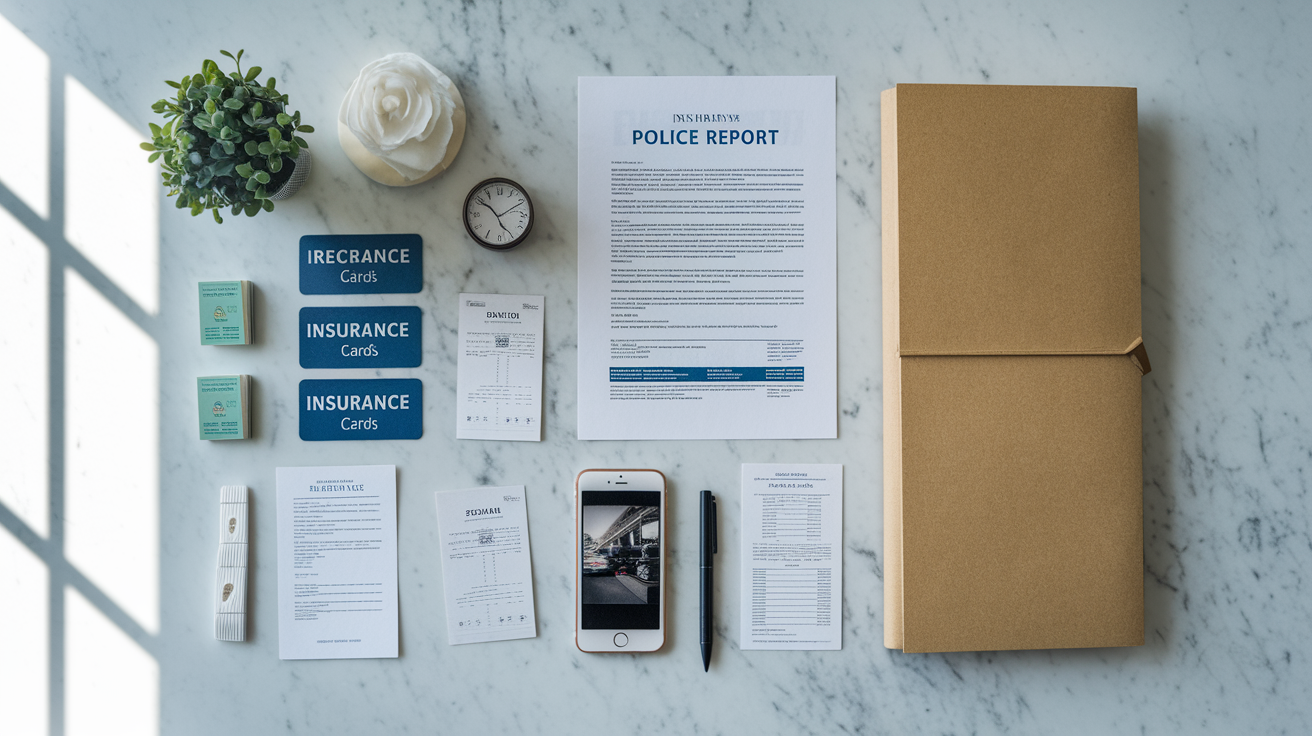
Strong documentation protects your claim from denial or low settlement offers. Insurers rely on evidence to determine fault, assess damage, and calculate payouts. Missing or incomplete records can delay your claim for weeks or cause the insurer to reduce what they’re willing to pay.
At the accident scene, use your phone to capture everything. Take wide shots showing the position of all vehicles, close ups of every dent and scratch, photos of skid marks or debris, and images of street signs or traffic signals. If the other driver’s vehicle has pre existing damage, photograph that too so the insurer doesn’t try to blame you for it later.
Gather and keep these documents:
Photos and videos of vehicle damage, the accident scene, road conditions, and weather
Police report or accident report number from the responding officer or station
Driver’s licenses, insurance ID cards, and vehicle registration from all parties involved
Contact information for witnesses who saw the crash
Repair estimates from body shops, ideally two or three for comparison
Towing and storage receipts if your car had to be moved
Medical bills and records for any injuries, even if treatment seems minor
Rental car receipts and mileage logs if you need a temporary vehicle
Time Limits and Reporting Deadlines for Car Insurance Claims

Many insurers require you to report an accident within 24 to 48 hours. That deadline appears in the “Duties After an Accident” section of your policy. Missing it can give the insurer grounds to deny your claim, especially if the delay made it harder for them to investigate or if evidence disappeared.
Some states impose separate injury reporting windows, often around 30 days. If anyone was hurt or claims pain later, report the accident immediately even if you’re not sure yet whether you’ll file a full claim. Waiting can limit your ability to recover medical costs or defend against a liability claim from the other driver.
Once you report the accident, the insurer typically has about 30 days to investigate and make a decision. Simple property damage claims may settle in a week or two. Claims involving injuries, disputes over fault, or major losses can take months, especially if lawyers get involved or if the insurer needs to inspect multiple vehicles.
Keep these timelines in mind:
Report to your insurer within 24 to 48 hours to meet most policy requirements
File a police report within 24 hours if one is required or if the other driver disputes fault
Submit medical bills and repair estimates as soon as you receive them to avoid delays
Know your state’s lawsuit statute of limitations (often two years for injury claims) if the insurer denies your claim or settlement talks break down
Delaying your report makes the insurer suspicious. They may argue that the damage or injuries aren’t serious, or that the delay allowed the other party to fabricate evidence. If you’re not sure whether to file, at least report the accident so the clock doesn’t run out on your coverage.
Cost Benefit Examples for Deciding to File or Self Pay

Use a simple formula to decide whether filing makes financial sense. Take the repair cost, subtract your deductible to get the insurer payout, then subtract the estimated premium increase over the next few years. If the result is positive, filing may be worth it. If it’s negative, you’ll lose money by filing.
Example A: Your car needs 2,000 dollars in repairs and your deductible is 500 dollars. The insurer would pay 1,500 dollars. If filing causes a 200 dollar per year premium increase for three years, that’s 600 dollars in extra costs. Your net benefit is 1,500 dollars minus 600 dollars equals 900 dollars. Filing makes sense here.
| Scenario | Repair Cost | Deductible | Expected Premium Increase | Best Decision |
|---|---|---|---|---|
| Minor fender bender | $900 | $1,000 | $0 (no payout) | Pay out of pocket |
| Moderate single vehicle crash | $2,000 | $500 | $200/year × 3 years = $600 | File (net benefit $900) |
| Small collision, high premium impact | $1,200 | $500 | $300/year × 3 years = $900 | Pay out of pocket (net loss $200) |
| Serious crash with major damage | $10,000 | $1,000 | $600/year × 3 years = $1,800 | File (net benefit $7,200) |
Large losses override premium math. If your car is totaled or repair costs reach 10,000 dollars or more, file the claim even if your rates will rise. The payout will far exceed any long term premium increases, and most drivers can’t afford to replace a vehicle out of pocket. The same rule applies to injuries. Medical bills can reach hundreds of thousands of dollars for serious crashes, and trying to self pay that kind of cost is not realistic.
Common Claim Mistakes and How to Avoid Them

Delaying your report is the most common mistake. Drivers wait to see if the damage is “really that bad” or hope the other party won’t file a claim. By the time they call the insurer, days or weeks have passed and critical evidence is gone. The insurer may deny coverage because the delay violated policy terms.
Skipping the police report is another frequent error, especially in minor crashes. If the other driver later claims injuries or disputes fault, you’ll have no independent record of what happened. Even if police don’t respond to the scene, go to the station and file a report the same day.
Many drivers accept the first settlement offer without negotiation or comparison. Insurers often start low, especially on property damage and total loss valuations. Get multiple repair estimates and research your vehicle’s actual cash value before agreeing to a payout.
Not disclosing pre existing damage can backfire. If your car already had a dent or scrape before the accident and you don’t mention it, the insurer may accuse you of trying to get old damage repaired under the new claim. Take photos of your vehicle regularly so you have a record of its condition before any crash.
Avoid these mistakes:
Waiting more than 24 to 48 hours to report the accident to your insurer
Skipping the police report when fault is disputed or injuries might exist
Accepting the first settlement offer without getting repair estimates or researching vehicle values
Failing to document the scene with photos, videos, and witness contact information
Signing release forms or settlement agreements without reading them carefully or consulting an attorney
Not reporting possible injuries immediately, even if you feel fine at the scene
Final Words
Start with the quick rules: file if there are injuries, major damage, theft, or legal exposure. Don’t file for tiny cosmetic fixes. Take photos, get a police report when needed, and notify your insurer promptly.
We also covered what to weigh — deductibles, prior claims, likely rate changes — plus the step-by-step filing process and the exact documents you should gather. Use the cost-benefit checks before deciding.
If you’re still unsure, run the checklist here and ask the simple question about when to file a car insurance claim. You’ll make a smarter, more confident choice.
FAQ
Q: When should you file a claim, pay out of pocket, or not file an auto insurance claim?
A: Deciding whether to file a claim, pay out of pocket, or not file depends on injury, major damage, theft, or legal exposure—file. For minor, cosmetic, or repairs at or below your deductible, pay yourself to avoid rate increases.
Q: What’s the biggest mistake people often make when dealing with an insurance claim?
A: The biggest mistake people often make when dealing with an insurance claim is delaying reporting and skimping on documentation. Missing photos, police reports, or medical records can lead to denials or lower payouts, so report promptly and document everything.