


Think a single huge credit will give you the biggest cut? Think again.
Stacking several mid-size discounts often saves more.
When insurers apply discounts one after another, the math matters.
This guide shows the best car insurance discounts to stack, which ones play nice together, and the simple steps to layer them on one policy.
Read on to learn the handful of discounts that usually combine cleanly, and a quick checklist you can use when you call your agent.
Key Stackable Auto Insurance Discounts That Deliver the Biggest Savings

Stacking car insurance discounts means combining multiple credits on the same policy to reduce your premium. Most insurers apply discounts one after another, not as simple percentages added together. So a 15% discount on $1,200 drops it to $1,020, then a 20% discount on that $1,020 brings it to $816. Not just 35% off the original. Understanding this math helps you see why piling up several mid-sized discounts often beats chasing one huge credit.
Certain discounts stack better because they come from different buckets. A policy-level credit (bundling home and auto) combines cleanly with a driver-based credit (safe driving history), vehicle equipment savings (anti-theft device), and payment method discounts (autopay). Insurers rarely block these four categories from layering. Conflicts usually happen when two discounts compete for the same bucket, like enrolling in two different telematics programs or claiming two separate anti-theft device credits for the same car.
Most drivers who stack discounts see total savings between 25% and 50% off the base premium. Aggressive stacking with perfect driving, military membership, multiple bundles, and strong telematics data can push savings to 40–70% in rare cases. That upper end requires a clean multi-year record, low annual mileage, documented safety equipment, and strong affiliation credits. Typical insurer caps land around 35–60%, though carriers rarely publish those hard ceilings.
Here are eight top stackable discounts and their typical ranges (as of 2025):
Safe driver / claim-free gets you 10–30% for zero at-fault accidents and minimal moving violations over 3–5 years.
Multi-policy bundle (home + auto) delivers 10–25% depending on the value of both policies.
Multi-car adds 5–15% per additional vehicle garaged at the same address.
Good student earns 10–25% for students with GPA 3.0–3.5 or higher.
Defensive driving course saves 5–15% upon completion of an approved program.
Vehicle safety and anti-theft equipment gives you 5–20% for standard features, up to 30% for advanced manufacturer systems.
Usage-based or pay-per-mile programs can deliver 10–50% depending on miles driven and driving behavior scores.
Paperless billing, autopay, or pay-in-full combines for 3–10% in administrative convenience options.
How to Layer Car Insurance Discounts for Maximum Stackability

Most insurers allow policy-level, driver-level, vehicle-level, and payment-method discounts to stack together without conflict. Common stackable combinations include multi-policy bundling (home and auto), safe driver history, multi-car coverage, vehicle safety equipment, and paperless billing with autopay. These four buckets rarely compete because they reward different behaviors. Expect these to apply cleanly on the same policy.
Typical exceptions? Enrolling in two different telematics programs at once won’t work. Progressive Snapshot and a carrier’s second usage-based product won’t both apply. Duplicate anti-theft credits won’t stack if you try to claim both an aftermarket device discount and a factory-installed system discount for the same car. Some insurers also cap the total percentage reduction at 35–60%, meaning stacking eight discounts worth 10% each won’t deliver an 80% cut. State-level rules can limit certain credits. California restricts the use of gender and credit scoring, and some states mandate how telematics data is applied. Always confirm compatibility with your insurer and check state insurance department guidelines.
Follow these six steps to layer discounts logically:
Bundle your home and auto policies first. This often provides the largest single discount and makes you eligible for loyalty credits.
Apply driver-based credits next. Submit proof of a clean driving record, defensive driving course completion, or good student status.
Add vehicle equipment discounts. Provide VIN confirmation and receipts for anti-theft devices or factory safety systems.
Enroll in a telematics or mileage program. Allow 30–90 days of driving data to accumulate before the discount applies.
Switch to paperless billing and autopay. These usually take effect within one billing cycle.
Request an annual review. Ask your agent or insurer to manually verify all applicable discounts are active on your policy.
Insurer-Specific Stacking Rules for Major Carriers

Each major insurer offers multiple discounts, but stacking rules and caps vary. Some carriers publish exact percentages, while others adjust discounts based on your profile and state. The notes below reflect typical offerings as of 2025, but always verify current eligibility and compatibility with a direct quote.
GEICO
GEICO commonly stacks multi-policy bundling, safe driver history, good student credits, and vehicle equipment discounts without restrictions. The DriveEasy telematics program can layer on top of these, though the final combined discount typically caps around 50–60%. Membership discounts for military, federal employees, and certain professional groups often add another 5–15% and usually combine with other credits.
State Farm
State Farm allows multi-line bundling (home, auto, life) to stack with safe-driver and good-student discounts. The Drive Safe & Save telematics program and the Steer Clear program for younger drivers both apply, but enrolling in Drive Safe & Save may adjust how other usage-based credits are calculated. Agents can manually review your policy to identify additional stackable options specific to your state.
Progressive
Progressive’s Snapshot telematics program often provides the deepest usage-based discount but may alter how other behavior-based credits apply. Multi-policy bundling, multi-car discounts, and continuous insurance credits stack cleanly with Snapshot. The continuous insurance discount rewards drivers who maintain coverage without gaps, typically adding 5–10%. Always ask how Snapshot affects any existing safe-driver credits.
Allstate
Allstate stacks claim-free history, new-car discounts, multi-policy bundling, and good-student credits on most policies. Some discounts apply only to specific coverages. New-car safety features may reduce collision and comprehensive costs but not liability. The company also offers participation rewards through the Milewise program for low-mileage drivers, which can combine with policy-level bundles.
USAA
USAA delivers strong stacking potential with multi-policy, safe-driver, good-student, and anti-theft discounts all combining on the same policy. Membership is restricted to military members, veterans, and eligible family members. Total stacked savings frequently reach 40–50% for members with clean records and multiple policies, making USAA one of the most discount-friendly carriers when you qualify.
Real Examples Showing How Stacked Discounts Reduce Premiums

Sequential discount math matters more than the sum of listed percentages. When you see “15% + 20% + 15%” on your policy, the insurer usually applies 15% off the base, then 20% off the new subtotal, then 15% off that result. The final discount percentage is less than 50%, but the dollar savings still add up fast.
Two examples with a $1,200 starting premium show how different discount combinations produce similar results. One stack uses moderate policy and driver credits (multi-policy 15%, safe driver 20%, good student 15%, anti-theft 10%, autopay 5%) and lands at $593.03 (roughly 50.6% total savings, or $606.97 saved). Another stack focused on mileage and bundle (pay-per-mile 40%, multi-policy 15%, paperless 3%) finishes at $593.64 (about 50.3% savings, or $606.36 saved). Both paths cut the premium in half, proving that aggressive mileage credits can replace multiple smaller discounts if you drive very few miles per year.
| Scenario | Starting Premium | Discounts Applied (Sequential) | Final Premium | Total Savings % |
|---|---|---|---|---|
| Moderate Stack | $1,200/yr | Multi-policy 15%, Safe driver 20%, Good student 15%, Anti-theft 10%, AutoPay 5% | $593.03 | ≈50.6% |
| Usage-Based + Bundle | $1,200/yr | Pay-per-mile 40%, Multi-policy 15%, Paperless 3% | $593.64 | ≈50.3% |
| High-End Stack | $2,400/yr | Multi-policy 20%, Safe driver 25%, New-car safety 15%, Loyalty 7%, Pay-in-full 3% | $1,105.10 | ≈53.9% |
Qualification Requirements for Popular Stackable Discounts

Earning multiple discounts requires documentation and ongoing maintenance. Safe-driver credits typically demand zero or one at-fault accident and fewer than one moving violation in the past three to five years. Insurers verify your motor vehicle report (MVR) at quote time and renewal. If you pick up a speeding ticket mid-term, expect the discount to disappear at the next renewal unless your state or insurer offers accident forgiveness.
Good student discounts require proof of a GPA at or above 3.0 to 3.5 (varies by insurer). You’ll submit a recent transcript, report card, or school-issued verification form. Most insurers accept documentation once per policy period or annually. If your student’s GPA dips below the threshold, notify the insurer or risk retroactive premium adjustments. Anti-theft device discounts need an invoice or serial number showing installation of an approved system. Factory-installed equipment is usually verified through the VIN, but aftermarket devices require receipts and sometimes photos or installer certifications.
Telematics and usage-based programs require 30 to 90 days of driving data before the discount applies. During that window, the insurer tracks mileage, hard braking, rapid acceleration, late-night driving, and phone use (depending on the program). Your initial discount estimate may adjust after the data period closes. Defensive driving course credits require completion certificates from state-approved providers, and the discount typically lasts three years before you need to retake the course.
Documentation you’ll need to maintain multiple discounts:
Clean MVR for safe-driver credits. Request a copy annually to confirm accuracy before renewal.
Current transcript or school form for good-student discounts. Dated within the past term or semester.
Invoice and serial number for aftermarket anti-theft installations. Keep photos of the installed device.
Telematics app active for usage-based discounts. Check monthly summaries and correct any data errors.
Course completion certificate for defensive driving. Store a digital copy with your policy documents.
Best Discount Stacks for Young Drivers, Families, and Seniors

Teenage drivers face the highest base premiums, so stacking becomes critical. Start with the good-student discount (10–25%) if the teen maintains a 3.0 or higher GPA. Add a defensive driving course credit (5–15%) immediately after the teen completes an approved program. If the household qualifies for multi-car coverage, that adds another 5–15%. Installing an anti-theft device on the teen’s car (if they have their own vehicle) can save 5–20%. Some insurers offer graduated licensing discounts or student-away credits if the teen attends school more than 100 miles from home without a car. Confirm both with your carrier.
Family households with multiple drivers and vehicles benefit most from bundling home and auto (10–25%), then layering multi-car discounts and individual driver credits. If one parent works from home or drives fewer than 7,500 miles per year, enroll that vehicle in a pay-per-mile or low-mileage program (10–50% depending on miles). Assign the safest driver to the highest-value vehicle to maximize safe-driver credits on that car. For families with college students, keep the student on the family policy and claim the good-student and student-away discounts rather than splitting onto separate policies.
Senior drivers often qualify for mature-driver or senior safe-driving course discounts (5–15%) after completing an approved refresher program. Many insurers renew this credit every three years. Seniors who drive less than 7,500 miles annually should explore pay-per-mile programs, which can deliver 20–40% savings. Loyalty discounts (5–10%) frequently apply after age 55 if you’ve held continuous coverage with the same insurer for several years. Bundling homeowners or condo insurance remains one of the simplest ways for retirees to maintain a strong discount stack.
Payment, Administrative, and Billing Discounts That Boost Stacks

Small administrative discounts add up when stacked with larger policy and driver credits. Paperless billing typically saves 2–5%, autopay adds another 3–7%, and paying the full six-month or annual premium upfront can save an additional 3–10% by avoiding installment fees. Combined, these three administrative choices often reduce your premium by 8–15%, and they take effect within one billing cycle. Insurers apply these discounts after calculating your coverage and driver-based credits, so the dollar savings appear smaller than a multi-policy bundle, but they require almost no effort to maintain.
Online purchase or early-renewal discounts occasionally appear as limited-time offers. Some insurers knock off 3–7% if you buy a new policy entirely online without agent assistance. Early-renewal discounts reward customers who renew 7–30 days before the expiration date, adding another 2–5%. New customer signup bonuses are rare among major carriers but sometimes show up as a first-term credit. These promotional discounts usually don’t renew, so factor that into your long-term budget.
Common administrative add-ons that increase your stack:
Paperless billing. Switch to email delivery of policy documents and billing statements (2–5%).
Autopay enrollment. Authorize automatic monthly or full-term payments from your bank account (3–7%).
Pay-in-full discount. Pay the entire six-month or annual premium upfront to avoid installment fees (3–10%).
Online purchase credit. Complete the quote and purchase process without phone or agent assistance (3–7%).
Vehicle-Based Discounts That Combine With Most Other Savings

Vehicle equipment discounts apply to the car itself, not the driver, so they stack cleanly with policy bundles, safe-driver credits, and payment discounts. Standard safety features like anti-lock brakes, airbags, and electronic stability control usually deliver 5–10% off collision and comprehensive premiums. Advanced driver assistance systems (forward collision warning, automatic emergency braking, lane-keeping assist, blind-spot monitoring) can push that discount to 15–30%, especially on new vehicles. Insurers verify these features through the VIN, so you don’t need to submit extra documentation unless you add aftermarket equipment.
Anti-theft devices (factory alarm systems, immobilizers, or GPS tracking) typically save 5–20% on comprehensive coverage because they reduce theft risk. Aftermarket systems require proof of installation and an invoice showing the device serial number. Some insurers also offer discounts for vehicles on the Insurance Institute for Highway Safety (IIHS) Top Safety Pick list or models with low theft rates according to the National Insurance Crime Bureau. These discounts apply only to the collision and comprehensive portions of your premium, not liability, so the overall policy savings will be smaller than the stated percentage.
Five common vehicle features that qualify for equipment discounts:
Anti-lock brakes (ABS). Standard on most cars built after 2012, saves 5–10% on collision coverage.
Factory alarm or immobilizer. Prevents engine start without the correct key, saves 5–15% on comprehensive.
Airbags (front, side, curtain). Reduces injury severity, saves 5–10% on personal injury protection (PIP) or medical payments where applicable.
Advanced driver assistance systems (ADAS). Automatic emergency braking, lane-keeping, adaptive cruise, saves 10–30% on collision and comprehensive.
GPS tracking or recovery system (LoJack, OnStar). Aids vehicle recovery after theft, saves 10–20% on comprehensive coverage.
How Mileage-Based & Telematics Discounts Work in Stacking

Usage-based insurance programs monitor your driving through a smartphone app or plug-in device, tracking mileage, speed, braking, acceleration, and time of day. Pay-per-mile programs charge a low base rate plus a per-mile fee, making them ideal if you drive fewer than 7,500 miles per year. Discounts range from 10% to 50%, with the deepest savings going to drivers who log under 5,000 miles annually. Most insurers require 30 to 90 days of driving data before applying the discount, and your rate adjusts at each renewal based on actual mileage and behavior scores.
Telematics programs often conflict with other usage-based credits. If you enroll in Progressive’s Snapshot, you typically can’t stack a second mileage-tracking discount from Progressive. Some insurers allow a telematics discount to layer with multi-policy, safe-driver, and vehicle equipment credits because those categories don’t overlap. Always ask whether enrolling in a behavior-based program will replace or reduce any existing safe-driver discount. In most cases, telematics delivers a bigger total discount than a static safe-driver credit, so the switch makes sense if your driving habits are strong.
If you drive very few miles, compare the savings from a pay-per-mile program against stacking several mid-sized traditional discounts. For example, a driver covering 4,000 miles per year might save 40% through pay-per-mile, replacing the need for good-student, defensive-driving, and autopay credits that together only deliver 25%. But if your mileage creeps above 10,000 miles annually, traditional stacking usually wins. Track your mileage for three months before enrolling, and re-evaluate at each renewal if your commute changes.
Legal, State, and Policy Restrictions That Limit Discount Stacking
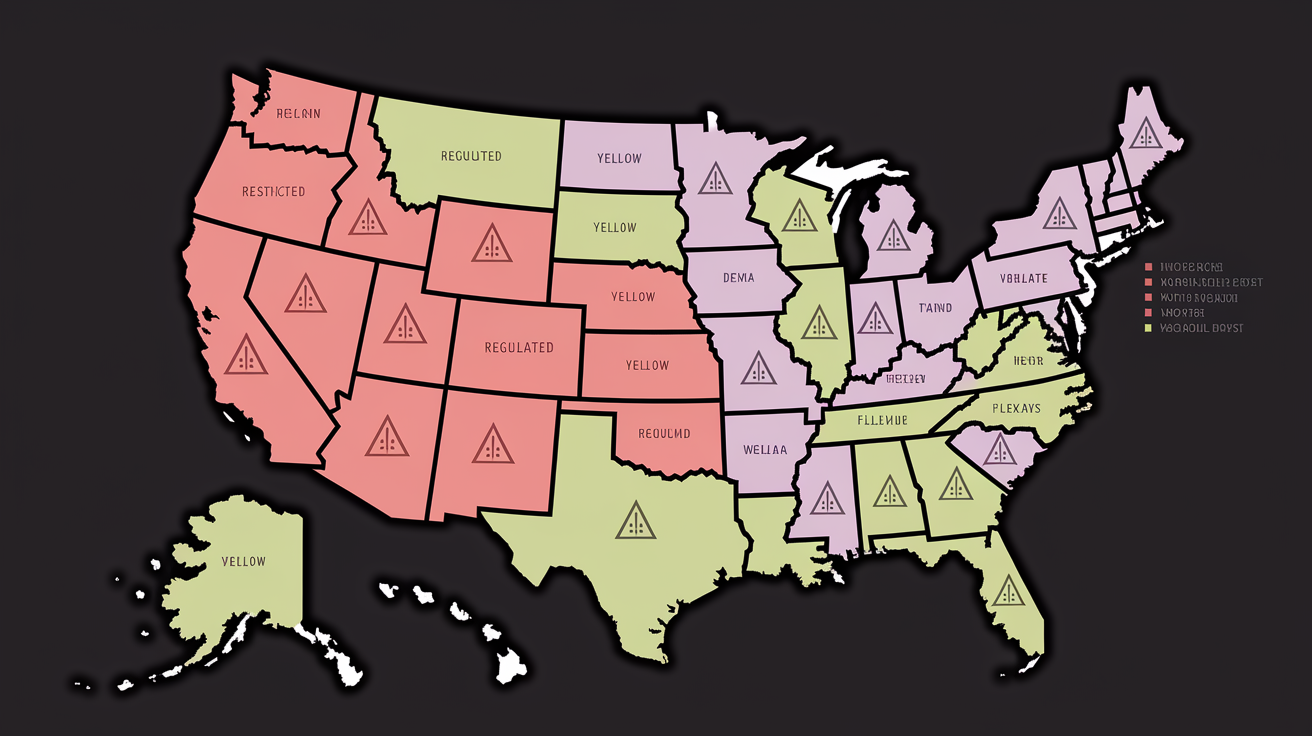
State insurance regulations control which discounts insurers can offer and how they apply them. California, Hawaii, and Massachusetts restrict or ban the use of credit-based insurance scores, so credit-related discounts won’t appear in those states. Some states mandate minimum discount percentages for good-student or defensive-driving credits, while others leave it to the insurer. Telematics program rules vary. Connecticut and California require insurers to allow customers to opt out without penalty, and data retention policies differ by state.
SR-22 or FR-44 filings (proof of insurance required after serious violations like DUI) limit access to many discounts. Insurers classify SR-22 drivers as high-risk, so safe-driver, claim-free, and loyalty credits often disappear or shrink. Multi-policy bundling and vehicle equipment discounts usually remain available. If you move states mid-policy, your discount stack may change. Uninsured motorist (UM) and underinsured motorist (UIM) stacking rules vary by state. Some states allow you to combine UM limits across multiple vehicles on one policy, while others cap total coverage at the highest single-vehicle limit.
Four common state and policy restrictions that affect discount stacking:
Credit scoring bans. California, Hawaii, Massachusetts prohibit credit-based insurance scores, eliminating credit-related discounts.
SR-22 / FR-44 filings. Required after major violations, most safe-driver and loyalty discounts become unavailable.
Telematics opt-out rules. Some states mandate penalty-free opt-out periods, confirm your state’s consumer protections before enrolling.
UM/UIM stacking limits. Varies by state, some allow additive coverage across vehicles, others cap at the policy maximum regardless of vehicle count.
Final Words
Stack the obvious discounts first: bundle your home and auto, keep a clean driving record, and add vehicle-safety and payment credits. Those moves usually deliver the biggest, most reliable savings.
Remember most insurers cap total savings (often 35–60%) and apply discounts one after another, so run the numbers for your situation. The post showed which combos tend to work and what documentation you’ll need.
Use the checklist here to compare quotes side-by-side and ask your agent about stacking rules. Finding the best car insurance discounts to stack can trim your bill and ease your mind.
FAQ
Q: Is stacking car insurance worth it?
A: Stacking car insurance is worth it when you can combine several credits, like driver, vehicle, policy, and payment, often cutting premiums 25–50%; insurer caps usually 35–60%. Check your insurer’s stacking rules and run apples-to-apples quotes.
Q: Can you stack insurance discounts?
A: You can stack insurance discounts in many cases, but insurers often apply them sequentially and cap totals (typically 35–60%). Some programs conflict, like duplicate telematics credits. Ask your insurer which combos they allow.
Q: Which insurance companies offer multi-policy discounts?
A: Insurance companies that offer multi-policy discounts include GEICO, State Farm, Progressive, Allstate, USAA (membership required), and Farmers. Discount ranges typically run 10–25% depending on insurer and state.
Q: Which insurance company is best for bundling?
A: The best insurance company for bundling depends on your profile. USAA often leads for members; GEICO and State Farm commonly offer strong bundles. Compare apples-to-apples quotes because caps and telematics rules change final savings.