


Think you’re safe because other drivers carry insurance?
About 1 in 7 drivers is uninsured, so that assumption can cost you.
This checklist helps you compare uninsured motorist (UM) and underinsured motorist (UIM) coverage side by side so you can pick protection that actually covers medical bills, lost wages, and car damage.
Print or save the checklist, fill one row per quote, and focus on limits, stacking, hit-and-run rules, and whether UIM was offered in writing.
By the end you’ll know which policy gives the most protection for your situation.
Uninsured Motorist Coverage Comparison Checklist

This checklist lets you compare uninsured motorist (UM) and underinsured motorist (UIM) coverage side by side. Use one row per policy or carrier so you can see differences in limits, premiums, and rules at a glance.
Print or save a digital copy and fill it out as you collect quotes. When you’re done, you’ll have a clear picture of which option gives you the best protection for your situation.
| Feature | UM Coverage | UIM Coverage | Notes |
|---|---|---|---|
| Liability trigger | At‑fault driver has no insurance | At‑fault driver’s limits too low to cover your losses | UM applies first; UIM applies when UM or other liability exhausted |
| Bodily injury | Medical bills, lost wages, pain & suffering | Same as UM—pays what at‑fault policy did not cover | Both follow per‑person and per‑accident caps (e.g., 100/300) |
| Property damage | UMPD available in some states (separate line or add‑on) | Rarely covers property—UIMPD less common | Check state law; collision usually overlaps UMPD |
| Hit‑and‑run inclusion | Yes, if you meet physical‑contact or witness rule | No—UIM requires an identified at‑fault driver | Police report must be filed promptly for UM hit‑and‑run claim |
| Deductible | Usually none for UMBI; may exist for UMPD | Usually none for UIMBI; deductibles vary by state | Confirm in policy—some carriers add small deductibles |
| State requirements | Mandatory in ~20 states; auto‑enrolled at liability limit | Fewer states mandate UIM; often you must opt in | Maryland example: UM 30/60 minimum; Connecticut requires match to liability |
| Coverage limits | Typical options: 25/50, 50/100, 100/300, 250/500 (in thousands) | Same limit tiers as UM; usually offered bundled | Cannot exceed liability limits in some states (e.g., South Carolina UM cap) |
| Stacking options | Some states allow stacking across household vehicles | Stacking rules identical to UM; not available everywhere | Stacking multiplies per‑person limits (3 vehicles × 100k = 300k stacked) |
| Exclusions | Does not cover intentional acts, business use without commercial policy, racing | Same exclusions plus requirement that at‑fault driver’s limits be exhausted | Read policy for state‑specific exclusions (e.g., off‑road, phantom vehicle rules) |
| Claim documentation | Police report, medical records, proof no at‑fault coverage | At‑fault driver’s policy declaration, settlement docs, itemized damages | UIM requires proof you exhausted other party’s limits before triggering payout |
When you’re evaluating your options, focus on these quick checks:
Confirm your UM and UIM limits match or exceed your liability limits. Expert baseline is 100/300.
Verify stacking eligibility if you own multiple vehicles, and calculate your stacked total (number of vehicles × per‑vehicle limit).
Check whether UIM was offered in writing, you accepted or rejected, and the premium difference for higher limits.
Note if UMPD or UIMPD is included and whether your state requires it or if collision overlaps enough to skip it.
Compare annual premium and premium per driver across carriers. Raising limits from 30/60 to 100/300 often adds only $10 to $20 per month.
Look for any policy reformation risk if the insurer failed to make a meaningful offer of UIM at purchase.
Understanding How Uninsured Motorist Coverage Works

UM coverage steps in when the driver who caused your accident doesn’t have liability insurance. About 1 in 7 drivers on U.S. roads is uninsured, so the risk is real. When a crash happens and the other driver can’t pay, your UM policy covers your medical bills, lost wages, and sometimes pain and suffering up to your policy’s limits. It also extends to passengers in your car and household members injured while riding in someone else’s vehicle.
UM is usually divided into two parts. UMBI (uninsured motorist bodily injury) handles injury expenses: doctors, therapy, lost income, and non-economic damages like pain and suffering. UMPD (uninsured motorist property damage) covers damage to your car when the at‑fault driver has no insurance, though UMPD is less common than collision and isn’t offered in every state. If your state does offer UMPD, check if you need it given your collision deductible and whether UMPD is rated as a not‑at‑fault claim.
When you file a UM claim, you submit it to your own insurer, not the at‑fault party. Your insurer investigates, determines fault, and pays damages up to your policy limits. UM claims are generally rated as not‑at‑fault, so premium increases are smaller than after an at‑fault collision. Historical average increase after a UMPD claim is about $72 per year, compared with $767 per year for an at‑fault accident. Your health insurance may cover some medical costs, but it won’t pay for lost wages or pain and suffering, and your health plan’s deductibles and co‑pays create gaps that UM fills.
Key Differences Between UM and UIM Coverage
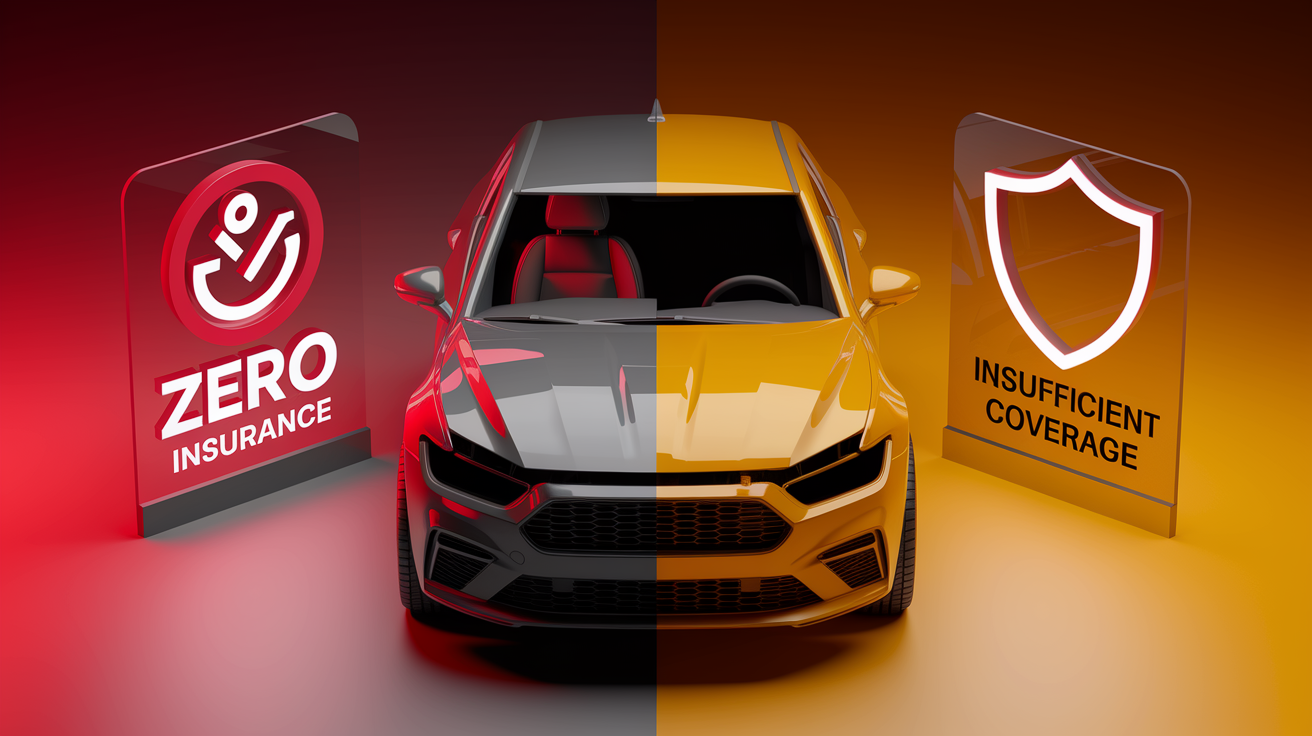
UM coverage applies when the other driver has no insurance at all or can’t be identified in a hit‑and‑run. UIM coverage applies when the at‑fault driver does have insurance but the liability limits are too low to cover your damages. Simplest way to think about it: UM is for zero coverage, UIM is for not enough coverage.
Most insurers bundle UM and UIM together, but they trigger under different conditions and pay out in different sequences. If the at‑fault driver has a 25/50 liability policy and your injuries total $100,000, the other driver’s insurer pays $25,000 and your UIM policy covers the remaining $75,000 up to your UIM limit. If the other driver has no insurance, your UM policy pays the full $100,000 up to your UM limit. Both coverages protect household members and passengers, and both follow the same per‑person and per‑accident caps.
The biggest distinctions to keep in mind when comparing policies:
UM pays when the at‑fault driver has zero liability insurance or flees the scene. UIM pays when the at‑fault driver’s limits are exhausted but your damages exceed those limits.
UM covers hit‑and‑run accidents if you meet physical‑contact or eyewitness rules. UIM requires an identified at‑fault driver with verifiable insurance.
UM is mandatory in about 20 states and auto‑enrolled at your liability limit. UIM is offered but not always required, so you may need to opt in.
Both UM and UIM share the same limit tiers (25/50, 100/300, etc.), but in some states you can’t buy UM limits higher than your liability limits.
UM claims are almost always rated as not‑at‑fault. UIM claims follow the same treatment but require proof that the other party’s policy was exhausted first.
State Specific UM and UIM Requirements

State laws control whether you must carry UM or UIM, how much you can buy, and whether you can stack limits across vehicles. These rules affect how you compare policies because a coverage option that’s automatic in one state might be a paid add‑on or outright unavailable in another.
| State Type | UM Required? | UIM Required? | Notable Rule |
|---|---|---|---|
| Strict‑requirement states | Yes, auto‑enrolled | Yes or must offer | Connecticut: UM and UIM must match liability limits exactly |
| Mandatory UM, optional UIM | Yes | Offer only | Maryland: UM minimum 30/60; UIM offered but you can decline in writing |
| Optional UM and UIM | No, but offered | No, but offered | South Carolina: UM auto‑enrolled at liability amount; UIM offered but not mandatory |
| Written‑rejection required | Must offer | Must offer | Florida: UM/UIM not required, but insurer must document your written rejection |
| Stacking‑allowed states | Varies | Varies | Some states let you stack across household vehicles; others cap or prohibit stacking |
| UM‑cap states | Yes, capped | Yes, capped | South Carolina: cannot purchase UM limits higher than your liability limits |
| UMPD add‑on states | Yes, UMBI mandatory | Varies | California: offers UMPD as separate add‑on; most states do not |
| No‑insurance states | Special rules | Special rules | New Hampshire: no car insurance required, but if you buy a policy UM/UIM must be included |
Before comparing quotes, look up your state’s baseline rules. In states like Virginia, where UM/UIM may be optional, you can decline coverage but that leaves you exposed. In Connecticut and Maryland, you must carry UM at or above state minimums.
Stacking rules also vary. South Carolina allows stacking across household vehicles, which can multiply your per‑person limits (three vehicles with 100/300 UM equals a stacked total of 300/900). Other states prohibit stacking or cap the stacked total at the measuring vehicle’s limit. Confirm stacking eligibility when you request quotes, and note whether your state restricts UM purchases above your liability limits. If you move states mid‑policy or buy a car in a different state, your coverage rules may change, so check requirements at every renewal.
How to Choose the Right Coverage Limits

Start by matching your UM and UIM limits to your liability limits. Most experts recommend this as the baseline because your liability coverage reflects how much you think is reasonable to pay someone else. You deserve the same protection when someone else hits you. If you carry 100/300 liability, buy 100/300 UM and UIM.
Next, evaluate your personal financial exposure. The average bodily injury claim runs about $17,000, but catastrophic injuries (broken bones, head trauma, long‑term disability) can generate bills and lost income in the hundreds of thousands. If you have significant assets, a high income, or dependents who rely on your earnings, consider raising UM/UIM limits above state minimums. Moving from 30/60 to 100/300 often costs only $10 to $20 extra per month, and the added $70,000 per person in coverage can be the difference between financial recovery and bankruptcy.
Check the real‑world risk in your area. States like Michigan have uninsured driver rates near 30 percent, while others hover near 10 percent. Even at 10 percent, that’s 1 in 10 drivers. Odds high enough to matter. If you live in a high‑uninsured area or commute in heavy traffic, higher UM/UIM limits are even more valuable.
When deciding on limits, keep these factors in mind:
Your health insurance deductibles, co‑pays, and whether your plan covers lost wages or pain and suffering (most don’t).
The value of your household income and how long you could survive without a paycheck if injured.
Whether you own multiple vehicles and can stack UM/UIM limits for broader per‑person protection.
The premium difference between limit tiers. Run real quotes for 50/100, 100/300, and 250/500 to see the actual cost delta.
Questions to Ask Your Insurance Provider

Use these questions to compare UM and UIM offerings across carriers and catch gaps before you buy.
What are my current UM and UIM limits in dollars (per person / per accident), and do they match my liability limits?
What’s the premium increase to raise UM/UIM from my current limits to 100/300 or 250/500, broken down by annual and monthly cost?
Does my UM coverage include bodily injury and property damage, or is UMPD a separate add‑on or unavailable?
Am I allowed to stack UM/UIM across the vehicles in my household, and if so what’s my total stacked limit?
If I’m injured while riding in someone else’s car, does my at‑home UM/UIM policy apply, and which policy has priority?
What documentation do I need to file a UM claim for a hit‑and‑run (police report timeline, physical‑contact requirement, eyewitness affidavit rules)?
Will filing a UM or UIM claim increase my premium, and if so by how much and for how many years?
Does this state require a written rejection if I decline UIM, and did the insurer make a meaningful offer of UIM at purchase?
After you collect answers, compare the quotes side by side using the checklist table. Look for mismatches in limits, premium jumps, stacking eligibility, and claim‑rating treatment. The carrier with the lowest premium isn’t always the best deal if the UM limits are too low or stacking is blocked.
Final Words
Start by running the checklist against your current policy. Focus on state rules, whether UM or UIM applies, limits, stacking, hit-and-run inclusion, and the documents you’ll need to file a claim. That shows gaps fast.
Then call your insurer with the questions list. Match limits to your likely medical costs and lender requirements, and pick higher limits if a serious injury would cost more than your car.
Use the compare uninsured motorist coverage checklist to compare offers apples-to-apples and choose a plan that gives you clear, dependable protection.
FAQ
Q: What should I choose for uninsured motorist coverage?
A: The uninsured motorist coverage you should choose depends on your medical cost risk, state rules, and budget. Match UM limits to your liability limits; pick higher limits if you have little savings.
Q: Is uninsured motorist coverage a waste of money?
A: Uninsured motorist coverage is not usually a waste of money. It pays your medical bills, lost wages, and pain when the at-fault driver has no or too little insurance, often at a modest added cost.
Q: Is it better to have a $500 deductible or $1 000?
A: Choosing a $500 versus $1,000 deductible depends on your savings and claim frequency. A $1,000 deductible usually lowers premiums; pick $500 if you prefer smaller out-of-pocket costs for common repairs or medical bills.
Q: What does $100 k /$ 300k /$ 100k mean?
A: The $100k/$300k/$100k means the insurer will pay up to $100,000 per injured person, $300,000 total per accident, and $100,000 for property damage. It shows per-person, per-accident, and property limits.