
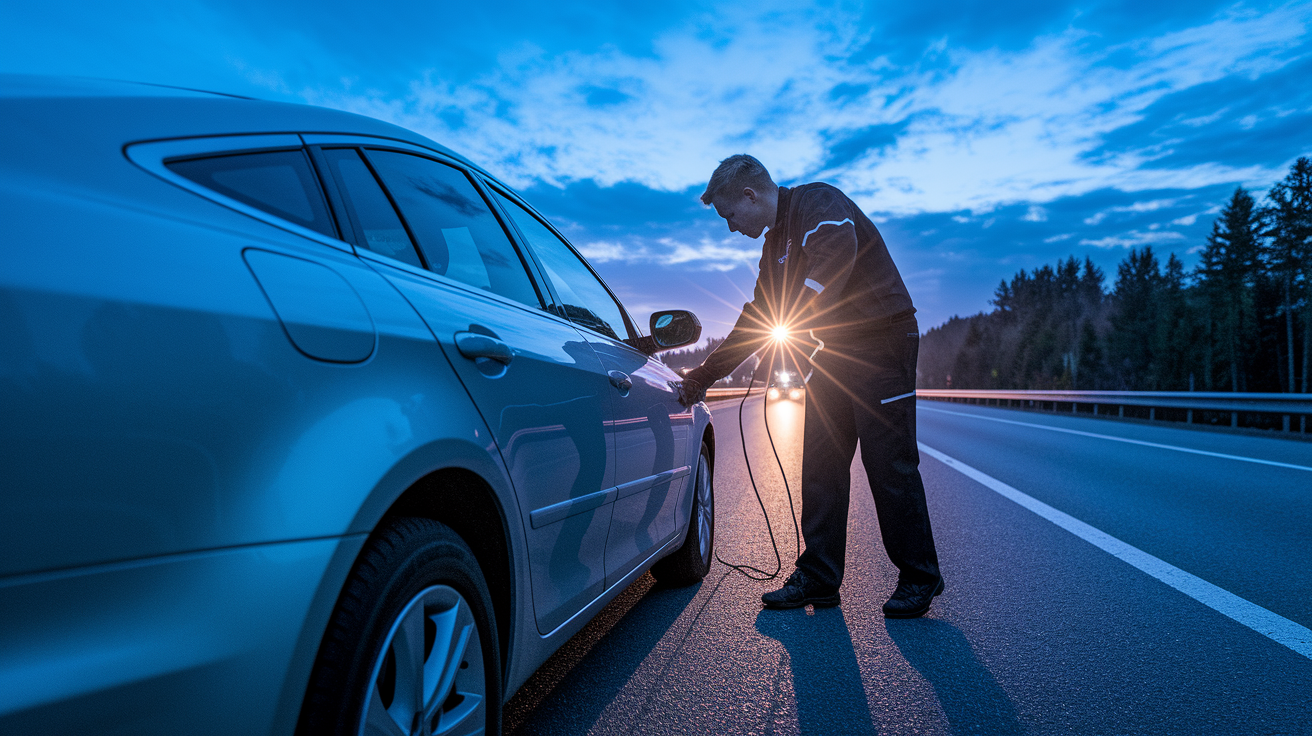

Does roadside assistance really cover jump starts, towing, and lockouts?
Short answer: mostly yes, but there are distance caps, call limits, and exclusions.
A jump start is almost always included; towing and lockout help usually are too.
But plans differ on miles covered, how many calls per year, and what triggers extra fees.
This post walks through typical coverage, common gotchas like key replacement or off-road recovery, and the exact questions to ask your provider so you won’t be surprised when you need help.
What Roadside Assistance Typically Covers
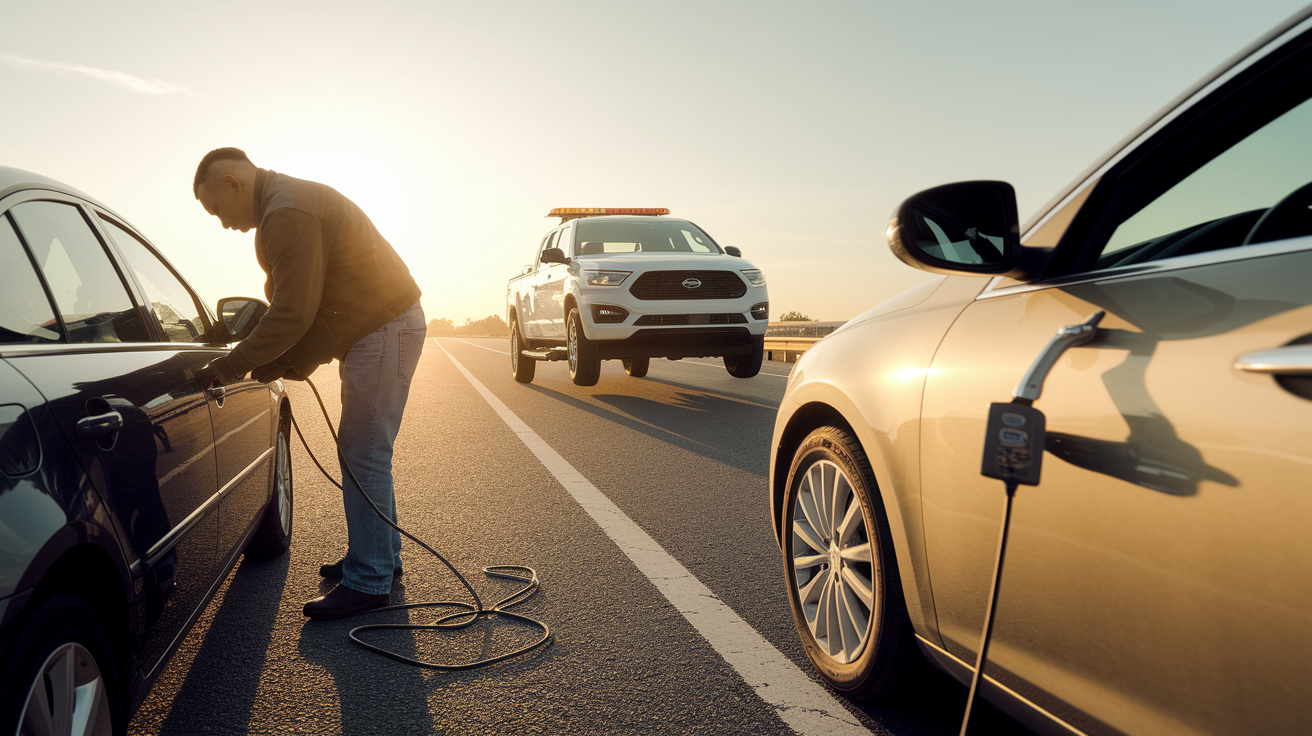
Most roadside plans cover jump starts, towing to a nearby shop, and lockout help. These three handle the bulk of everyday breakdowns, dead batteries, and locked-out situations that strand drivers. You’re usually not charged per incident, but there are limits on distance, number of calls, and specific conditions.
How these services get bundled varies. Some plans follow the vehicle, meaning only the insured car is covered no matter who’s driving. Others follow the driver, so if you’re in a friend’s car or a rental, you can still call. Membership groups often offer tiers with better perks like longer towing distances or extra calls per year. Insurance plans tend to be simpler and cheaper, but they cap towing at shorter distances and limit how many times you can call annually.
Even standard coverage has quirks. A jump start is usually free, but if your battery needs replacing the technician won’t carry one. Towing might be free for 15 miles but cost extra after that. Lockout service will get your door open, but if you lost the key entirely you’re paying for a new one. Knowing what’s included versus what triggers an extra charge helps you avoid surprises when you’re already stuck.
- Jump starts – technician shows up with battery power to get your engine running
- Towing – transport to a repair shop, typically within 10 to 50 miles
- Lockout assistance – unlocking your vehicle when keys are inside
- Fuel delivery – small amount of gas brought to you, usually 2 to 5 gallons
Breakdown of Core Services: Jump Starts, Towing, and Lockouts

Jump start service is simple. A technician arrives with cables or a portable battery, connects to your battery, and gives you enough power to start the engine. The service is almost always free under your plan. Some will do a quick battery check to see if it’s weak and likely to fail again soon. The catch? Roadside assistance doesn’t include a replacement battery. If your battery’s dead because it’s old or damaged, the technician can jump you so you can drive to a parts store or mechanic. You pay for the new battery and installation. For electric vehicles, some plans offer mobile charging to get you to a charging station. Others skip that step and just tow the EV to a charger within your mileage limit.
Towing is one of the most used services, and it comes with clear distance caps. A basic plan might cover 10 to 15 miles, which usually gets you to the nearest shop. Mid-tier plans often bump that to 50 or 100 miles. Premium memberships can cover 200 miles or more per tow. Need to go beyond your plan’s limit? The provider charges per additional mile, usually around 3 to 7 dollars. Most will tow to the nearest qualified facility by default. Want your car towed to a specific shop across town or to your house? That’s allowed in many plans, but the extra mileage counts against your limit or triggers overage fees. Situational towing, like pulling your car out of a ditch close to the road, often falls under winching or recovery rather than standard towing. Separate rules usually apply.
Lockout assistance covers unlocking your vehicle when the keys are inside. A technician uses specialized tools to open the door without damaging the lock or window. This service is typically free and counts as one of your annual calls. The limit is usually on the technician’s time, capped at about 30 minutes to an hour of labor. Keys lost, stolen, or broken? Lockout service won’t help. The provider may arrange for a locksmith to cut a new key or reprogram a fob, but you pay the locksmith directly. Replacement key costs can range from 50 dollars for a basic metal key to 200 dollars or more for a smart key. Some higher-tier plans offer partial reimbursement for locksmith services, commonly up to 100 dollars. Standard plans don’t.
Differences Between Major Providers and Membership Tiers

Coverage details shift depending on whether you get roadside assistance through auto insurance, a membership group like AAA, a credit card benefit, or your vehicle’s manufacturer warranty. Insurance plans are usually the cheapest option, often 15 to 30 dollars per year added to your auto policy. They tend to cap towing at shorter distances and limit you to three or four calls annually. Membership programs cost more upfront, commonly 60 to 120 dollars per year depending on the tier. They often allow unlimited calls and include longer towing distances, especially at premium levels. Automaker programs are sometimes included free with a new vehicle for the first three to five years, and they may offer perks like complimentary rental car reimbursement or trip interruption coverage that other plans skip.
| Provider | Basic Coverage | Notable Limits |
|---|---|---|
| AAA Classic | Towing up to 7 miles, jump starts, lockout, tire change | 4 service calls per year; extra towing costs ~4 dollars per mile |
| Insurance Add-On (Progressive example) | Towing up to 15 miles, jump starts, lockout | Typically 3–4 calls per year; follows the insured vehicle only |
| Credit Card Perks (Visa/Amex examples) | Limited or pay-per-use roadside dispatch | Often no included towing mileage; cardholder pays discounted rate per service |
| Manufacturer Plan (Ford example) | Towing up to 50 miles, trip interruption coverage | Valid for first 3–5 years or 36,000–60,000 miles; vehicle must be under warranty |
Picking the right plan depends on how often you drive, where you drive, and whether you want coverage that travels with you or stays with your car. If you regularly take long road trips or drive an older vehicle prone to breakdowns, a higher-tier membership with extended towing and unlimited calls makes sense. Mostly drive locally and your car’s reliable? A low-cost insurance add-on or even relying on a credit card’s pay-per-use service may be enough. Check whether the plan follows the driver or the vehicle. That detail determines whether you’re covered when you’re behind the wheel of someone else’s car.
Costs, Limitations, and Exclusions to Be Aware Of

Roadside assistance can be structured as a flat annual membership fee, an add-on to your auto insurance bill, or a pay-per-use service where you’re charged each time you call. Membership programs like AAA typically cost between 60 and 120 dollars per year depending on the tier. Basic plans offer shorter towing distances and fewer annual calls. Premium plans extend towing to 100 or 200 miles and allow unlimited service requests. Insurance add-ons are cheaper, usually 15 to 30 dollars annually per vehicle, but they come with tighter restrictions. Credit card roadside perks often work on a reimbursement or pay-per-call basis. You pay the tow company upfront and submit receipts, or the card’s concierge arranges service and bills you at a discounted rate, sometimes 50 to 80 dollars per incident.
Most plans impose limits that can catch you off guard if you’re not familiar with the fine print. Common restrictions include the number of service calls allowed per year, usually three to five for basic plans, with a per-call fee of around 75 to 125 dollars once you exceed that cap. Towing mileage is another frequent limit. Your plan covers 15 miles and you need a 40-mile tow? You’ll pay the difference at a per-mile rate. Off-road recovery, like pulling your vehicle out of deep mud or snow more than 100 feet from a paved road, often isn’t covered under standard plans. You may need a specialized recovery service that bills separately.
- Towing mileage caps – free towing only up to a set distance, typically 10 to 50 miles, with per-mile charges beyond that
- Annual service-call limits – basic plans often allow 3 to 5 calls per year; exceeding the limit triggers full-price charges
- Off-road exclusions – winching or recovery may be limited to vehicles within 100 feet of an established road
- Key replacement not covered – lockout service unlocks the door but doesn’t pay for lost, stolen, or broken key replacement
- Extra fees for specialty towing – flatbed towing for low-clearance vehicles, motorcycles, or RVs may cost more or require a specialized plan
Premium tiers reduce or eliminate many of these limitations. Upgrading from a basic membership to a mid or high-tier plan often increases towing from 7 or 15 miles to 100 or 200 miles, raises the annual call cap to unlimited, and adds benefits like trip interruption reimbursement (commonly 100 dollars per day for up to three days if you break down far from home). You drive frequently, cover long distances, or own an older vehicle? The extra 30 to 60 dollars per year for a higher tier can pay off after just one or two long-distance tows. Rarely break down and stay close to home? Sticking with a basic plan or an insurance add-on keeps costs low without sacrificing the essentials.
When Roadside Assistance May Not Help and What to Do Instead

Roadside assistance is designed for mechanical breakdowns and minor emergencies, not for accidents or situations that require specialized recovery. If you’re involved in a collision, standard roadside plans typically don’t cover towing from the accident scene. That’s handled by your auto insurance collision or comprehensive coverage, which arranges and pays for towing to a repair shop or storage lot. Your vehicle stuck far off-road, deep in sand, or submerged in water? Most roadside plans won’t send a recovery team because the extraction exceeds their equipment or policy limits. Off-road recovery often requires a heavy-duty tow truck or winch-equipped recovery service. Those providers charge based on the complexity of the job, sometimes 200 to 500 dollars or more.
When roadside assistance can’t help, your next step depends on the situation. For accident-related towing, call your insurance company’s claims line and ask them to dispatch a tow truck. They’ll coordinate directly with a contracted towing company. The cost is usually covered under your policy’s towing and labor provision or counted toward your deductible. Stuck off-road or need specialized recovery? Search for local towing companies that advertise heavy-duty or off-road recovery services. Ask for a quote before they dispatch. Some credit cards and higher-tier roadside memberships offer reimbursement for emergency towing expenses. Keep your receipt and submit a claim after. Your car has a mechanical failure that can’t be fixed on-site and you’re beyond your plan’s towing distance? You can pay the overage fee per mile, arrange your own tow and seek partial reimbursement if your plan allows it, or contact your insurer to see if towing and labor coverage applies.
Final Words
Right to the point: most plans will handle jump starts, towing to a nearby shop, and basic lockout help.
If you’re still asking, does roadside assistance cover jump starts towing and lockouts — the short answer is usually yes, but check mileage caps, yearly call limits, and whether key replacement or long-distance towing carries extra fees.
Quick next step: read your policy or call your provider today to confirm limits and make sure you’ve got the right level of protection. You’ll drive easier knowing you’ve got a plan.
FAQ
Q: Does roadside assistance include lockout?
A: Roadside assistance usually includes lockout help, meaning a technician unlocks your car door; it rarely covers key replacement or fob reprogramming, and limits or extra fees can apply depending on your plan.
Q: Does roadside assistance include jump start?
A: Roadside assistance generally includes jump starts, where a technician boosts your battery on site; it won’t usually replace a dead battery, and repeated calls or battery replacement may cost extra under some plans.
Q: Who can jump start a car for free?
A: People who can jump start a car for free are roadside technicians tied to your membership or insurer, credit card benefits, or automaker programs, when the plan includes jump starts.
Q: Do I have to pay for towing if I have roadside assistance?
A: If you have roadside assistance, you usually don’t pay for towing up to your plan’s mileage limit; beyond that, long-distance tows, extra miles, or non-covered situations can cost you.