


What if the other driver has no insurance?
Who pays your medical bills and lost wages?
Start with one simple rule: match your uninsured motorist (UM) limits to your liability limits.
That keeps your protection consistent and prevents a cheap state minimum from leaving you on the hook.
Then think about your assets, household size, and health insurance gaps.
This post shows how much uninsured motorist coverage you need and the quick questions to ask your agent.
Recommended Uninsured Motorist Coverage Amount

Most insurance professionals recommend matching your uninsured motorist limits to your liability limits. If you’re carrying $100,000 per person and $300,000 per accident in bodily injury liability, you’ll want the same structure in UM. This keeps things consistent. You’ve already decided that level of protection makes sense if someone sues you, so why wouldn’t you want the same protection if an uninsured driver hits you?
A typical middle-tier setup is $100,000 per person and $300,000 per accident. Plenty of drivers go with $250,000 per person, and some choose $500,000 or more if their assets and income justify higher protection. Higher limits cut the risk that a serious injury forces you to pay tens of thousands out of pocket when the at-fault driver has nothing. UM coverage protects you against uninsured drivers, underinsured drivers (in states that bundle UIM with UM), and hit-and-run drivers who take off.
Start with your liability limits as the baseline. Then ask yourself: if I’m hurt badly enough to exhaust that coverage, can I afford the difference? If the answer’s no, think about raising both liability and UM together. You don’t want to recover physically but face financial ruin because the other driver had nothing and your own policy came up short.
When you’re deciding how much to carry, think about:
Match or exceed your liability limits to keep protection consistent in both directions.
Look at household income and savings. Higher earners and people with retirement accounts or real estate should protect those assets with higher UM limits.
Think about passenger injuries. Your UM policy can cover other people in your vehicle when an uninsured driver causes a crash.
Review state minimums but don’t stop there. State-required UM floors (if any) are usually way below the cost of serious medical treatment.
Consider gaps in health insurance. High deductibles, out-of-network penalties, and uncovered lost wages make UM coverage critical.
Key Factors That Determine the Right UM Coverage

Your personal assets play the biggest role in figuring out the right uninsured motorist coverage. If you own a home, have retirement savings, or hold investment accounts, those assets are at risk when medical bills and lost wages blow past your UM policy limits. An uninsured driver can’t pay you, so your own policy is the only source of recovery. If that policy pays $50,000 and your damages total $150,000, you’ll either absorb the $100,000 shortfall or try to collect from a judgment-proof defendant. That process rarely works.
Medical costs from serious crashes routinely top $100,000. Emergency room treatment, surgery, hospital stays, rehab, prescription medications, and follow-up care add up fast. Orthopedic injuries, traumatic brain injuries, and spinal damage often need months of treatment and generate bills that dwarf state-minimum UM limits. If your health insurance has a high deductible or doesn’t cover all providers, those gaps become out-of-pocket expenses. UM coverage is built to fill those gaps when the at-fault driver has no insurance.
Household size and the number of drivers in your family also shape the right UM amount. If you’ve got a spouse, teenage drivers, or elderly parents on your policy, each person is a potential claimant under your UM coverage. A single accident can injure multiple passengers, and a per-accident limit of $300,000 gets split among all injured parties. Families with several drivers should think about per-accident limits high enough to cover multiple serious injuries without forcing anyone to sue their own insurer for inadequate coverage.
Risk tolerance and local crash data round things out. States with high uninsured-driver rates (often 10 to 20 percent of all motorists) present a real probability that your next accident involves someone without insurance. If you live somewhere uninsured driving is common, or if you commute on high-speed highways where crash severity is greater, higher UM limits are a realistic hedge against that risk. The question isn’t whether you’ll ever need the coverage, but whether you can afford the financial fallout if you do and your limits prove too low.
Cost of Increasing UM Coverage

Raising uninsured motorist coverage from state minimums to $100,000 per person or $250,000 per person usually adds $10 to $20 per month to your premium. The exact increase depends on your state, driving record, vehicle, and insurer, but UM coverage is typically cheaper than liability coverage because it only applies when the other driver is uninsured or underinsured. Liability coverage, by contrast, pays claims you cause, which statistically happen more often and in higher amounts across an insurer’s book of business.
Doubling your UM limits rarely doubles your premium. For example, going from $50,000 to $100,000 per person might cost an extra $5 to $8 per month, while jumping from $100,000 to $250,000 could add another $8 to $12. The incremental cost of higher limits drops as you move up, making $250,000 or $500,000 limits a cost-effective choice for drivers with significant assets or income. Many insurers offer $1,000,000 umbrella policies that extend UM coverage even further, often for less than $20 per month when bundled with auto and home insurance.
Typical cost drivers and premium impacts:
State minimums and mandates. States that require UM by law may have higher base premiums, but the incremental cost to increase limits stays modest.
Driving record and claims history. A clean record keeps UM premiums low. At-fault accidents and tickets raise all coverages, including UM.
Vehicle value and type. UM premiums aren’t directly tied to vehicle value (that’s collision and comprehensive), but insurers may charge slightly more for high-performance or luxury vehicles due to injury severity in crashes.
Bundling and multi-policy discounts. Combining auto and home insurance or insuring multiple vehicles often lowers the marginal cost of higher UM limits, making $250,000 or $500,000 coverage more affordable than buying each policy separately.
State Requirements and Minimum UM Limits

Uninsured motorist coverage is mandatory in some states and optional in others. States that require UM typically set a minimum limit equal to the state’s liability minimum, but those floors are often way below the cost of serious injuries. For example, a state might require $25,000 per person in UM coverage, an amount that can be wiped out by a single emergency room visit and follow-up surgery. Other states let drivers reject UM coverage entirely by signing a written waiver, leaving those drivers with no protection if an uninsured driver causes a crash.
Even in states that mandate UM, the law usually lets drivers carry the absolute minimum, which creates a false sense of security. A $25,000 UM limit will cover minor soft-tissue injuries and some broken bones, but it won’t cover traumatic brain injuries, spinal damage, or multi-week hospital stays. Medical bills from moderate to severe crashes routinely hit $50,000 to $150,000, and lost wages can add tens of thousands more. Relying on state-minimum UM limits is a gamble that your next crash will be minor and that the uninsured driver who hits you will somehow have assets you can collect against. That combination rarely happens.
State laws also differ on whether UM coverage includes underinsured motorist (UIM) protection. Some states automatically bundle UIM with UM, while others require separate purchase or offer UIM as an optional add-on. In states where UIM is separate, you have to specifically select it to get protection when the at-fault driver carries insurance but not enough to cover your injuries. Checking your state’s requirements and understanding the difference between UM-only and UM/UIM coverage is essential before you choose limits.
| State Example | Minimum UM Limit | Notes |
|---|---|---|
| Maine | $50,000 per person / $100,000 per accident | UM required, must equal liability limits |
| Connecticut | $25,000 per person / $50,000 per accident | UM required unless rejected in writing |
| Texas | None | UM optional, must be offered by insurer |
| California | $15,000 per person / $30,000 per accident (if purchased) | UM optional, floor matches liability minimum |
Real-World Scenarios: When Limits Are Too Low or High
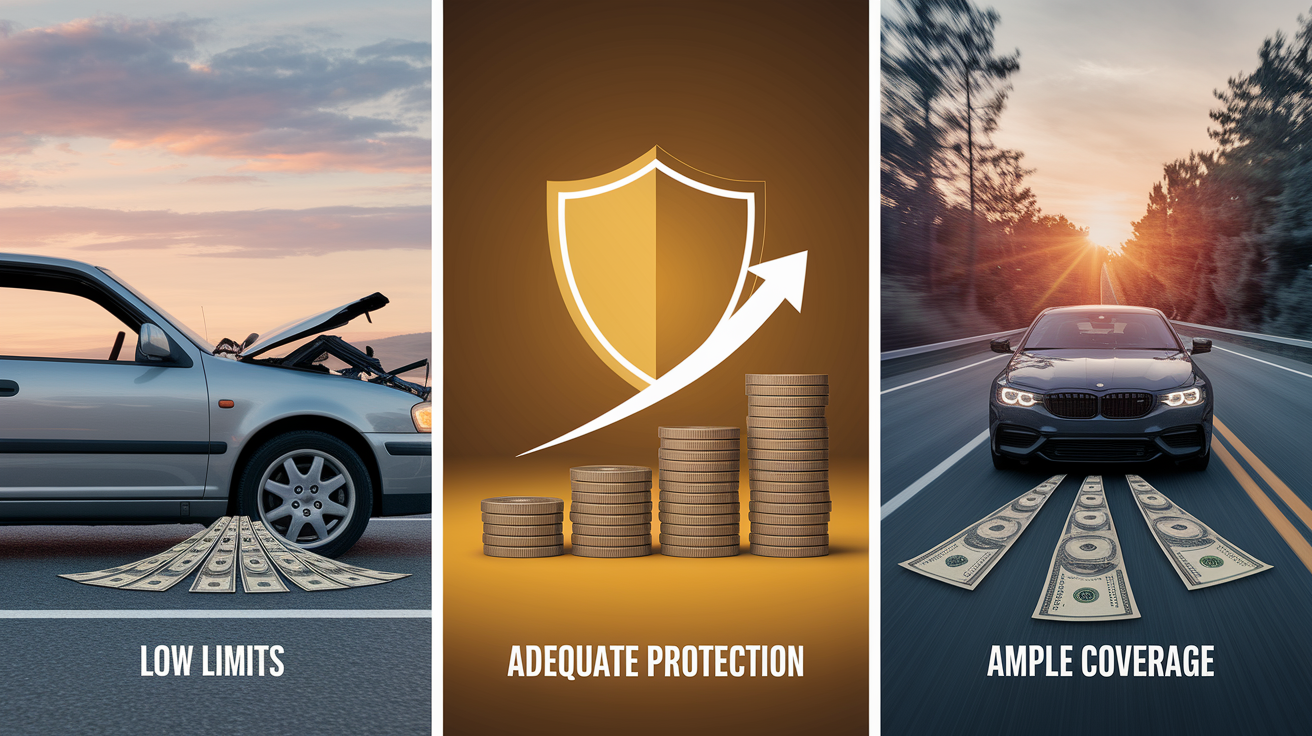
Consider a driver rear-ended at a stoplight by an uninsured motorist traveling 45 miles per hour. The impact fractures two vertebrae and requires emergency surgery, three days in the hospital, and eight weeks of physical therapy. Total medical bills reach $82,000, and lost wages add another $12,000. The driver’s UM coverage has a $50,000 per person limit. The policy pays $50,000, leaving the driver responsible for $44,000 in unpaid bills and wages. The uninsured at-fault driver has no assets and files for bankruptcy six months later.
A second driver gets hit by someone who fled the scene after running a red light. The crash causes a traumatic brain injury, facial fractures, and a shattered femur. Medical costs total $340,000 over two years, and the driver can’t return to work for 18 months, losing $95,000 in income. The driver carries $500,000 per person in UM coverage. The policy pays the full $435,000 in documented damages, covering all medical bills, lost wages, and providing additional compensation for pain and suffering. The driver recovers financially and focuses on physical rehab without the distraction of unpaid creditors.
A third driver with $25,000 in UM coverage suffers whiplash and a concussion when an uninsured driver runs a stop sign. Initial emergency room treatment costs $8,000, follow-up imaging and neurology visits add $6,500, and the driver misses three weeks of work, losing $4,200. Total documented damages equal $18,700. The UM policy pays the full amount, and the driver’s out-of-pocket expense is limited to health insurance copays. In this case, the $25,000 limit was enough because the injuries stayed moderate and treatment wrapped up within a few months.
Final Words
Match your uninsured motorist limits to your liability limits — many people choose $100,000/$300,000 or higher to avoid big out-of-pocket medical bills.
We covered why: state minimums are often too low, your income and assets matter, family size and local uninsured-driver rates change the math, and raising UM usually adds only a small monthly amount.
Ask your agent this exact question: how much uninsured motorist coverage do I need? Get quotes with the same limits and drivers so you can compare. You can improve protection for a little extra cost and sleep easier.
FAQ
Q: What is the best amount of uninsured motorist coverage? Is 50/100/50 enough?
A: The best amount of uninsured motorist coverage is to match your liability limits—many choose at least 100/300 or higher; a 50/100/50 limit is often too low for serious medical bills.
Q: What is the 80% rule for insurance?
A: The 80% rule for insurance means you should insure property for at least 80% of its replacement value, or the insurer may reduce your payout proportionally if you’re underinsured.
Q: Is it better to have a $500 deductible or $1 000?
A: Choosing between a $500 deductible or $1,000 comes down to your cash cushion: $1,000 usually lowers your premium, but pick $500 if you can’t comfortably cover the higher out-of-pocket after a claim.