

Think filing a claim is just calling your insurer and waiting?
It’s not.
This post shows simple, practical steps to file a claim after a car crash and get a fair result.
You’ll learn what to do at the scene, what documents to gather, how to tell your insurer the facts, and how to deal with the adjuster so you don’t get shortchanged.
Read on and you’ll have a clear checklist to follow.
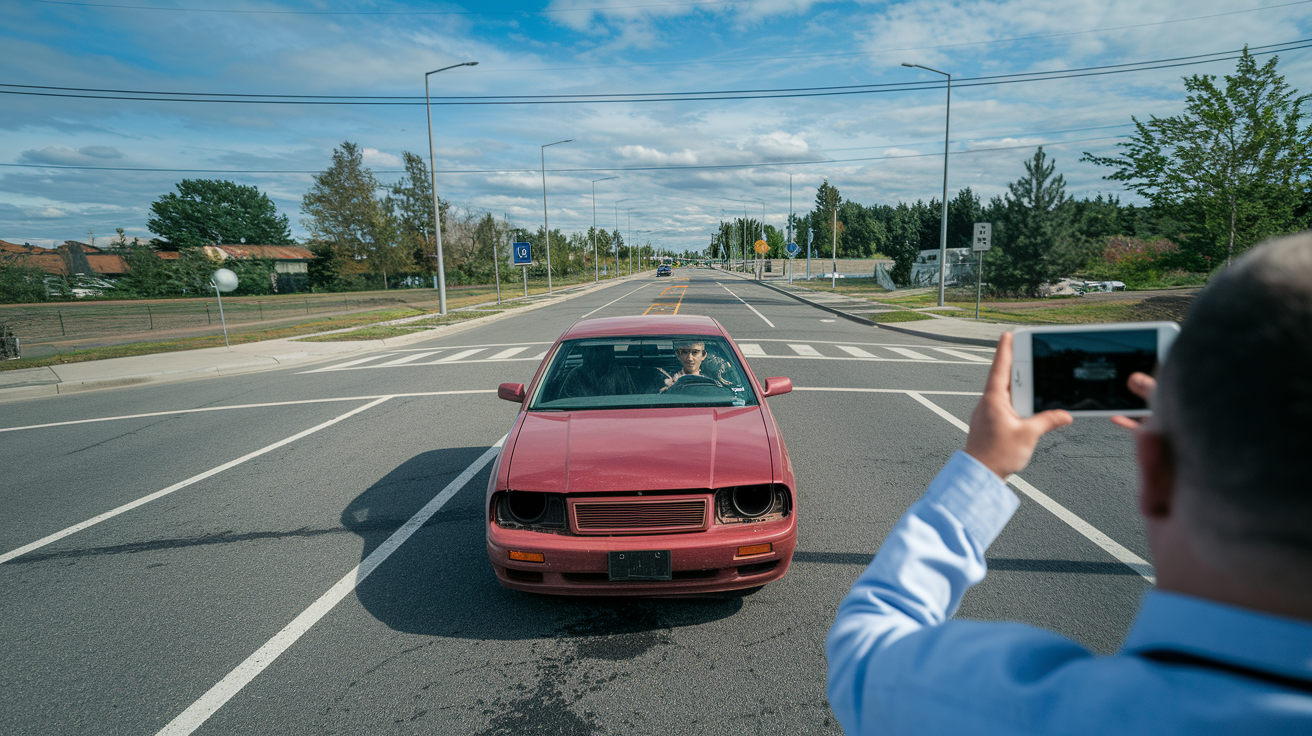
If you’re here after a crash, do one thing right now: take lots of photos and get the police report number.
Immediate Scene Actions for Starting the Car Accident Claim Process

Check for injuries first. If anyone’s hurt or the damage looks bad, call 911. In most states, you’re legally required to report an accident to police if someone’s injured, if property damage crosses a certain threshold (usually $1,000 or more), or if a driver seems impaired. Getting a police report started gives you a report number, typically within 24 hours. Your insurer’s going to ask for that number right away.
Document everything with photos and video. Take at least 10 to 20 photos covering every angle of damage to all vehicles, license plates, skid marks, traffic signs, road conditions, and where the cars ended up. Use your phone’s camera with timestamp and location turned on. Record a short video walking around the scene if you can, narrating what you’re seeing. Grab contact info from witnesses if anyone stopped. Write down their names, phone numbers, and a quick note about what they saw.
Before you leave, exchange complete information with the other driver. You’ll need these details to file your claim quickly.
Scene Checklist:
- Check for injuries and call 911 if anyone’s hurt or damage looks severe.
- Move vehicles somewhere safe if you can do it without causing more problems.
- Exchange driver’s license number, license plate, insurance company name, policy number, and vehicle VIN with the other driver.
- Take 10 to 20 photos and a few short videos of damage, positions, plates, road signs, skid marks, and scene conditions.
- Record the exact time, date, location (street name, mile marker, or GPS coordinates), and weather.
- Ask for witness names and phone numbers from at least one to three people who saw the crash.
Collecting Required Documentation for Filing a Car Accident Insurance Claim
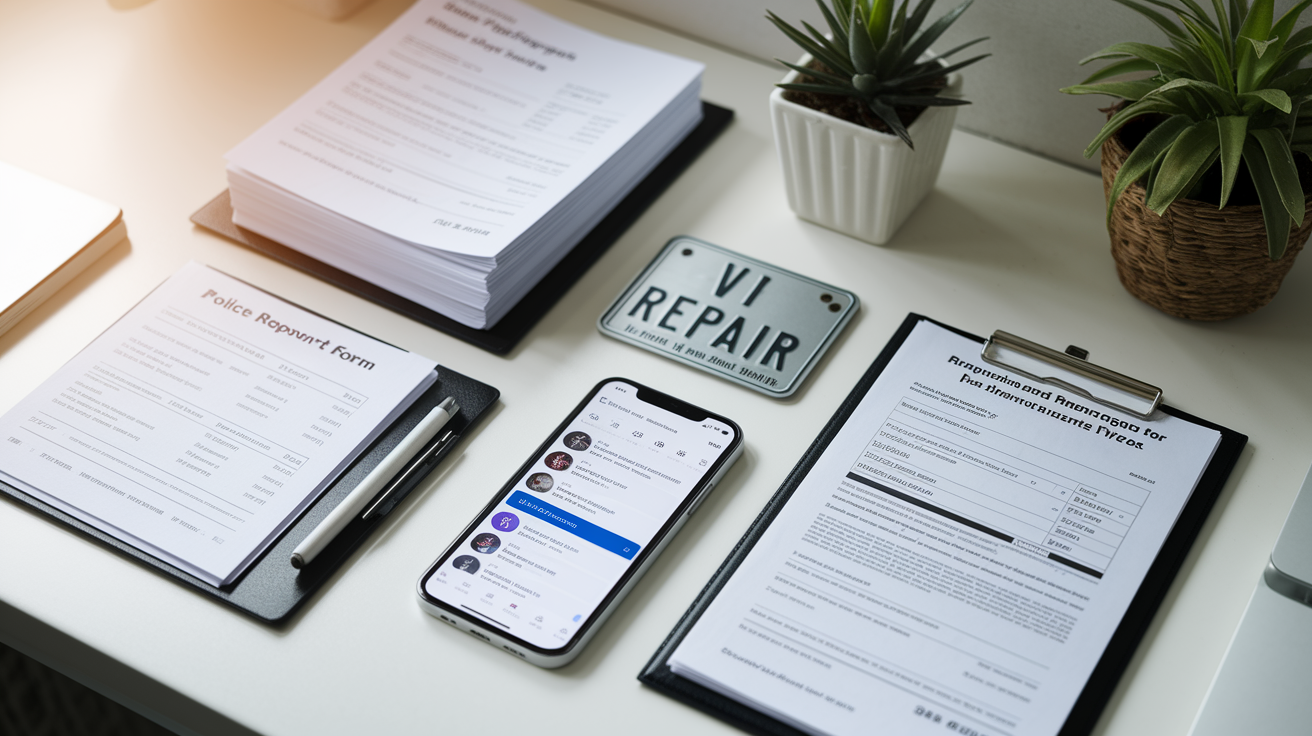
Insurers need documentation to verify your claim, figure out who’s at fault, and calculate payouts. Organized records speed things up and improve your odds of a fair settlement. Start gathering documents right after the accident. Keep everything in one folder, digital or paper. Missing even one piece of paperwork can delay your claim by days or weeks.
For property damage, you’ll need the police report number, copies of your driver’s license and vehicle registration, the VIN (check the dashboard or door frame), photos and videos from the scene, at least one written repair estimate, tow and storage receipts if your car was towed, and any invoices for temporary repairs or rental cars. For injuries, collect medical bills and records from the emergency room or urgent care (ideally within 24 to 72 hours of the accident), prescription receipts, treatment notes from follow-up appointments, and documentation of lost wages if you missed work.
Required Documentation Checklist:
- Vehicle Identification Number (VIN) from your car and the other driver’s car if you can see it
- All photos and videos from the scene (10 to 20 minimum)
- Police report number and a copy of the full report once it’s available
- At least one written repair estimate from a body shop or dealer
- Tow and storage receipts showing date, time, location, and charges
- Medical bills, ER or urgent care records, prescriptions, and treatment summaries
- Proof of lost wages (pay stubs, employer letter, or tax records if you’re self-employed)
- Copies of your insurance card, driver’s license, and vehicle registration
Notifying the Insurance Company After a Car Accident

Most insurers expect you to report an accident as soon as possible. Call or file online within 24 hours of the crash if you can. Insurers commonly expect initial notice within 24 to 72 hours, and many policies require written claims or additional documentation within 10 to 30 days. Delaying your report can lead to denial if the insurer argues the delay caused them harm, like lost evidence or the inability to interview witnesses.
You can notify your insurer by phone, through their mobile app, or via their website’s online claims portal. When you call, have your policy number ready, along with the date, time, and location of the accident, the police report number, the other driver’s name and insurance details, and a short factual description of what happened. The insurer will ask for the VIN, odometer reading, names and contact info for passengers and witnesses, and details about injuries or vehicle damage. Stick to the facts. Don’t speculate about fault or say things like “It was all my fault.”
After you file, the insurer gives you a claim number right away. Write it down and keep it handy for every follow-up call or email. You’ll also be assigned a claims adjuster, usually within 24 to 72 business hours. Save the adjuster’s name, phone number, email, and any case reference numbers. Track the date and time of every conversation, what was discussed, and what the next steps are. This log helps if timelines slip or if you need to escalate issues later.
Step-by-Step Car Accident Insurance Claim Process Explained

Filing a car accident claim follows a structured workflow from opening the claim to receiving your settlement. Understanding each stage helps you stay organized and avoid delays.
Opening the claim
When you first contact your insurer, you’ll provide the information collected at the scene and immediately after. This includes your policy number, the accident date, time, and location, the police report number, the other driver’s name, insurance company, and policy number, your VIN and odometer reading, a description of the damage and any injuries, the tow yard location if your car was towed, and the names and phone numbers of passengers and witnesses. The insurer opens a file, assigns a claim number, and logs your First Notice of Loss. You’ll typically receive the claim number during this first contact, either over the phone or in a confirmation email.
Document upload and verification
After opening the claim, you’ll upload or email your documentation. Most insurers accept digital submissions through their mobile app or secure online portal. Submit your photos and videos, a copy of the police report or the report number if the full report isn’t ready yet, repair estimates if you’ve already obtained one, tow and storage receipts, medical records and bills for injury claims, and copies of your driver’s license, registration, and insurance card. The insurer reviews these documents to verify coverage, confirm the details you reported, and begin evaluating fault and damages. This verification step usually takes one to three business days.
Inspection and estimate
Once your documents are verified, the adjuster schedules an inspection of your vehicle. For drivable cars, you may take the vehicle to an approved body shop or a location the adjuster suggests. For undrivable or severely damaged vehicles, the adjuster often comes to the tow yard or your home. Inspections are typically scheduled within one to seven business days of claim filing. The adjuster photographs the damage, checks the VIN and odometer, and writes a damage estimate. If the damage is extensive or parts are on backorder, the estimate may be revised later. You’ll receive a written estimate, usually within a few days of the inspection.
Settlement and payout expectations
After the estimate’s completed and approved, the insurer calculates the payout. For repair claims, the payout equals the repair cost minus your deductible. For total loss claims, the payout is the actual cash value of your vehicle minus your deductible. Simple property damage claims with clear liability often settle within 7 to 30 days. Injury claims, disputed liability cases, or total loss negotiations can take weeks or months. Once you accept the settlement, the insurer issues payment either directly to the repair shop, to your lienholder if you have a loan, or to you by check or direct deposit. Keep all settlement documents and payment confirmations for your records.
Working With the Claims Adjuster Throughout the Accident Claim

Claims adjusters are the insurer’s employees or contractors assigned to investigate your claim, verify damages, and determine the payout. Most adjusters contact you within 24 to 48 hours of the claim being filed, though it can take up to 7 business days during peak times or after weekends. The adjuster will schedule the vehicle inspection, review your documentation, and ask follow-up questions about the accident, the damage, and any injuries.
When speaking with an adjuster, answer questions honestly and stick to the facts. Describe what you saw, heard, and did, but don’t guess about speeds, distances, or what the other driver was thinking. If the adjuster asks for a recorded statement, know that this is common for larger claims or injury cases, but you’re not always required to give one immediately. For serious injury claims or disputed liability, consider consulting an attorney before providing a detailed recorded statement. Never admit fault or say things like “I wasn’t paying attention” or “I should have stopped sooner.” Stick to observable facts like “The light was green when I entered the intersection” or “I felt the impact on the driver’s side rear panel.”
If the adjuster’s estimate seems low or incomplete, you can request a copy and get an independent appraisal from a body shop you trust. Compare line items and parts costs. If there’s a big difference, provide the independent estimate to the adjuster and ask them to re-evaluate. This matters especially if the adjuster’s estimate uses aftermarket parts and your policy requires original equipment manufacturer (OEM) parts, or if hidden damage wasn’t included in the first inspection.
Adjuster Communication Tips:
- Keep a log of every call: date, time, adjuster’s name, and summary of discussion.
- Ask specific questions: “What’s my rental car limit per day and total days?” “Which repair shops are in your network?” “When do you expect to issue the settlement?”
- Don’t speculate. Answer only what you know for certain.
- Request copies of all estimates, photos, and settlement calculations in writing.
- If you disagree with an estimate or decision, ask to speak with the adjuster’s supervisor and document that request.
Handling Repairs, Rental Cars, and Deductibles in the Claim Process
Understanding how repairs, rental coverage, and deductibles work helps you manage out-of-pocket costs and timelines. Your collision deductible is the amount you pay before the insurer covers the rest. Common deductible amounts range from $250 to $1,000. If the repair costs $3,500 and your deductible is $500, the insurer pays $3,000 and you pay $500. If you’re not at fault and your insurer successfully recovers the full amount from the other driver’s insurer through subrogation, you may get your deductible refunded, typically within 30 to 90 days after recovery.
Rental car reimbursement coverage (if you purchased it on your policy) typically pays $20 to $50 per day and caps the total number of days at 7 to 30, depending on your policy limits. The insurer approves rental coverage once your car is declared undrivable or in the shop for repairs. Keep all rental invoices and return the rental as soon as your car is fixed to avoid out-of-pocket charges beyond your policy limits. If you don’t have rental coverage, you can still rent a car, but you’ll pay for it yourself unless the other driver’s insurer agrees to cover it as part of a third-party claim.
Repair timelines vary by damage severity and parts availability. Minor repairs like bumper repainting or small dent fixes often take 1 to 7 business days. Moderate repairs involving panel replacement or structural work usually take 7 to 14 days. Major repairs with frame damage, extensive parts replacement, or hard to find parts can take 2 to 8 weeks or longer. Total loss is declared when repair costs exceed roughly 60 to 75% of your car’s actual cash value. The exact threshold varies by state law and insurer policy.
| Coverage Type | Typical Range / Details |
|---|---|
| Collision Deductible | $250 to $1,000 (varies by policy) |
| Rental Reimbursement | $20 to $50 per day; 7 to 30 day caps |
| Repair Timelines | Minor 1 to 7 days, Moderate 7 to 14 days, Major 2 to 8+ weeks |
| Total Loss Threshold | Repair costs ≥ 60 to 75% of actual cash value |
At-Fault vs Not-At-Fault Scenarios in Car Accident Claims

Who’s at fault changes how you file and what you can expect. If you’re not at fault, you’ve got two main options. You can file a third-party claim directly with the other driver’s insurer, which can be slower and requires you to negotiate with an adjuster who works for the other side. Or you can file with your own insurer under your collision coverage, pay your deductible up front, and let your insurer handle subrogation to recover the money from the at-fault driver’s insurer. If subrogation succeeds, your insurer will refund your deductible, usually within 30 to 90 days. Filing with your own insurer is often faster and gets your car repaired sooner, but you’ll need collision coverage on your policy to use this option.
When you’re at fault, you’ll file a claim under your collision coverage for your own vehicle damage and your liability coverage will handle any claims from the other driver for their vehicle and injuries. You’ll pay your collision deductible out of pocket. Your insurer will investigate, and if they confirm you were at fault, expect a premium increase at your next renewal. The size of the increase depends on your driving record, your state, your insurer, and the severity of the accident. Don’t admit fault at the scene or in early conversations with adjusters. Let the investigation and evidence determine fault.
If the other driver is uninsured or underinsured, file a claim under your uninsured motorist (UM) or underinsured motorist (UIM) coverage if you have it. UM/UIM coverage limits typically mirror your liability limits. For example, if you carry 100/300 liability, your UM/UIM is often 100/300 as well. This coverage pays for your injuries and, in some states, your vehicle damage when the at-fault driver doesn’t have enough insurance. When liability is disputed, your insurer and the other driver’s insurer will review police reports, witness statements, photos, and any available video. If you disagree with a fault determination, gather additional evidence like independent witness statements, traffic camera footage if available, or expert accident reconstruction reports and submit them to your insurer for re-evaluation.
Filing Medical, Injury, and Lost Wage Claims After the Accident

If you or your passengers are injured, seek medical care immediately, ideally within 24 to 72 hours of the accident. Prompt treatment creates a documented record linking your injuries to the crash, which matters for your claim. Delaying treatment can lead insurers to question whether your injuries were caused by the accident or something else. Even if you feel fine at the scene, symptoms like whiplash, concussion, or soft tissue injuries can appear hours or days later.
Personal Injury Protection (PIP) and Medical Payments (MedPay) coverage pay for medical expenses regardless of fault. PIP is mandatory in no-fault states and covers medical bills, lost wages, and sometimes essential services like childcare if you’re unable to work. MedPay is optional in most states and covers medical bills up to your policy limit. Both coverages often require you to file an initial claim within 30 days of the accident, though deadlines vary by state and insurer. Check your policy for exact timeframes. For bodily injury claims against the at-fault driver’s liability coverage, timelines are longer, but gathering documentation early speeds up the process.
Track every medical expense and all time you miss from work. Save itemized bills, treatment notes, prescriptions, and receipts for over the counter medications or medical equipment like braces or crutches. If your doctor recommends future treatment or physical therapy, get a written estimate or treatment plan to include in your claim. For lost wages, collect pay stubs, a letter from your employer stating the dates you missed and your hourly or salary rate, or tax returns if you’re self-employed. Injury claims often take weeks to months to settle because insurers wait until you’ve completed treatment or reached maximum medical improvement to evaluate the full extent of damages.
Medical and Injury Claim Documentation:
- Itemized medical bills from emergency room, urgent care, specialists, and physical therapy
- Treatment notes and discharge summaries from each visit
- Prescription receipts and pharmacy invoices
- Records of any imaging (X-rays, MRIs, CT scans) and test results
- Written estimates for future medical care or ongoing treatment
- Proof of lost wages (pay stubs, employer letter, or self-employment income records)
Disputing a Claim or Handling a Claim Denial

If your claim is denied or you receive a settlement offer that’s too low, you’ve got options to dispute the decision. Common reasons insurers deny claims include late reporting, policy exclusions (such as intentional damage or racing), lapsed coverage at the time of the accident, or a determination that the damage isn’t covered under your policy type (for example, filing a collision claim for flood damage). Review the denial letter carefully. It will state the reason for denial and cite the policy section or state law the insurer is relying on.
To dispute a denial or low offer, gather additional documentation that supports your claim. Get independent repair estimates from two or three body shops, especially if the insurer’s estimate is way lower. For total loss disputes, collect recent sale prices for comparable vehicles (same year, make, model, mileage, and condition) from sources like local classified ads, dealer listings, or valuation tools. For injury claims, submit detailed medical records, a physician’s statement linking the injury to the accident, and any second opinions or specialist reports. Write a demand letter to the insurer outlining the facts, attaching your supporting documents, and stating the amount you believe is fair. Send the letter via certified mail or email with read receipt.
If the insurer still denies your claim or refuses to negotiate, escalate internally first. Ask to speak with the adjuster’s supervisor or the claims manager. Document every conversation with names, dates, and summaries. Many states have insurance department complaint processes. You can file a formal complaint with your state’s department of insurance, which may investigate and sometimes mediate disputes. For larger claims or serious injuries, consult an attorney who specializes in insurance claims or personal injury. Statute of limitations for filing a lawsuit typically ranges from 1 to 6 years depending on your state, with most states allowing 2 to 3 years for personal injury claims and 2 to 4 years for property damage claims.
Dispute Escalation Steps:
- Review the denial letter and identify the specific reason and policy section cited.
- Gather independent estimates, comparable sales data, or additional medical records that counter the insurer’s position.
- Write a demand letter with supporting documents and send it to the adjuster and their supervisor.
- If no resolution, file a complaint with your state department of insurance and consider consulting an attorney for claims above $10,000 or involving permanent injuries.
Common Mistakes to Avoid When Filing an Auto Insurance Claim

Small mistakes at the scene or during the claim process can cost you hundreds or thousands of dollars in reduced payouts or denied claims. Knowing what to avoid helps protect your claim from the start.
Never admit fault at the scene or in early statements to insurers. Saying “I’m sorry” or “I didn’t see them” can be interpreted as an admission of liability. Stick to factual descriptions of what happened without assigning blame. Don’t delay medical care if you feel any pain or discomfort. Waiting days or weeks to see a doctor makes it harder to prove your injuries were caused by the accident. Don’t delete photos or videos, even if they seem redundant. Extra documentation is better than missing a critical angle or detail. Don’t miss the reporting window. Notify your insurer within 24 to 72 hours and submit all required documents within the timeframes stated in your policy, commonly 10 to 30 days.
Common Filing Mistakes:
- Admitting fault at the scene or during insurer interviews
- Delaying medical treatment beyond 24 to 72 hours for suspected injuries
- Failing to take enough photos (minimum 10 to 20 from multiple angles)
- Missing the 24 to 72 hour claim reporting deadline
- Accepting the first settlement offer without getting independent repair estimates or medical cost projections
Mobile-Friendly Claim Checklist and Timeline for Filing an Auto Insurance Claim
Use this checklist and timeline to stay organized from the moment of the accident through final settlement. Save it on your phone or print it to keep in your glove box.
| Stage | Expected Timeframe | Actions |
|---|---|---|
| At the Scene | 0 to 2 hours | Check injuries, call 911, move to safety, take 10 to 20 photos/videos, exchange info, get witness contacts (1 to 3), record police report number, note time/date/location/weather |
| Documentation Gathering | 0 to 24 hours | Collect VIN, odometer reading, police report number, repair estimates, tow receipts, medical records if injured, insurance cards, driver’s licenses, registration copies |
| Reporting to Insurer | Within 24 to 72 hours | Call insurer or file online, provide policy number, accident details, police report number, other driver’s info, photos/videos, receive claim number, save adjuster contact info |
| Inspection and Estimate | 1 to 7 business days | Schedule vehicle inspection with adjuster, upload documents via app or email, review written damage estimate, get independent appraisal if needed |
| Settlement and Payout | 7 to 30+ days | Review settlement offer, negotiate if low, accept final offer, receive payment (direct to shop, lienholder, or you), keep all receipts and settlement documents |
Final Words
At the scene you focused on safety, photos, witness info, and exchanging details — the exact steps that get a claim moving quickly.
Then you gathered police reports, repair and medical docs, notified your insurer, worked with the adjuster, and handled repairs or disputes. We walked through timelines, common mistakes, and a mobile-friendly checklist so you can act fast and stay organized.
Follow the checklist, keep clear records, and you’ll feel confident about how to file an insurance claim after a car accident and get back on the road with less worry.
FAQ
Q: How do I claim insurance if it’s not my fault?
A: If it’s not your fault, report the crash to your insurer and the other driver’s company, provide the police report, photos, and witness info, and let your carrier seek reimbursement (subrogation: insurer recovers costs).
Q: Should you file a claim immediately after an accident?
A: You should file a claim as soon as possible—ideally within 24–72 hours. For minor damage, compare repair cost to your deductible first to decide whether to file or pay out of pocket.
Q: What is the first thing you do after a car accident?
A: The first thing after a car accident is check for injuries and call 911 if anyone’s hurt. Then move to a safe spot, warn traffic, and contact police for a report.
Q: What not to say to car insurance after accident?
A: Don’t admit fault, guess details, or apologize to your car insurance after an accident. Give only basic facts (who, when, where) and say you’ll follow up with photos and the police report.