
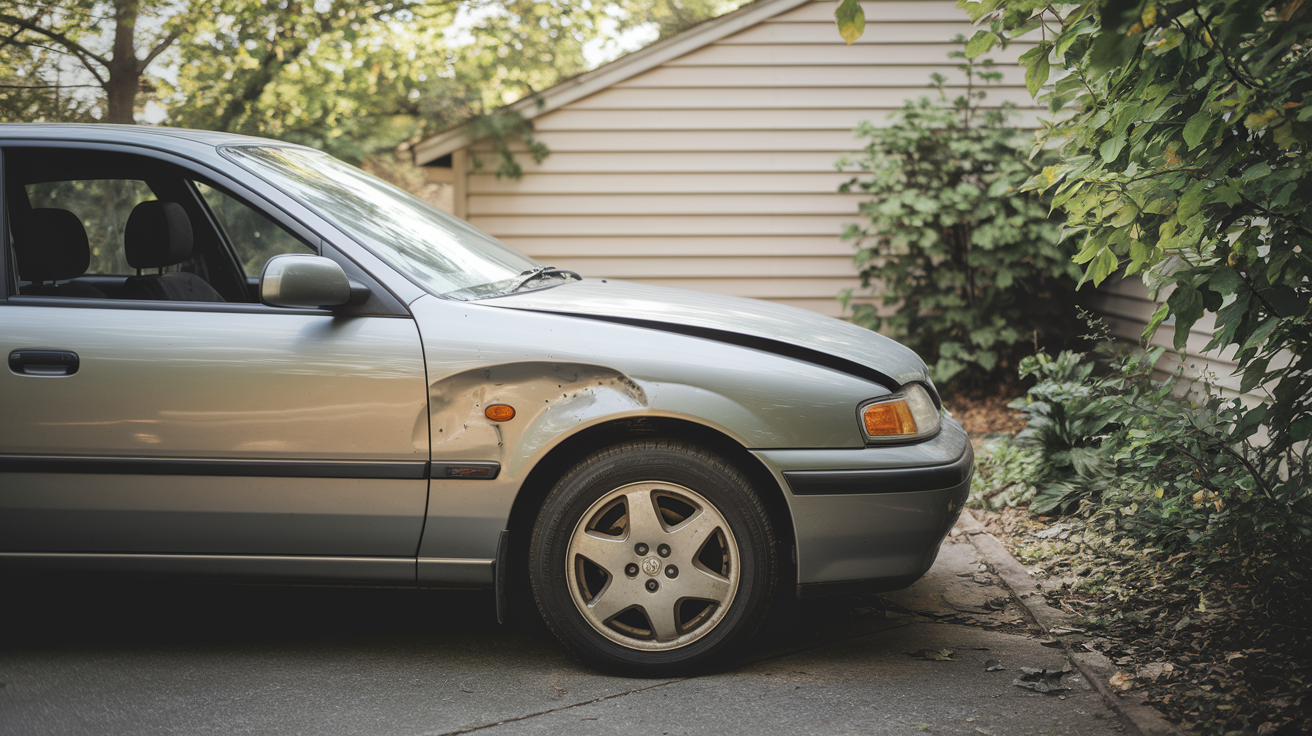

Filing a claim for a small dent can cost you more than the repair.
Start with the math: compare the body shop estimate to your deductible (what you pay before insurance kicks in) and add the likely premium bump over the next three years.
Also check for hidden damage, like sensors, reinforcement bars, or alignment, which can balloon the bill.
If the repair is two to three times your deductible or safety systems are affected, file.
If it’s cosmetic or under your deductible, pay out of pocket to protect rates and resale value.
Deciding Whether Minor Car Damage Justifies Filing an Insurance Claim
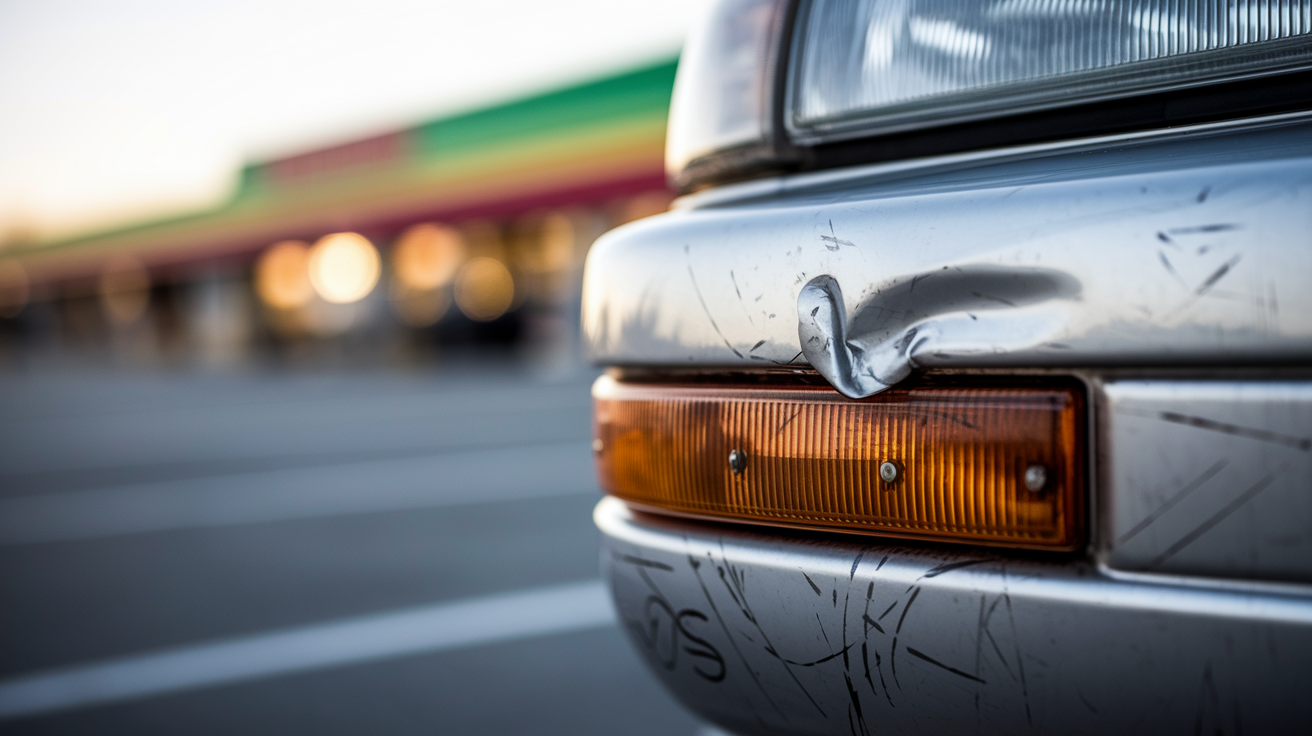
Your car picked up a dent after someone backed into you at the grocery store. The bumper’s scuffed, there’s a crease in the quarter panel, and you’re staring at a decision that feels bigger than the actual damage.
The first filter is simple math. If you carry a $1,000 deductible and the body shop estimates $900 to fix the dent and paint match, filing means you pay $1,000 and the insurer pays nothing. You lose. Now flip it: same deductible, but the estimate comes back at $4,000 because sensors behind the bumper need recalibration and the reinforcement bar shifted. You file, pay your $1,000, and the insurer covers the remaining $3,000. That’s when a claim makes sense.
The harder variable is what happens after. An at-fault claim can raise your premium by 20 to 50 percent for up to three years. If your annual premium is $1,500 and it jumps $400 in year one, you’re looking at roughly $1,200 in extra costs over three years. Add that to your deductible, and the real out-of-pocket for filing that $4,000 repair is $2,200, not $1,000. For the $900 cosmetic fix, paying yourself saves both the deductible and the rate hike.
Here are the top decision rules:
- If repair cost is less than your deductible, pay out-of-pocket.
- If repair cost is close to your deductible and damage is cosmetic only, self-pay to avoid premium and discount penalties.
- If repair cost is two to three times your deductible or more, filing usually makes financial sense.
- If structural components, sensors, or safety systems are affected, file the claim regardless of cost.
- If you’re not at fault and the other driver’s insurer accepts liability, file with them to keep your record clean.
Even a single claim can show up on a vehicle history report. When you sell or trade in, buyers see “minor collision” and don’t distinguish between a parking lot tap and a highway crash. That perception cuts resale value. If your car is older or worth less than a few thousand dollars, a claim record may cost you more in lost resale than the repair itself.
What Counts as Minor Car Damage (And Why It Can Be Misleading)
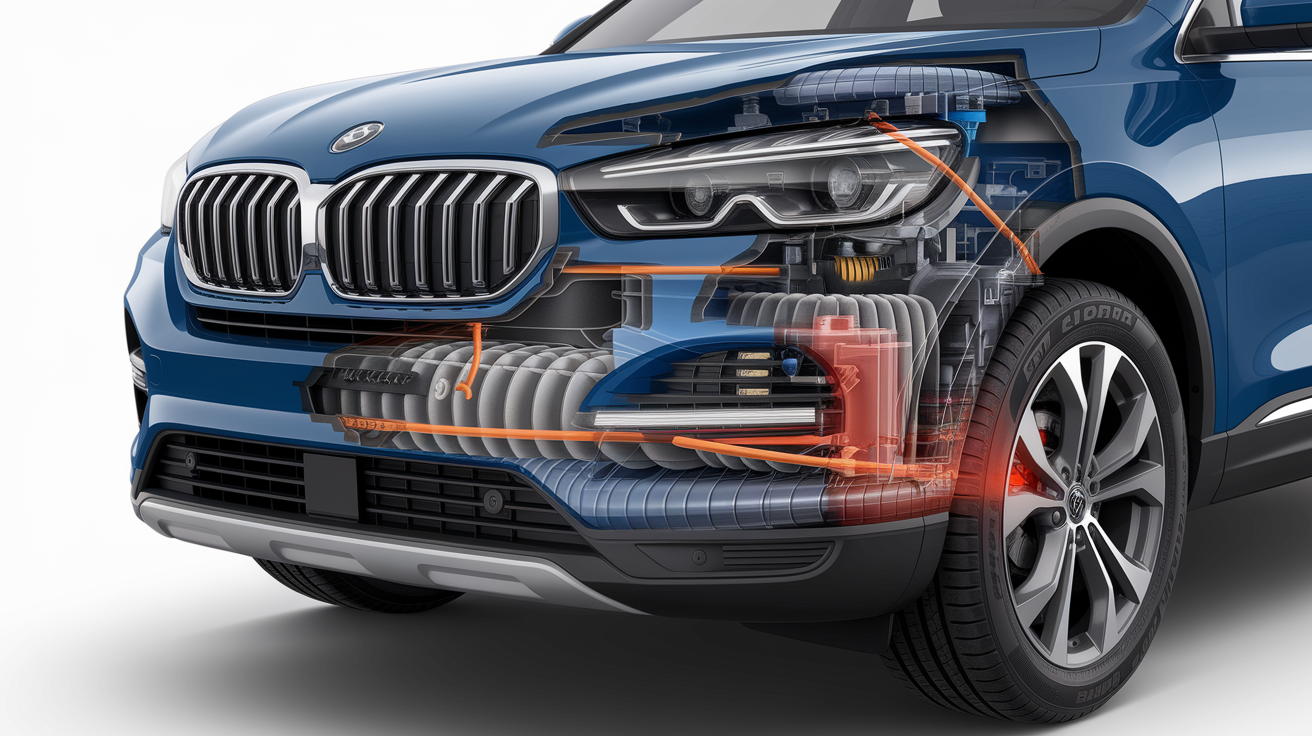
“Minor” usually describes damage you can see without crawling under the car. Small dents in doors or fenders, paint scratches that haven’t cut through primer, scuffed or cracked plastic bumper covers, and light sheet metal creases all fit. If the car starts, drives straight, and no warning lights appear, most people assume it’s cosmetic.
That assumption breaks down fast with modern vehicles. Bumpers aren’t just plastic shells anymore. Behind that cover sit impact absorbing foam blocks, steel or aluminum reinforcement bars, mounting brackets designed to crush at precise rates, and an array of sensors for parking assist, blind spot monitoring, collision warning, and automatic braking. A five mile per hour tap in a parking lot can shift the reinforcement bar half an inch, crack an energy absorber, or knock a radar sensor out of alignment. None of that shows up in a photo.
The damage you can’t see often costs more to fix than the scratched paint. A bumper cover replacement might run $400. Add in a shifted reinforcement bar that needs realignment, two recalibrated sensors, and paint blending into adjacent panels, and the bill climbs to $2,500. The original dent looked like a $200 problem.
Watch for these hidden issues after any impact:
- Sensor calibration problems that trigger warning lights days or weeks later, sometimes only under specific conditions like highway merging or tight parking.
- Reinforcement bar movement that reduces crash protection in a second accident, even if the bar looks intact from the outside.
- Alignment and suspension geometry changes that cause uneven tire wear, pulling to one side, or vibration at speed. Symptoms that emerge over months, not immediately.
Real World Situations Where Minor Damage Becomes a Bigger Problem

A driver tapped a shopping cart corral at low speed. The plastic bumper showed a small crack and a scuff. No big deal. Two weeks later, the forward collision warning light came on. The shop pulled the bumper and found the radar sensor bracket bent and the sensor aimed three degrees off axis. Recalibration failed because the bracket couldn’t hold the correct angle. Total repair: new bracket, sensor reinstall, two hour calibration procedure, and paint work. The bill hit $3,200.
That’s the risk with sensor heavy vehicles. Parking sensors, adaptive cruise radar, camera modules, and ultrasonic emitters all rely on millimeter level positioning. A low speed impact can jar them loose or shift their mounting points. The systems might work intermittently or only fail in specific scenarios, like rain or direct sunlight. You won’t know until the car throws a code or the system shuts down on the highway.
Structural risks are quieter but more dangerous. Bumper reinforcement bars are designed to absorb energy and then transfer remaining force to the frame rails in a controlled way. If a bar bends or its mounts crack, the next impact, even a minor one, can bypass that protection and send force directly into the passenger cabin. You won’t see the problem until a second accident reveals it. Frame and unibody damage from a “minor” hit can also affect how airbags deploy, because crash sensors rely on deformation patterns that assume the structure is intact.
Common examples include:
- A misaligned rear bumper with a hidden crack in the energy absorber, discovered only when the shop removes the cover to investigate a rattle.
- Dashboard warning lights for lane keeping assist or emergency braking that appear three days after a parking lot fender bender, traced to a camera bracket that shifted one degree.
- Reinforcement bar deformation with zero visible exterior damage, found during a pre-purchase inspection when selling the car, killing the deal because the buyer’s mechanic flagged it as prior unreported collision damage.
How Minor Claims Affect Insurance Rates and Future Coverage

Filing a claim drops a flag in your insurance record. For at-fault accidents, expect your premium to rise. Industry data shows increases between 20 and 50 percent in the first year, depending on your insurer’s surcharge schedule, your state’s regulations, and your prior claim history. If you’re paying $1,500 a year and your rate jumps 30 percent, that’s an extra $450 in year one. Surcharges typically last three to five years, tapering down each year if you stay claim free.
The math gets worse if you lose an accident free discount. Many insurers offer 10 to 20 percent off your base premium if you haven’t filed a claim in three or five years. A single minor claim can erase that discount immediately. If your discount was worth $200 a year and you lose it for three years, you’re out $600 on top of any surcharge. Add your deductible, and a $1,200 repair paid through insurance might actually cost you $1,800 over three years.
Accident forgiveness changes the equation if you have it. Some policies waive the first at-fault surcharge, but only once per policy term and only if you meet eligibility rules like five years claim free or a certain age threshold. Forgiveness doesn’t erase the claim from your record. It just prevents the rate hike. If you use forgiveness on a $900 fender repair and then cause a bigger accident two years later, the second claim will hit you with full surcharges and possibly non-renewal.
Here are three typical outcomes after filing a minor claim:
- No premium increase: You’re not at fault, the other driver’s insurer pays, and your carrier doesn’t surcharge you. Your record stays clean if the claim is processed entirely through the third party.
- Moderate surcharge: At-fault minor claim with accident forgiveness or in a state with surcharge caps. Premium rises 10 to 25 percent for two to three years, then returns to baseline.
- Loss of discount plus surcharge: At-fault claim without forgiveness. You lose your claim free discount and face a 30 to 50 percent rate increase for three to five years, compounding the financial impact each renewal.
When Paying Out of Pocket Becomes the Preferable Choice

If the damage is purely cosmetic and doesn’t affect how the car drives or its safety systems, paying yourself keeps your insurance record clear. A door ding that bothers you visually but has no structural component, a keyed panel, or a scuffed bumper that you can live with for now. All candidates for self-pay.
Protecting your claim free discount is another strong reason. If you’re two years into a five year accident free period that saves you $250 a year, filing a $700 claim to fix a scratch means you pay the $700 and lose $750 in future discounts. You’re $50 behind, plus you’ve added a claim to your record that might complicate shopping for a new policy or getting the best rate at renewal.
Older vehicles with limited resale value rarely justify a claim for minor cosmetic damage. If your car is worth $4,000 and you’re looking at a $600 repair to fix a dent, paying out of pocket keeps the title clean. A documented claim can cut resale value by more than the repair cost, because buyers assume any reported accident means hidden problems.
Self-pay makes sense when:
- Damage is cosmetic only, with no mechanical, structural, or electronic system involvement.
- Repair cost is at or below your deductible, meaning the insurer would pay nothing anyway.
- You’re close to earning or renewing a multi year claim free discount worth hundreds of dollars annually.
- The vehicle’s resale or trade in value would drop more from a claim record than from leaving minor cosmetic damage unrepaired.
At-Fault vs. Not-At-Fault: How Fault Changes Your Decision
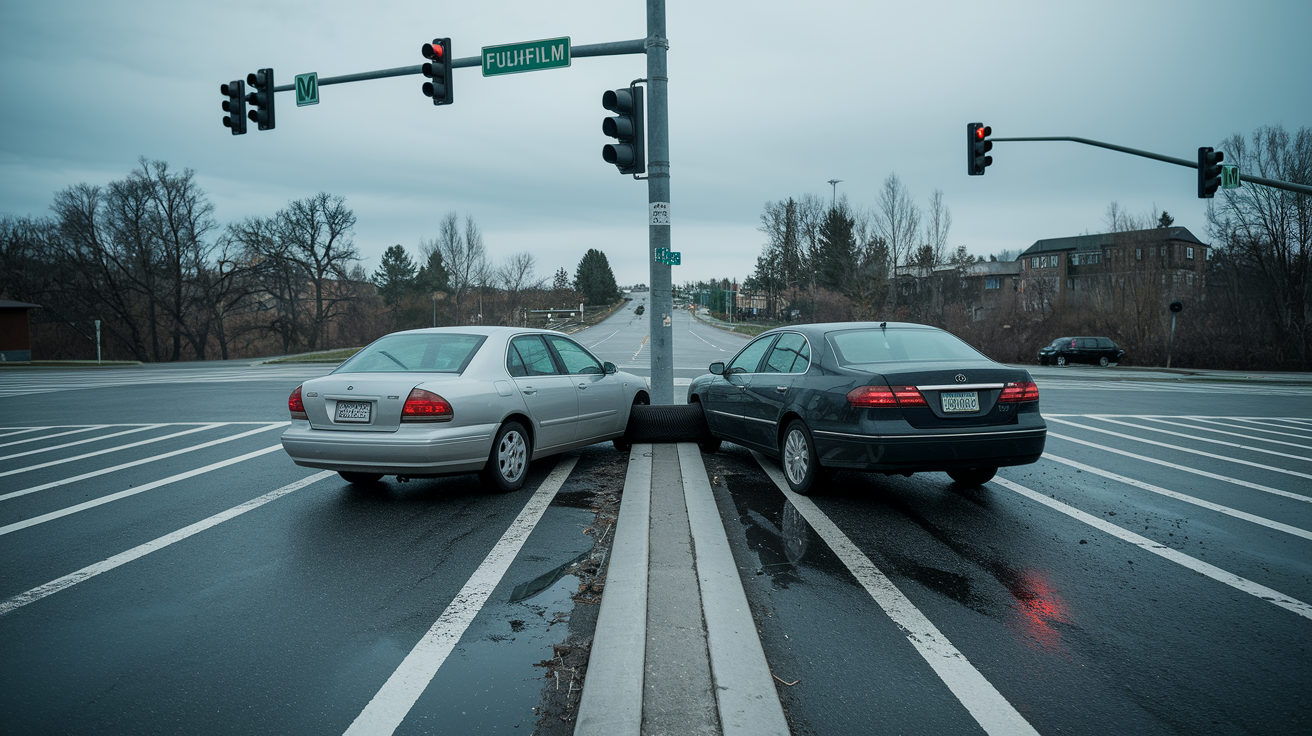
Fault determination decides who pays and how the claim affects your future rates. If the other driver rear ends you at a stoplight and their insurer accepts 100 percent liability, you file the claim with their carrier. Your insurer isn’t involved, you pay no deductible, and your record stays clean. That’s the ideal scenario for minor damage.
Disputed liability muddies everything. If both drivers claim the other ran a stop sign and there are no witnesses, insurers may split fault 50-50 or assign percentages based on state comparative negligence rules. In that case, you might file with your own collision coverage, pay your deductible, and let your insurer pursue subrogation to recover costs from the other driver’s carrier. Even if subrogation succeeds and you get your deductible back, the claim still appears on your record as an at-fault or shared fault incident.
Uninsured and underinsured motorist coverage kicks in when the at-fault driver has no insurance or insufficient limits to cover your damage. Hit and run cases often fall into this category. You file under your own UM/UIM coverage, pay your deductible, and your insurer covers the repair. Some states treat UM claims more favorably than at-fault collision claims when setting future premiums, but not all. Check your policy and state rules.
| Scenario | Likely Outcome | Impact on Filing Decision |
|---|---|---|
| Other driver 100% at fault, insurer accepts | File with their carrier; no deductible, no rate increase | Always file; you risk nothing and recover full repair cost |
| Fault disputed; both insurers negotiate | May file with own carrier; deductible applies; possible surcharge if any fault assigned to you | Weigh repair cost vs. deductible plus potential rate impact; self-pay if close call |
| At-fault driver uninsured or unknown (hit and run) | File under UM/UIM or collision; pay deductible; surcharge depends on state and coverage type | File if repair cost exceeds deductible; check if UM claims are surcharged in your state |
Getting Repair Estimates Without Triggering a Claim

You can walk into any body shop, describe the damage, and ask for a written estimate without notifying your insurer. Shops see this every day. An estimate is not a claim. It’s information. Use it to decide whether filing makes sense.
Get at least two estimates, ideally three. Prices vary widely depending on the shop’s labor rate, whether they use OEM or aftermarket parts, and how thoroughly they inspect for hidden damage. A quick visual quote might come back at $800. A detailed inspection that includes pulling the bumper cover and checking sensor mounts might reveal $2,400 in work. You want the second number before you commit.
A typical body shop inspection starts with photos and measurements, then moves to disassembly if you authorize it. The tech removes plastic covers, checks frame rails and mounting points, tests electrical connections, and runs diagnostic scans if the car has advanced safety systems. If disassembly reveals problems, the estimate gets revised upward. That’s normal. What you don’t want is to file a claim based on a $900 visual guess, only to have the insurer’s adjuster find $3,000 in hidden damage after the claim is already on your record.
Estimate sources to consider:
- Local independent body shops that handle insurance work and cash jobs. Often provide free estimates and can explain repair steps in plain language.
- Dealership collision centers, which may charge for detailed inspections but typically use OEM parts and have factory trained techs familiar with sensor systems.
- Online estimators that use photos and vehicle data to generate ballpark figures. Useful for quick screening but not reliable for final decisions, especially with sensor equipped vehicles.
Documentation Steps to Protect Yourself Before Filing

Accurate documentation protects you if the other driver changes their story or if fault becomes disputed. Take photos immediately, even if the damage looks minor. Shoot wide angles showing both vehicles, close ups of every dent and scratch, and shots of license plates, VINs, and the surrounding area. Capture road conditions, traffic signs, and anything that establishes context.
Video adds another layer. A 30 second walk around narrated with your voice noting the date, time, weather, and what happened gives you a timestamped record that’s hard to dispute later. If the other driver admits fault at the scene, record that too. Politely and without being confrontational. “Just for my records, you said you didn’t see me when you backed up, is that right?” That statement can matter if their insurer tries to shift liability.
Here’s what to document:
- Photos of all vehicle damage from multiple angles, including areas with no visible damage if they were near the impact zone.
- Video walk around with verbal notes on date, time, location, weather, and a brief description of how the collision occurred.
- Witness statements, including names, phone numbers, and a sentence or two about what they saw. Witnesses often disappear if you wait even a few hours.
- Insurance information exchange: the other driver’s name, policy number, insurer name, and phone contact. Also their license plate, make, model, and state of registration.
- Police report number if law enforcement responded. Request a copy within a few days while details are fresh.
- Written notes on impact location, speed estimates, and any admissions or statements made by the other driver. Memory fades fast, and details matter in disputed claims.
Myths About Filing Claims for Minor Damage

“Insurance is there to use, so file everything.” That sounds logical until you run the numbers. Insurance is risk transfer, and every claim you file tells the insurer you’re a higher risk. Filing a $600 repair on a $500 deductible costs you $500 now and potentially $1,000 in rate increases over three years. The myth that using your insurance is always the smart move ignores the long term cost of claim history.
“If the damage looks minor, it probably is.” Modern vehicles hide complexity behind plastic covers. A scratched bumper can mask a bent reinforcement bar, a shifted sensor bracket, or a cracked energy absorber. What looks like $300 in cosmetic work can turn into $2,500 once the shop starts disassembly. Minor appearance does not equal minor repair cost or minor safety risk.
“Filing a claim guarantees better repair quality.” Not necessarily. You can use any licensed shop whether you file or pay yourself. Some people assume insurer approved shops deliver higher quality because the insurer oversees the work, but approved networks are about cost control and streamlined billing, not craftsmanship. If you’re paying out of pocket, you have the same access to skilled shops, and you control the timeline and parts choices without insurer oversight.
Common misconceptions:
- Filing is always safer or smarter because “that’s what insurance is for.” Ignores rate increases, discount loss, and claim history penalties that can cost more than the repair.
- Visible minor damage means minor repair costs. Overlooks hidden structural and sensor issues common in modern vehicles.
- Insurer involvement guarantees repair quality. Confuses billing arrangements with workmanship. Quality depends on the shop, not the payment method.
Quick Decision Framework for Minor Car Damage Claims

Start by comparing the repair estimate to your deductible. If the estimate is less than your deductible, the insurer pays nothing. Filing makes no financial sense. If the estimate roughly equals your deductible, add up your expected premium increase over three years and compare the total to paying out of pocket. If the estimate is two to three times your deductible or more, filing usually wins unless you’re trying to preserve a high value claim free discount.
Next, check for non-financial triggers that override cost comparisons. Structural damage, safety system warnings, or anything that makes the car unsafe to drive means you file, regardless of deductible math. The same goes for significant hidden damage found during inspection. Don’t absorb a $5,000 repair to avoid a rate increase that might cost $1,200 over three years.
Here’s the step by step decision process:
- Get at least two written repair estimates from licensed shops. Include disassembly and diagnostic scans if the vehicle has sensors or advanced safety features.
- Compare the higher estimate to your collision or comprehensive deductible. If estimate is less than deductible, skip filing and pay yourself.
- If estimate exceeds deductible, ask your insurer or agent for the likely surcharge percentage and duration. Calculate total premium increase over three years.
- Add your deductible to the three year premium increase. If that sum is less than the repair estimate, filing is financially rational.
- Override the math and file if structural components are involved, warning lights appeared, or a professional inspection flags safety concerns. Some risks aren’t worth the savings.
| Repair Cost | Decision | Reason |
|---|---|---|
| Less than deductible (e.g., $400 repair, $500 deductible) | Pay out of pocket | Insurer pays nothing; filing adds claim to record for zero benefit |
| Close to deductible (e.g., $1,200 repair, $1,000 deductible) | Evaluate premium impact; often self-pay | Insurer pays only $200; likely lost in future rate increases and discount penalties |
| 2× to 3× deductible or higher (e.g., $4,000 repair, $1,000 deductible) | File claim | Insurer covers most cost; out of pocket including future premiums usually lower than self-pay |
Final Words
If you’re staring at a ding or scuff, act fast. Compare repair cost to your deductible, think about a possible premium rise, and watch for hidden sensor or structural damage. Get 2–3 estimates and take lots of photos first.
If repair is under the deductible, self-pay is often better. If it’s 2–3 times the deductible or safety systems could be affected, file.
Still unsure? Use the simple rules above to answer should I file a claim for minor car damage — you’ll make a smarter, safer choice.
FAQ
Q: Is it worth filing a car insurance claim for minor damage?
A: Filing a car insurance claim for minor damage is worth it when repair costs exceed about 2–3 times your deductible, or when sensors, structure, or safety systems may be affected.
Q: Is it better to not file an insurance claim?
A: Not filing an insurance claim may be better when damage is cosmetic, repair costs are under your deductible, you want to protect no-claims discounts, and there are no hidden safety or sensor issues—get 2–3 estimates first.