


What if the driver who hits you has no insurance?
It happens more often than you think—about 1 in 7 drivers in 2022 lacked liability coverage.
Uninsured motorist (UM) and underinsured motorist (UIM) pay your medical bills, lost wages, and sometimes car damage when the at-fault driver can’t cover the costs.
This post shows what UM and UIM actually cover, how limits and stacking work, and when carrying them is smart—especially if you live where uninsured drivers are common or you couldn’t absorb big medical bills.
What Uninsured Motorist Coverage Actually Is

Uninsured motorist coverage (UM) pays for your injuries, and sometimes your vehicle damage, when you’re hit by a driver who has no liability insurance. Underinsured motorist coverage (UIM) fills the gap when the at-fault driver does carry insurance, but their liability limits are too low to cover your losses.
Both coverages protect you when another driver’s insurance can’t or won’t cover the full bill. You file the claim with your own insurer instead of chasing the at-fault driver’s policy or the driver personally.
In 2022, roughly one in seven U.S. drivers (about 14 percent) drove without liability insurance. That rate varies widely by state. Some states see uninsured driver rates in the mid 20s percent range, while others stay below 5 percent.
When you carry UM and UIM, you shift the financial risk from your own bank account to your insurance policy. Without these coverages, you’re on your own if the other driver lacks enough insurance to pay your medical bills, lost income, or car repairs.
The Two Main Types: Uninsured and Underinsured

Uninsured Motorist (UM) steps in when the at-fault driver has zero liability insurance. This can also apply if the driver fled the scene (hit and run) and can’t be identified. In some states it covers situations where the driver’s insurer denies the claim or goes insolvent.
Underinsured Motorist (UIM) applies when the at-fault driver does carry liability insurance, but their policy limit is lower than your total damages. UIM covers the shortfall up to your own UIM policy limit.
Here’s a quick example:
You’re rear-ended. Your medical bills, lost wages, and vehicle damage total $55,000. The at-fault driver carries the state minimum liability of $25,000. Their insurer pays you $25,000, leaving a $30,000 gap. If you carry UIM with a limit of $50,000 or higher, your UIM can cover that $30,000 shortfall.
Without UIM, you’d be responsible for the remaining $30,000. You could sue the driver personally, but if they have few assets and limited income, collecting that money can be difficult. Sometimes impossible.
What Each Coverage Type Includes

Both UM and UIM typically break into two subtypes: bodily injury and property damage.
Uninsured Motorist Bodily Injury (UMBI) covers your medical bills, hospital care, physical therapy, lost income while you recover, and in many states pain and suffering damages. UMBI can also cover passengers in your vehicle.
Uninsured Motorist Property Damage (UMPD) covers damage to your car and sometimes other property when the at-fault driver is uninsured. UMPD is less common than UMBI. Some states don’t offer it at all. Many drivers rely on their own collision coverage instead. If UMPD is available, it often comes with lower limits and sometimes applies a deductible.
Underinsured Motorist Bodily Injury (UIMBI) works the same way as UMBI but fills the gap when the at-fault driver’s liability limit is too low. UIMBI is usually paired with UMBI on the same policy declaration.
Underinsured Motorist Property Damage (UIMPD) is rare. Most states and insurers do not offer it as a standalone option. Drivers typically rely on collision coverage to repair their vehicle when another driver’s property damage liability limit falls short.
How Limits Are Expressed and What They Mean

UM and UIM limits follow the same format as liability coverage. You’ll see them written as split limits or as a single combined limit.
Split limits look like this: 50,000 / 100,000. The first number is the maximum your policy will pay for one injured person in a single accident. The second number is the total maximum for all injured people in that accident.
Example: You carry 50,000 / 100,000 UMBI. You’re hit by an uninsured driver. You suffer $60,000 in medical bills, and your passenger has $40,000 in bills. Your policy pays you $50,000 (your per person limit) and your passenger $40,000, totaling $90,000. You’re still responsible for the remaining $10,000 of your own bills.
Single combined limits are written as one number, like $150,000. That’s the total your policy will pay for all bodily injury claims from one accident, regardless of how many people are hurt.
Example: You carry $150,000 single limit UMBI. Same accident, same bills. Your policy pays the full $100,000 ($60,000 for you, $40,000 for your passenger) because the total is under the $150,000 limit.
Common UM/UIM limit combinations include:
- 25,000 / 50,000
- 50,000 / 100,000
- 100,000 / 300,000
- 250,000 / 500,000
- Single limits of $100,000, $250,000, or $500,000
Higher limits cost more but reduce your personal exposure. Many insurance professionals recommend matching your UM/UIM limits to your liability limits or higher, especially if you have assets to protect.
Stacking: When You Can Combine Limits Across Vehicles

Some states allow stacking, which means you can add together the UM or UIM limits from multiple vehicles on the same policy to create a higher total limit for one claim.
Example: You own three vehicles. Each has $50,000 per person UMBI. Your state allows stacking. You’re seriously injured by an uninsured driver. Instead of a $50,000 limit, you can stack all three policies for a combined $150,000 per person limit.
Stacking isn’t available everywhere. Some states prohibit it. Some insurers offer it as an optional rider for an additional premium. When stacking is allowed, it usually increases your premium, but the increase is often smaller than buying a much higher single limit on one vehicle.
Non-stacking policies cap your UM/UIM benefit at the limit shown on the vehicle involved in the accident, regardless of how many other vehicles you insure.
Check your policy declarations page or ask your insurer whether your coverage is stacking or non-stacking. If you have multiple vehicles and significant injury risk, stacking can provide meaningful extra protection for a modest cost increase.
What UM and UIM Cost and What Affects the Price

UM and UIM are typically inexpensive compared to liability or collision coverage. Incremental annual cost for moderate UM/UIM limits often ranges from about $10 to $200 per year, depending on state, chosen limits, and your driving profile.
As a rough percentage, adding UM/UIM usually increases your total premium by a low single digit amount when you choose limits similar to your liability limits.
Factors that raise UM/UIM premiums:
State uninsured driver rate. States with higher percentages of uninsured drivers usually charge more for UM/UIM because claims are more frequent.
Coverage limits. Higher limits cost more. Jumping from 25,000 / 50,000 to 100,000 / 300,000 will increase premium, but the difference is often smaller than you’d expect.
Stacking. Allowing stacking across multiple vehicles raises the premium because the insurer’s maximum payout increases.
Driving record and age. Drivers with accidents, tickets, or less experience may pay more for all coverages, including UM/UIM.
Vehicle type. More expensive vehicles can drive up UMPD cost if that coverage is purchased.
Many insurers provide free quotes that show the incremental cost of different UM/UIM limits. Comparing quotes for 50,000 / 100,000 versus 100,000 / 300,000 can help you see whether the extra protection is worth the price difference in your situation.
State Requirements: Mandatory, Optional, or Rejected in Writing
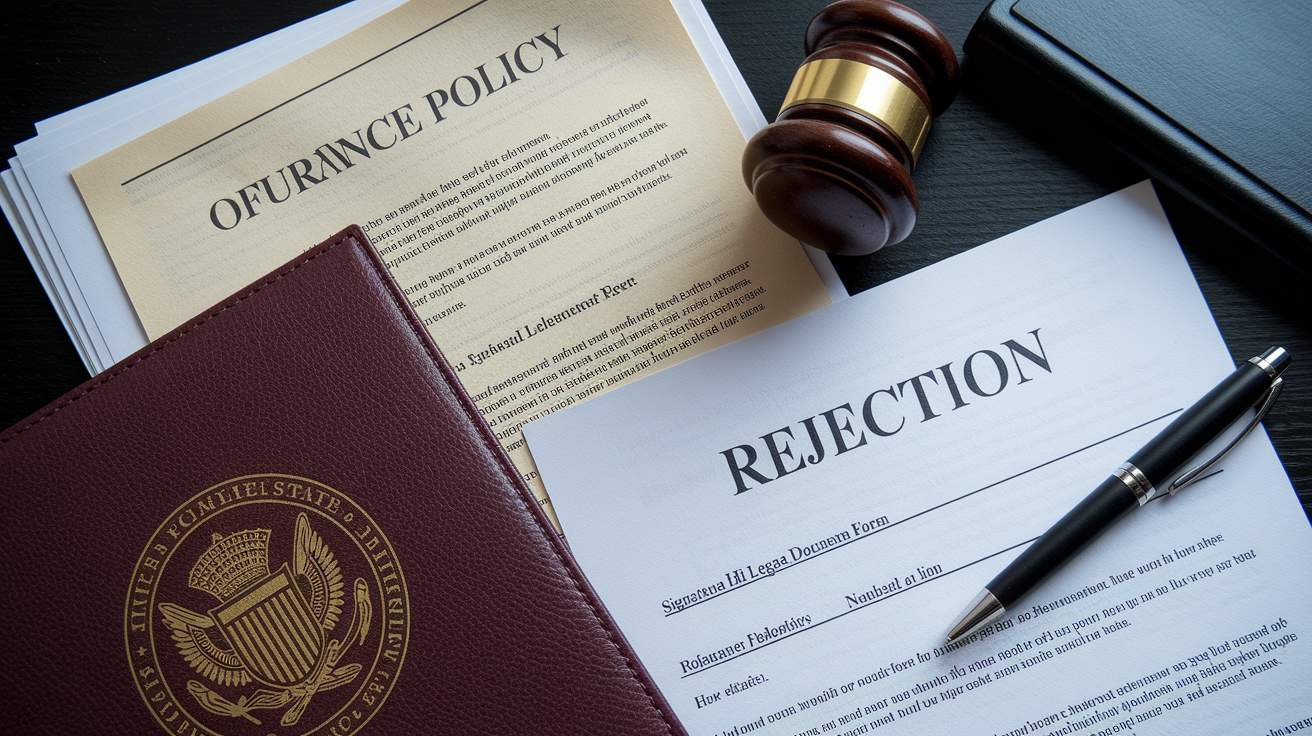
UM and UIM rules vary significantly by state.
Some states require insurers to offer UM/UIM and set minimum limits. The insurer must include it in every quote, but you can decline it if you sign a written rejection form.
Other states make UM or UMBI mandatory at a statutory minimum limit. You can’t decline it, though you can usually buy higher limits if you want more protection.
A few states treat UM/UIM as fully optional with no requirement to offer or reject in writing.
If your state requires a written rejection, your insurer will ask you to sign a form confirming you understand the coverage and are choosing not to buy it. If you don’t sign, the coverage is automatically included in your policy.
Common state minimum UM limits mirror state liability minimums. For example, if your state requires 25,000 / 50,000 liability, the UM minimum is often the same.
Before you decline UM or UIM, check:
- Whether your state requires it or requires a signed rejection.
- What the minimum limits are.
- Whether your lender or lease company requires UM/UIM as a condition of financing.
Some auto loan and lease contracts require you to carry UM/UIM to protect the lender’s collateral. Declining the coverage could put you in breach of your loan agreement.
Real Scenarios Where UM and UIM Fill Critical Gaps

High uninsured driver area.
You live in a state where 20 percent of drivers are uninsured. You’re hit at a stoplight by a driver with no insurance. Your medical bills reach $40,000, and your car needs $8,000 in repairs. Without UMBI, you’re responsible for the $40,000 medical bill unless your health insurance covers it (and even then, you may face high deductibles and copays). Without UMPD or collision coverage, you pay for the car repairs yourself.
Young driver with limited assets.
Your 18 year old is rear-ended by a driver carrying the state minimum liability of $25,000. Your teen suffers a concussion and misses two weeks of work. Medical bills and lost income total $35,000. The at-fault driver’s insurer pays $25,000. If you carry 50,000 / 100,000 UIM, your policy covers the remaining $10,000. Without UIM, your teen (or you, if you’re covering the bills) is on the hook for that $10,000.
Serious injury, high medical costs.
You’re hit by a driver with $50,000 in liability coverage. You suffer a broken leg and need surgery, physical therapy, and three months off work. Total damages: $120,000. The other driver’s insurer pays their $50,000 limit. You carry 100,000 / 300,000 UIM. Your UIM pays the remaining $70,000, up to your limit. Without UIM, you’d be $70,000 short unless you successfully sued the driver and collected, which is unlikely if the driver has minimal assets.
Passenger injured in your car.
You’re driving a friend to dinner. An uninsured driver runs a red light and T-bones your car. Your friend suffers $30,000 in medical bills. Your UMBI covers your friend’s bills up to your per person limit. Without UMBI, your friend might file a claim against your liability coverage (if your state allows it) or sue you personally, even though you weren’t at fault.
Hit and run with no way to identify the driver.
Someone sideswiped your car in a parking lot and fled. You have no license plate, no witnesses. In many states, UM (specifically UMPD if you carry it) or collision coverage is your only way to get the car repaired without paying out of pocket. Some states treat hit and run as an uninsured motorist event, triggering UM coverage if the driver can’t be found.
Financial and Legal Consequences of Declining UM and UIM

When you decline UM or UIM, you accept the risk that you will personally cover any costs the at-fault driver’s insurance doesn’t pay.
Out of pocket medical bills.
If you’re seriously injured and the at-fault driver is uninsured or underinsured, you’ll rely on your health insurance. Health plans often have high deductibles, copays, and out of pocket maximums. Some treatments and lost income protection aren’t covered by health insurance at all. You may end up with thousands or tens of thousands of dollars in bills.
Vehicle repair costs.
Without UMPD or collision coverage, you pay for repairs yourself when the at-fault driver has no insurance or no property damage coverage. Even a moderate accident can cost $5,000 to $10,000 in body work.
Legal collection challenges.
You can sue an uninsured or underinsured driver in civil court, but winning a judgment doesn’t guarantee you’ll collect. If the driver has no assets, no wages to garnish, or files for bankruptcy, you may never see the money.
Impact on future insurance.
If you file a claim under your own collision or medical payments coverage because the at-fault driver couldn’t pay, your insurer might still raise your rates at renewal, even though you weren’t at fault. UM and UIM claims are typically treated more favorably because fault is clear.
Passenger liability exposure.
If a passenger in your car is injured by an uninsured driver and you don’t carry UMBI, that passenger might file a claim against your liability coverage or sue you to recover their losses, depending on state law. Carrying UMBI protects both you and your passengers without forcing them to pursue you.
Required rejection forms.
In states that require written rejection, declining UM/UIM without signing the form can result in automatic inclusion of the coverage on your policy. If you later file a claim and discover you’ve been paying for coverage you thought you declined, the coverage will apply. Conversely, if you sign a rejection form and later wish you had the coverage after an accident, you can’t add it retroactively to cover that incident.
How to Choose the Right UM and UIM Limits for Your Situation

Match your decision to your financial exposure, local uninsured driver prevalence, and household risk.
Step 1: Check your state’s uninsured driver rate.
Look up recent statistics. If your state’s rate is above 15 percent, you’re more likely to encounter an uninsured driver. Rates in the mid 20s percent range make UM/UIM nearly essential.
Step 2: Assess your assets and income.
If you own a home, have significant savings, or earn a high income, higher UIM limits protect those assets from a lawsuit or forced liquidation to pay medical bills. A common rule: carry UIM limits at least equal to your net worth or the amount you’d struggle to pay out of pocket.
Step 3: Evaluate your health insurance.
If you have a high deductible health plan or limited coverage, UMBI can fill gaps and cover expenses health insurance won’t pay, like lost income and pain and suffering damages. If your health coverage is comprehensive with low out of pocket costs, you may still want UMBI for income replacement and passenger protection.
Step 4: Consider your household and passengers.
If you frequently drive family members, carpool with coworkers, or have teenage drivers, higher UMBI limits protect everyone in the vehicle. One serious injury to a passenger can generate bills exceeding $100,000.
Step 5: Compare your liability limits.
A simple guideline: your UM and UIM limits should match or exceed your liability limits. If you carry 100,000 / 300,000 liability to protect others, it makes sense to carry the same UMBI limits to protect yourself and your passengers.
Step 6: Get quotes for multiple limit options.
Request quotes for 25,000 / 50,000, 50,000 / 100,000, 100,000 / 300,000, and 250,000 / 500,000. Compare the incremental cost. Often the jump from minimal to moderate limits is small, while the jump to very high limits (250,000 / 500,000 or single limits above $300,000) is larger but still modest relative to potential exposure.
Step 7: Decide on stacking if available.
If you insure multiple vehicles and your state allows stacking, calculate the combined limit you’d get versus the extra premium. Stacking can be a cost effective way to boost protection without buying a much higher single limit on each vehicle.
Recommendations by Driver Profile
| Driver Profile | Recommended UM/UIM Approach |
|---|---|
| Minimalist driver, low assets, tight budget | Carry at least state minimum UMBI if required, or consider 25,000 / 50,000 UMBI to cover basic medical bills and lost income. Skip UMPD if you have collision coverage or an older vehicle. Prioritize bodily injury protection over property. |
| Family driver, moderate assets, frequent passengers | Carry 50,000 / 100,000 or 100,000 / 300,000 UMBI to protect yourself and passengers. Add UMPD if your state offers it and your collision deductible is high. Match UIM limits to liability limits. |
| High net worth driver, significant assets or income | Carry 100,000 / 300,000 or higher UMBI/UIM, or consider a single limit of $250,000 to $500,000. Add an umbrella policy if your auto policy caps out below your asset level. Umbrella policies sometimes require underlying UM/UIM at specified minimums. |
| Young or new driver, limited experience | Carry at least 50,000 / 100,000 UMBI. Young drivers face higher accident risk and may encounter other young, underinsured drivers. Protect against both scenarios with solid UM and UIM limits. |
| Driver in high uninsured rate state (above 15 percent) | Treat UM/UIM as essential. Carry 50,000 / 100,000 at minimum, higher if budget allows. The likelihood of being hit by an uninsured driver is material, and the coverage is usually inexpensive relative to risk. |
| Driver with loan or lease requirements | Verify your lender’s requirements. Many require UM/UIM. Carry the mandated minimums at least. If the lender only requires state minimums, consider higher limits to protect yourself beyond the collateral value of the vehicle. |
Common Questions and Practical Answers
If I have collision coverage, do I need UMPD?
Collision covers your vehicle damage regardless of fault, so UMPD becomes redundant for your car. UMPD can sometimes cover other property (like a fence or mailbox) or apply without a deductible in some states, but most drivers skip UMPD if they carry collision.
Does UMBI cover me if I’m hit as a pedestrian or cyclist?
In many states, yes. UMBI can apply when you’re struck by an uninsured driver while walking or biking. Check your policy language. Some states extend UM to pedestrians, others limit it to occupants of your insured vehicle.
Can I buy UIM without buying UM?
Usually not. Most insurers bundle UM and UIM together. The limits are often the same, and you can’t pick one without the other. If your state allows it, the pricing structure typically makes buying both together the standard option.
What happens if the at-fault driver’s insurer pays their limit and I still have unpaid bills?
If you carry UIM and your limits are higher than what the at-fault driver’s policy paid, your UIM pays the difference up to your limit. You file a UIM claim with your own insurer after accepting the at-fault driver’s settlement.
Does UM or UIM raise my rate if I file a claim?
Practices vary by insurer and state. UM and UIM claims are generally treated as not at fault claims, so rate increases are less common than after an at fault accident. Some insurers won’t raise your rate at all. Others may apply a small increase. Ask your insurer about their claims policy before you file.
If I reject UM/UIM and later want it, can I add it anytime?
Yes. You can add UM or UIM at your next renewal or sometimes mid term by requesting a policy change. The coverage will apply only to accidents that happen after the effective date of the change. You can’t add it retroactively to cover an accident that already occurred.
Do UM and UIM cover property damage to items inside my car?
UMPD (if you carry it) usually covers vehicle damage. Personal property inside the car (like a laptop or phone) is typically covered by your homeowners or renters insurance, not your auto policy. Check both policies to confirm.
What to Check on Your Current Policy Right Now
Pull out your auto insurance declarations page and look for these items:
Uninsured Motorist Bodily Injury (UMBI) limits. Are they listed? What are the per person and per accident amounts?
Underinsured Motorist (UIM or UIMBI) limits. Are they the same as your UMBI limits, or different?
Uninsured Motorist Property Damage (UMPD). Is it included? What’s the limit and deductible?
Stacking status. Does your policy say “stacking” or “non-stacking”? If you have multiple vehicles, this matters.
Rejection forms. If UM or UIM is missing, check whether you signed a rejection form. If you didn’t and your state requires the coverage, contact your insurer to confirm it wasn’t omitted in error.
If your current limits are lower than your liability limits, or if you have no UM/UIM at all and your state allows you to decline it, request a quote for higher limits. Compare the annual cost difference against your potential out of pocket exposure in a serious accident.
If you’re shopping for new coverage, ask every insurer for a quote that includes UM and UIM at the same limits as your liability coverage. Then look at the incremental cost if you raise those limits to 100,000 / 300,000 or higher. The difference is often smaller than drivers expect, and the protection can prevent financial hardship if the worst happens.
This is coverage you hope you’ll never use. When you do need it, it can mean the difference between a manageable insurance claim and years of debt or asset loss.
Final Words
You learned how uninsured motorist protection works, when it kicks in, and the key questions to ask your insurer.
Real examples and state notes helped you see the risks.
Next steps: check your policy limits, compare quotes with the same coverages, and call your agent if anything’s unclear.
If you can’t cover a total loss or big medical bills, that’s a strong reason to act.
So remember what is uninsured motorist coverage and when you need it: it pays when an uninsured or hit-and-run driver causes damage or injury and you’d otherwise be left paying big bills.
FAQ
Q: Why would I want uninsured motorist coverage? Is it worth having uninsured driver’s cover?
A: Uninsured motorist coverage is worth having because it pays your medical bills, lost wages, and car repairs if the at-fault driver has no or too little insurance. Ask your agent about limits and cost.
Q: Is it good to reject uninsured motorist coverage? What happens if I do not have uninsured motorist coverage?
A: If you reject uninsured motorist coverage, you’re likely stuck paying your own costs after an uninsured or hit-and-run driver; recovery options are limited. Consider keeping at least minimum UM limits.