


Think the cheapest quote gives the same protection? Think again.
The declarations page is the policy’s blueprint, the one page that actually shows what you’ll get and what’s missing.
It lists limits, deductibles, named insureds, the exact vehicles or property covered, endorsements that add or remove protection, exclusions, and the true premium charges.
When you compare quotes, check the dec page line by line so you make a real apples-to-apples comparison, spot gaps or sneaky changes, and avoid picking a cheaper policy that leaves you on the hook after a claim.
Key Items to Review on the Declarations Page When Comparing Quotes

Your declarations page is the policy’s blueprint. It shows every coverage limit, deductible, named insured, covered vehicle or property, endorsement, exclusion, and premium charge. When you’re comparing insurance quotes, the dec page reveals what you’re actually buying, not just the headline price someone quoted you.
Comparing dec pages side by side is how you get an apples-to-apples look at protection. Two quotes with the same annual premium can deliver completely different coverage if one has lower liability limits, higher deductibles, or missing endorsements. Without checking these details line by line, you risk picking a cheaper policy that leaves you underinsured the moment you file a claim.
Here’s what to verify on every declarations page:
Coverage limits – the maximum dollar amount the insurer pays for each type of loss
Deductibles – what you pay out of pocket before insurance kicks in
Policy period – effective and expiration dates that define when coverage applies
Named insureds – the people or entities legally covered under the policy
Listed property or vehicles – the specific cars, dwellings, or structures the policy protects
Liability limits – protection against claims or lawsuits you cause
Endorsements – add-ons or modifications that expand or restrict coverage
Exclusions – specific events, perils, or losses the policy doesn’t cover
Discounts – credits applied to lower your premium
These elements determine both the quality of your coverage and the true cost when something goes wrong. A lower premium with reduced limits or missing endorsements usually just shifts more risk to you.
Understanding Coverage Limits and How They Affect Your Comparison

Coverage limits set the maximum dollar amount your insurer pays for a covered loss. On auto policies, you’ll see split limits displayed as three numbers, like 100/300/50. That’s $100,000 per person for bodily injury, $300,000 per accident for bodily injury, and $50,000 for property damage. On homeowners policies, you’ll see Coverage A for the dwelling (say, $300,000), Coverage B for other structures (often 10 percent of Coverage A), Coverage C for personal property (commonly 50 percent of Coverage A), and Coverage D for loss of use.
When comparing quotes, confirm each insurer quoted the same numeric limits. A quote with a $200 lower annual premium might have bodily injury limits of 50/100 instead of 100/300. That difference means you’re personally on the hook for judgments above $100,000 per accident instead of $300,000. In a serious claim, that gap can cost you tens or hundreds of thousands of dollars.
Some policies use a combined single limit instead of split limits. A combined single limit of $300,000 covers all bodily injury and property damage in one accident, giving you flexibility if multiple people get hurt. Other policies show per-occurrence limits for liability and aggregate limits for the policy period. Check whether your quotes use the same structure.
Split limits – separate dollar caps for each category (bodily injury per person, per accident, and property damage)
Combined single limit – one total amount covering all claims in an accident
Aggregate limit – the maximum the insurer pays across all claims during the policy period
Per-occurrence limit – the maximum for a single event, no matter how many claims
Matching these structures across quotes makes sure you’re comparing the same level of protection.
Comparing Deductibles and Understanding Their Impact

A deductible is what you pay out of pocket before your insurer starts paying a claim. Higher deductibles reduce your premium because you’re shouldering more financial risk. Common auto deductibles include $250, $500, and $1,000 for collision and comprehensive coverage. Homeowners policies often show deductibles of $500, $1,000, or $2,500, and some policies use percentage deductibles for wind, hail, or hurricane damage.
When you compare quotes, note the deductible for each coverage type. A quote with a $1,000 collision deductible costs you $1,000 out of pocket after an accident. A $500 deductible costs you $500. If the premium savings between the two quotes is only $80 per year, it takes more than six years of claims-free driving to break even on the higher deductible. Think about whether you can comfortably cover the higher amount if a claim happens tomorrow.
| Deductible Type | Typical Impact |
|---|---|
| Flat dollar deductible (e.g., $500) | You pay $500, insurer pays the rest of covered loss |
| Percentage deductible (e.g., 2% of dwelling limit) | On a $300,000 dwelling, you pay $6,000 before coverage starts |
| Separate deductibles for different perils | Wind/hail may have 1% deductible while theft has $500 deductible |
| Waived deductible endorsements | Deductible waived for glass-only claims or small wind losses |
Confirm the deductible applies per occurrence and check whether any perils have different deductibles. Some quotes show lower premiums because they’ve bumped your deductible without flagging the change.
Policy Period and Why Timing Matters in Quote Comparisons

The policy period on the dec page shows the exact effective date and expiration date of your coverage. A typical auto or homeowners policy runs six months or twelve months. If you’re comparing quotes, make sure each one starts on the same date and covers the same term length. A quote that begins two weeks earlier or later than your current policy distorts the premium comparison.
Mismatched effective dates can also create gaps or double coverage. If your current policy expires June 30 and a new quote starts July 15, you’ve got two weeks without insurance unless you buy short-term coverage. Some insurers prorate premiums based on the start date or apply different rates depending on the time of year. Confirm all quotes use the same policy period for accurate cost and coverage comparisons.
Correctly Matching Named Insureds Across Quotes
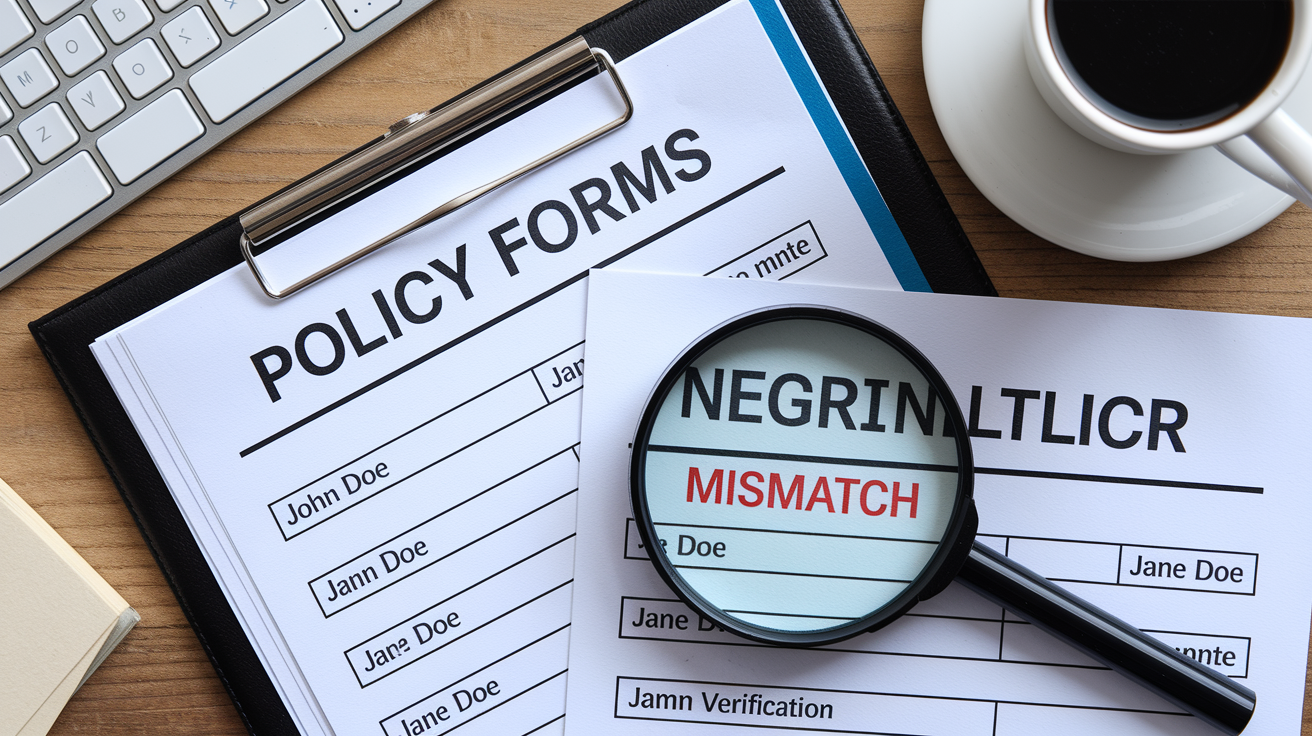
The named insured section lists the people or entities legally covered by the policy. On an auto policy, this typically includes you and your spouse or domestic partner. On a homeowners policy, it includes all property owners. If a household member or co-owner is missing from the named insured list, the insurer can deny claims related to that person.
When comparing quotes, verify every named insured on your current policy appears on the new quote. An omitted spouse or partner can void coverage when they’re driving your vehicle or filing a homeowners claim. In some states, excluding a driver or household member requires written consent. Doing so without proper documentation can void the entire policy.
Double-check spelling, middle initials, and any business names if the policy covers commercial property or vehicles. Small errors in the named insured section can delay claims or trigger underwriting reviews that reduce or cancel coverage after a loss.
Reviewing Vehicles or Property Listed on the Declarations Page

Every vehicle or property covered by your policy appears in its own section on the dec page. For auto insurance, you’ll see the year, make, model, VIN, and garaging address for each vehicle. For homeowners insurance, you’ll see the property address, dwelling square footage, construction type, and sometimes the year built or roof age.
Errors in this section directly affect both your premium and your coverage. A wrong VIN can result in the insurer denying a total-loss claim because the vehicle listed doesn’t match the vehicle you’re driving. An incorrect garaging address can place you in the wrong rating territory, causing premium adjustments or denied claims if the insurer discovers the mistake after a loss.
Watch for these listing errors:
Missing vehicles or properties that should be covered
Incorrect VINs, model years, or trim levels
Wrong garaging address or ZIP code
Omitted detached structures, like garages or sheds
Misclassified property use, such as rental units listed as owner-occupied
If you’re comparing quotes and one shows a different address, VIN, or property description, clarify the discrepancy before binding coverage. Even small differences can trigger underwriting changes or claim denials.
Evaluating Liability Limits When Comparing Quotes

Liability coverage protects you when you’re responsible for injuring someone or damaging their property. On an auto policy, bodily injury and property damage liability are the most important limits to compare. On a homeowners policy, personal liability coverage typically starts at $100,000 and can go up to $500,000 or more. Lower limits reduce your premium but leave you personally exposed to lawsuits and judgments that exceed your policy maximum.
When you compare liability limits, think about worst-case scenarios. A serious auto accident can rack up medical bills, lost wages, and pain-and-suffering claims that easily blow past $100,000 per person. If your policy only covers $50,000 per person and a jury awards $150,000, you’re personally responsible for the $100,000 difference. Higher liability limits often cost $100 to $300 more per year. That’s a small investment compared to the financial risk of a major claim.
Some quotes show lower premiums because they’ve dropped your liability limits to state minimums, like 25/50/25. State minimums are rarely enough for real-world accidents. Verify each quote you’re comparing uses the same liability limits before deciding based on price alone. If a quote has lower limits, ask the insurer to requote with your preferred limits so you can compare coverage, not just cost.
Endorsements: How Add-Ons Change Your Coverage

Endorsements are policy modifications that add, expand, or restrict coverage. They can be included automatically or purchased separately. They often explain why two quotes with identical base coverages have different premiums. Comparing the endorsements listed on each dec page helps you understand what extra protections you’re getting or losing.
Common endorsements affect coverage for specific risks or property types. Some endorsements broaden your protection, others limit it or exclude certain losses. Check which endorsements appear on each quote and confirm important add-ons are included at the same limits.
You might see these endorsements:
Rental reimbursement – pays daily rental car costs after a covered loss, like $30 per day up to $900
Roadside assistance or towing – covers towing and emergency services, often $50 to $100 per incident
Replacement cost for personal property – removes depreciation from contents claims, paying the cost to replace items new
Scheduled personal property – increases limits for specific valuables like jewelry, cameras, or musical instruments above standard sublimits
Water backup coverage – adds protection for sewer or drain backups, typically $5,000 to $25,000
Equipment breakdown (home) – covers mechanical or electrical failure of appliances, HVAC, or electrical systems
Endorsements directly affect your premium and your protection. If one quote includes water backup coverage at $10,000 and another doesn’t, the first quote might cost $50 more per year but saves you from a $10,000 out-of-pocket loss if your basement floods due to a sewer backup. When comparing quotes, get written confirmation of which endorsements are included, their limits, and whether they require separate premium charges.
Exclusions to Watch for When Comparing Quotes

Exclusions define what your policy doesn’t cover. Every policy includes standard exclusions for events like intentional damage, war, nuclear hazards, or wear and tear. Some policies add insurer-specific exclusions that narrow coverage beyond industry norms. Small differences in exclusion wording can create significant gaps in protection even if the premium and limits look identical.
Auto policies commonly exclude coverage for racing, commercial use without proper endorsements, and damage from driving under the influence. Homeowners policies exclude flooding, earthquake, routine maintenance, and sometimes mold or animal damage. When comparing quotes, read the exclusions section on each dec page or policy jacket to confirm important protections aren’t being removed.
Watch for exclusions that appear on one quote but not another. If a homeowners quote lists a mold exclusion and your current policy doesn’t, the cheaper quote might leave you unprotected for water damage that leads to mold growth. If an auto quote excludes rideshare activity and you occasionally drive for a delivery app, you’re facing a denied claim and policy cancellation if you have an accident while working. Verify exclusions match across quotes and ask insurers to clarify any unfamiliar language before you bind coverage.
Discounts and Rating Factors That Influence Premium Differences

Discounts reduce your base premium when you meet specific eligibility criteria. Missing or mismatched discounts can make one quote appear cheaper when the real difference is that important credits weren’t applied to the other quote. The dec page should list each discount by name and show the dollar amount or percentage reduction.
Confirm each quote applies comparable discounts. If your current insurer gives you a 15 percent multi-policy discount for bundling auto and home, verify competing quotes apply the same bundling credit. If a new quote is $200 cheaper but doesn’t include your safe-driver or claim-free discount, you’re not getting an apples-to-apples comparison.
Verify these discounts:
Multi-policy or bundling discount – often 10 to 25 percent when you insure auto and home with the same carrier
Safe driver or accident-free discount – typically 5 to 30 percent for clean driving records
Claims-free discount – rewards policyholders with no recent claims, often 10 to 20 percent
Anti-theft or security device discount – applies when vehicles have alarms or homes have monitored security systems
Good student discount – for young drivers maintaining a B average, usually 5 to 20 percent
Paid-in-full discount – reduces premium when you pay the full term upfront instead of monthly installments
Defensive driving or mature driver discount – available after completing an approved driver safety course
If a discount you qualify for is missing from a quote, ask the agent or underwriter to apply it and provide an updated dec page showing the corrected premium. Discounts can change your annual cost by hundreds of dollars, so matching them across quotes makes sure you’re comparing true premiums, not incomplete estimates.
Final Words
Start by scanning the declarations page for the big items: coverage limits, deductibles, policy period, and who’s named on the policy.
Then match listed vehicles or property, liability limits, endorsements, exclusions, and any discounts. Watch for VIN errors or missing drivers.
Use a short checklist when you shop so comparisons are apples-to-apples. What to verify on the declarations page when comparing quotes: limits, deductibles, named insureds, listed property, endorsements, exclusions, and discounts. Do this and you’ll pick protection that actually works.
FAQ
Q: What can be found on the Declarations page?
A: The Declarations page lists your policy’s key facts: who is insured, covered property or vehicles, coverage limits (max payouts), deductibles, policy period, endorsements, exclusions, and premium.
Q: What information is given on the declaration page?
A: The declaration page gives the same essentials: named insureds, policy number, effective dates, limits, deductibles, covered items, endorsements, exclusions, and the total premium for easy comparison.
Q: How do I read my declaration page?
A: How you read your declaration page is: scan named insureds, policy period, limits, deductibles, listed property, endorsements, exclusions, and premium, then compare those points across quotes.
Q: What is a declaration of proof of insurance?
A: A declaration of proof of insurance is a document showing your insurer, policy number, covered risks, limits, effective dates, and sometimes vehicle or property details to prove you meet legal or lender requirements.